DPS Meaning: Damage Per Second Explained for Professionals
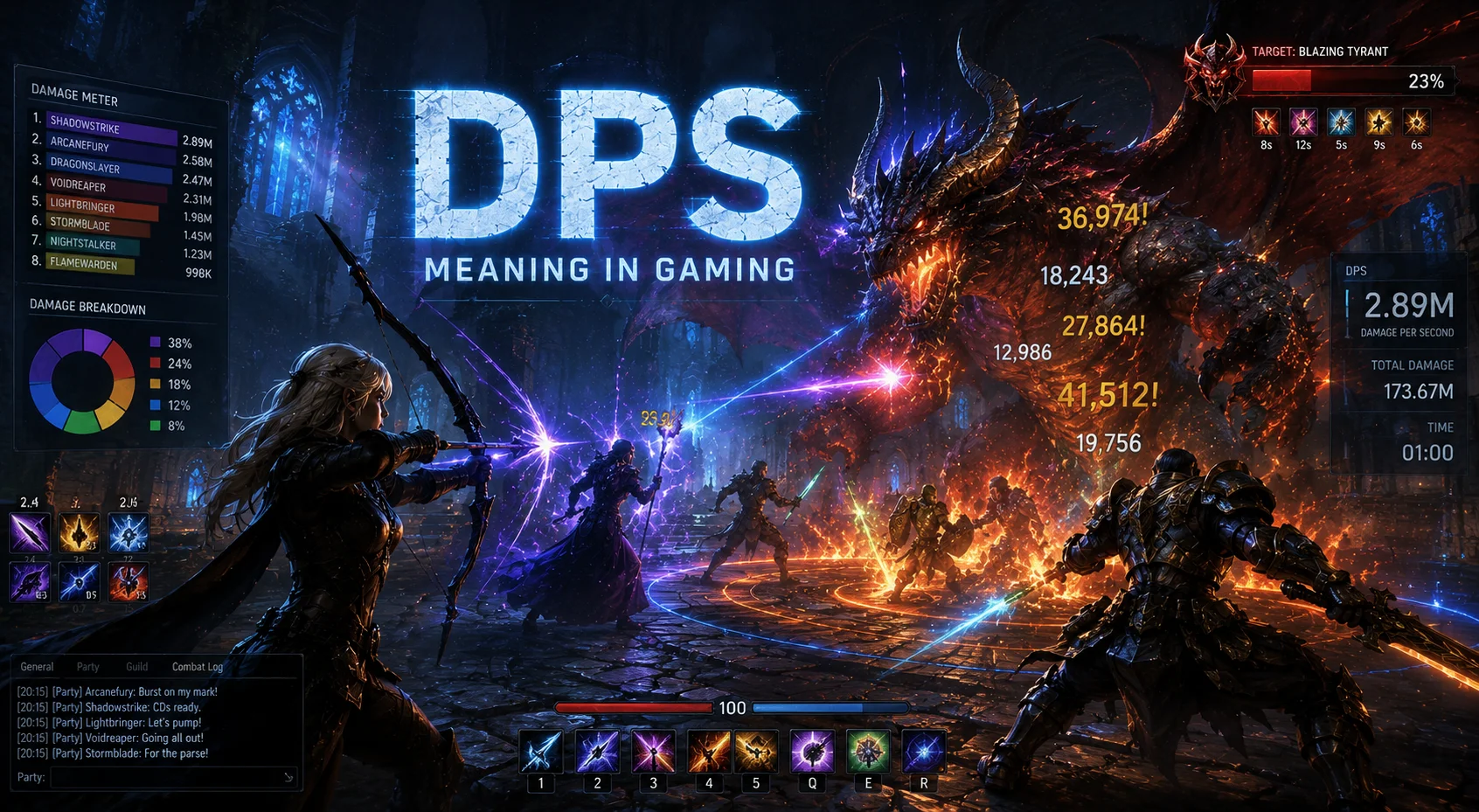
DPS stands for damage per second, a common metric in gaming that gauges how much damage a character, weapon, or ability can deliver over time. It helps players compare efficiency across builds, rotations, and gear. In professional contexts, DPS is not just raw numbers; it’s about consistency, timing, and rhythm under pressure. Understanding DPS enables teams to optimize rotations, manage cooldowns, and coordinate damage windows in both PvE and PvP. This section breaks down what DPS measures, how it is calculated, and why it matters across genres and roles.
What DPS measures in gameplay
DPS, short for damage per second, represents a practical measure of ongoing damage output during combat. It helps players compare builds, rotations, and gear across different encounters while accounting for uptime and timing.
- Average damage per second measures sustained output over a combat window, integrating ability cooldowns, resource constraints, uptime, latency, animation times, and environmental factors to reflect real performance rather than peak bursts.
- DPS is influenced by rotation efficiency, gear choices, stat optimization, talent synergies, and latency, meaning two players may have the same theoretical numbers but very different in-game performance due to timing and resource management.
- Damage application timing, critical hits, buffs, debuffs, and proc effects universally affect DPS, altering the rate at which damage accumulates during short windows or extended engagements while accounting for chance variability.
- DPS also reflects mechanics like damage over time, cleave effects, multi-target scenarios, environmental damage, and aura talents that change the average output across enemies in group or raid fights.
- Because DPS aggregates intermittent bursts and sustained phases, it rewards players who optimize cooldowns, resource generation, positioning, and safe trades to maximize uptime without sacrificing survival or team cohesion.
- DPS evaluation often uses tools and simulations to model rotations, factoring buffs, debuffs, target resistances, armor penetration, and enemy mechanics for precise planning and consistent performance across encounters.
- In team play, DPS comparisons may also account for target switching, target priority, and coordinated damage windows across raid, dungeon, or battleground scenarios, emphasizing synergy over isolated single-target output.
Interpreting these items together provides a clearer picture of a player’s sustained potential. It emphasizes consistency and efficiency over flashy but fleeting damage peaks.
How DPS is calculated (formulas and examples)
Calculating DPS starts with a few core concepts: total damage, total time, and how often hits land within that time frame. The examples below illustrate how different rotations impact the final DPS value.
| Scenario | Damage per Hit | Attack Speed (hits/s) | DPS (approx.) | Notes |
|---|---|---|---|---|
| Baseline melee rotation | 120 | 1.10 | 132 | Continuous hits under clean conditions |
| Spell rotation with cooldowns | 320 | 0.90 | 288 | Prime damage window during cooldowns |
| Aoe/Cleave for multiple targets | 180 | 1.00 | 180 | Per-target DPS; total damage distributed across targets |
| Boss window with buffs | 260 | 0.95 | 247 | Buff uptime factored in |
In practice, the numbers are simplified for clarity, but the underlying principle remains: DPS equals total damage divided by fight time, adjusted for uptime and buffs.
DPS vs burst and sustain: key differences
DPS is not a single fixed value but a profile that differentiates peak bursts from steady, end-to-end damage delivery. Burst DPS captures brief spikes produced by cooldown resets, procs, or crit-rich sequences, enabling quick eliminations of priority targets or dangerous adds. Sustain DPS, by contrast, focuses on steady damage over longer phases where resource management and uptime determine the outcome of fights. For practical planning, teams choreograph bursts to align with boss mechanics, phase transitions, and safe windows while maintaining a robust baseline that handles interruptions and gaps. In PvP, burst and sustain both matter, but matchmaking and map pressure amplify the value of consistency over blockbuster bursts. Analysts monitor Effective DPS, accounting for uptime, range, movement, and control effects that alter continuous damage in real game conditions. When evaluating builds, players should balance the desire for thrilling bursts with the necessity of maintaining pressure when targets move, dodge, or shield. The best strategies optimize both profiles: they maximize burst potential when it matters most and preserve steady DPS to finish fights or finish content more quickly with smaller margins for error.
Why DPS matters for strategies and roles
Across genres and game modes, DPS serves as a keystone metric that informs strategy and class roles. In MMORPGs, DPS roles drive rotation order, talent choices, and gear prioritization, while tanks and heals coordinate to preserve uptime for the DPS window. In team-based shooters and MOBAs, real-time DPS feedback helps squads optimize target focus, cooldown usage, and movement to sustain pressure despite map constraints. Game designers balance DPS through gear scaling, proc rates, and encounter design to keep the meta dynamic rather than dominated by a single build. Monitoring tools and stat dashboards enable pros and analysts to track DPS trends, run simulations, and benchmark performance against peers. On the esport stage, precise DPS tracking under varying latency and network conditions becomes a proxy for skill and teamwork, influencing drafting and stratification. The practical takeaway is clear: align your gear, rotations, and positioning to maximize sustained damage while preserving survivability and control. This holistic approach applies whether you are leading a raid, pushing for a speedrun, or fighting in a high-stakes match, ensuring you contribute consistent damage across the entire encounter.
Key Features and Benefits of the DPS Analytics Service
Introducing our DPS analytics service, a focused toolkit designed to quantify and improve damage per second across your gaming setup. By combining precise data capture with intuitive visuals, the platform reveals how rotations, gear, and team dynamics influence DPS in real time. You will gain visibility into efficiency drivers, identify bottlenecks, and align practice with measurable targets. The service supports players, guilds, and esports teams seeking to optimize performance across MMORPGs, MOBAs, and FPS titles alike. Use cases span single-player optimization to coordinated team rises in competitive play, with workflows that scale from practice rooms to tournament floors.
Core features: tracking, visualization, and reporting
Core features align data collection with actionable insights, making it easier to translate complex DPS data into practical adjustments during practice sessions, raid nights, and competitive events. This section highlights the core capabilities you can rely on to track, visualize, and report DPS performance.
- Real-time DPS tracking across weapons, abilities, and character builds, with drift alerts when performance deviates from expected baselines, enabling immediate adjustments.
- Advanced visualization that maps DPS contributions by skill rotation, gear, and buffs, using charts, heatmaps, and timelines to reveal hidden efficiency gaps.
- Comprehensive reporting automatically aggregates data into end-of-session summaries, trend analyses, and benchmark comparisons so you can communicate results with teammates and stakeholders, and drive training plans.
- Segmented dashboards let you filter by role, map, or match type, enabling targeted improvements for DPS-heavy roles like rogues or mages in MMORPGs.
- Export options and integration-ready data formats support collaboration with analysts, coaches, and competitive teams across platforms, enabling seamless reviews and data-driven decisions.
Together, these features create a scalable framework for turning granular DPS data into clear coaching points. Teams that adopt the full feature set report faster optimization cycles, higher DPS ceilings, and more consistent performance across diverse game modes.
Benefits for players and teams
Whether you are a solo player trying to squeeze maximum DPS from a difficult boss encounter or a raid team coordinating complex rotations, the analytics service translates data into practical gains. Key benefits include faster identification of rotation inefficiencies, clearer guidance on gear and stat optimization, and measurable progress over time. Real-time feedback lets you adjust on the fly during training sessions, while historical comparisons reveal whether changes lead to durable improvements or temporary spikes. For players, the tool provides personalized insights: estimated DPS lift from adjusting a skill order, suggested substitutes for low-availability abilities, and warnings when a build no longer meets performance benchmarks. For teams, the system supports coordinated strategy: shared dashboards, drill-downs by encounter, and consensus-based targets for each role. The result is a more data-driven approach to practice and competition, reducing guesswork and accelerating learning curves. Beyond individual sessions, DPS analytics enable competitive teams to benchmark across guilds and tournaments. You can track your DPS ceiling, measure consistency under pressure, and compare performance across patch cycles. This visibility helps coaching staff tailor training plans, schedule rotations, and assign roles that maximize overall damage output. The service also supports post-raid reviews, where analysts can pinpoint which adjustments yielded the largest DPS gains and replicate them in future encounters. Finally, the platform scales with you: from small groups to full esports rosters, it provides the same core capabilities with adjustable dashboards and permissions. The analytics tool also helps new players ramp up quickly by translating numbers into concrete practice tasks, such as focusing on specific cooldown windows or optimal resource management during boss phases. For teams, leaders can set shared targets, monitor progress via live dashboards during practice and scrims, and automatically generate highlight reels that showcase successful DPS sequences for training materials. In all cases, the data are actionable, with intuitive filters that let you compare classes, roles, and builds against patch notes and meta shifts. Over time, you can quantify the impact of minor stat changes on DPS curves, helping you choose upgrades that yield the largest per-stat gains. The combination of real-time alerts and historical trend lines makes it possible to identify when a change yields a temporary spike versus a durable upgrade, supporting smarter decision-making between raids and ladder play.
Integrations with game APIs and tools
Integrations with game APIs and tools provide a seamless data flow from game events to actionable dashboards. We support official APIs for popular titles, streaming telemetry from in-game clients, and third-party trackers that log combat events, resource usage, and gear states. Connectors handle authentication, rate limiting, and data normalization, ensuring that DPS timing aligns across titles with different clock scales. Real-time streaming pipelines push events like ability casts, hits, crits, and buffs into a central data lake, while batch jobs reconcile daily totals for longer-term analysis. The system ships with SDKs and sample connectors for Unity, Unreal, and web-based overlays, making it easier to embed DPS insights into training portals, coaching dashboards, or esports production environments. Security and governance features give you control over access, with role-based permissions, audit trails, and consent-based data sharing for teams, players, and partners. You own the dataset and can export cleaned results to standard formats for analysis. Examples include in-game overlays that display live DPS while a raid is in progress, automated post-match reports for scrimmages, and scheduled exports that feed coaching sessions and talent evaluations. We also support patch-aware connectors that tag DPS metrics by patch version, enabling teams to compare performance before and after balance changes. Cross-title analysis allows global teams to calibrate DPS expectations across different genres, like MMORPGs and tactical shooters, by mapping equivalent metrics and normalization rules for fair benchmarking. Documentation covers use cases from personal optimization to large-scale esports operations, with best-practice guides, tutorials, and example data sets to accelerate adoption. For data integrity, the pipeline includes validation checks, outlier detection, and timestamp alignment to ensure DPS numbers reflect actual in-game events rather than logging gaps. If a title updates its API or formats change, our connectors can be updated quickly via versioned adapters, minimizing downtime and keeping DPS analytics current with the latest patches.
Case studies: performance improvements using DPS analytics
Case studies illustrate how DPS analytics translate into tangible performance gains across genres and playstyles. Case Study A: In a high-end MMORPG raid environment, a 24-player guild adopted DPS analytics to optimize boss fight sequences. The team defined class-by-class rotation baselines, integrated the dashboards into the raid planning channel, and used real-time alerts to flag timing slippages during practice. Over an eight-week sprint focusing on a notoriously tight mechanic, they observed a sustained 17–19% increase in encounter DPS across the roster, with an average kill time reduction of 11–13% on the hard mode boss. The improvements were most pronounced in phases requiring tight timing windows, where even small micro-rotation gains translated into larger DPS swings. Coaches reported faster feedback loops, enabling players to adjust builds and rotations within a single practice session rather than across multiple retries. The case demonstrates how data-driven coaching can convert raw DPS data into durable on-field advantage. Case Study B: A professional PvP team used DPS analytics to normalize damage output across duel contexts. By analyzing first-second DPS, burst windows, and mobility-influenced DPS loss, they redesigned opener sequences and cooldown synergies. The result was a 12% average DPS uplift in controlled scrimmages and a 9% increase in win rate over five tournaments. The analytics also helped the team anticipate patch adjustments and adjust meta picks more quickly than rivals, maintaining a competitive edge. Case Study C: A solo player in a dungeon-crawler improved gear optimization using data-driven gear rotations. They tested different weapon types and trinkets, tracked the DPS curve across boss phases, and adopted a rotation refinement that favored high-DPS procs in critical moments. Over a four-week period, they achieved a 14–20% uplift in sustained DPS and reduced the average encounter duration by 4–6 minutes in longer dungeons. These cases illustrate how even incremental improvements compound into meaningful performance gains.
Technical Specifications and System Requirements for DPS Measurement
Technical specifications and system requirements for DPS measurement help ensure accurate, consistent, and fair comparisons across games and setups. DPS measurements can vary with hardware, software configurations, and data collection methods, so clear standards help players and developers interpret numbers correctly. This section outlines input sources, baseline software dependencies, timing considerations, and policies governing data usage. Readers will find practical guidance on sources, minimum and recommended specs, sampling cadence, and how privacy or security concerns are addressed. The goal is to equip players, technicians, and analysts with a solid framework for evaluating DPS in both casual play and competitive environments.
Data sources and accuracy considerations
Understanding data sources is essential for interpreting DPS values accurately across different games, patches, and instrumentation. This section highlights inputs from game telemetry, external benchmarks, and user-reported observations, while noting where errors can creep in during collection and processing.
- In-game event logs, combat timers, damage formulas, and controlled test environments provide primary inputs, while clock drift, frame pacing, and inconsistent sampling across builds can introduce subtle measurement biases.
- Use of automated capture tools, server-side metrics, and client instrumentation should be cross-validated to avoid double-counting, skewed timestamps, or missing events that distort DPS calculations.
- Platform differences between PC, console, and mobile can affect timing accuracy due to asynchronous processing, input latency, and rendering pipelines, requiring platform-specific calibration for trustworthy DPS figures.
- Sampling methodology should specify whether DPS is averaged over an encounter, counted per second, or aggregated across multiple sessions to ensure comparable metrics across players and tools.
- Documentation of anomaly handling, such as how crits, shields, or resistances are treated, helps users interpret outliers and avoid misrepresenting performance.
Cross-validation across tools and repeated trials further strengthen confidence in reported numbers. Where possible, document timing references, sampling windows, and environmental conditions that influence results.
Hardware and software requirements
Minimum hardware and software requirements for DPS measurement aim to ensure data collection is reliable and reproducible. A baseline system should provide enough headroom to log events without interfering with game performance, while the measurement tools run within expected timing budgets.
At minimum, a multi-core CPU with modern instruction sets, 8–16 GB of RAM, solid-state storage for logs, and a stable OS are recommended. Networking considerations matter when the tool streams data to a server or shares results across devices. The recommended configuration increases memory to 16–32 GB, uses a high-speed SSD, and enables dedicated GPU acceleration if the measurement pipeline renders visualizations in real time.
In practice, ensure drivers and firmware for the GPU, network adapters, and storage devices are up to date, as stalls and interrupts at the OS level can skew timing signals. Consider running measurements on an isolated test system or after a fresh reboot to minimize background tasks. Document the baseline software versions, patch levels, and any third-party monitoring tools active during data collection to aid reproducibility.
Security and privacy concerns also influence configuration choices. If measurement tooling uses network telemetry, enable encryption and restrict data fields to essentials. Finally, establish a clear protocol for sharing raw logs with collaborators, including redaction guidelines and permissible use cases to protect players’ environments while enabling rigorous analysis.
Sampling rates, latency, and their impact on DPS readings
Sampling rate defines how often the measurement captures DPS-relevant events. Higher rates provide finer granularity but increase storage and processing demands, while lower rates reduce overhead at the cost of temporal precision. Latency in input handling, processing, and display stages can distort the timeline of events, especially in fast-paced action or competitive contexts. To mitigate this, align clocks across client and server, apply synchronized timestamps, and report whether measurements are taken locally, server-side, or via a hybrid approach. Document any buffering or smoothing that produces a more stable readout at the cost of immediacy.
Calibrating sampling cadence to match game pacing — including frame rate, attack cadence, and effect resolution — helps produce reproducible results across machines. When possible, publish the exact cadence, the window used for averaging, and the method for extrapolating per-second figures from discrete samples. In multiplayer scenarios, account for network jitter, packet loss, and desynchronization by incorporating latency estimates into the DPS confidence interval.
Real-world benchmarks indicate that modest increases in sampling frequency can yield diminishing returns beyond a certain threshold, particularly in long encounters where average DPS is more informative than peak DPS. Therefore, analyses should clearly distinguish between instantaneous DPS (point-in-time) and sustained DPS over a defined duration, and provide guidance on when each metric is appropriate for comparison.
Additionally, document how different rendering pipelines or post-processing steps may alter the perceived timing of hits, and specify whether data represents raw captures or includes any post-hoc corrections.
Security, privacy, and data retention policies
Security, privacy, and data retention policies govern how DPS data is collected, stored, and shared. Measurement tools should minimize exposed personal information, anonymize identifiers, and separate gameplay telemetry from sensitive account data. Access controls, encryption at rest and in transit, and audit trails help organizations detect unauthorized access and ensure accountability.
Retention durations should balance the needs for reproducibility and analytics with user rights and regulatory requirements. When third-party services are involved, data transfer agreements should specify data usage boundaries, deletion timelines, and breach notification procedures. Transparency about data usage builds trust among players and teams while supporting rigorous, privacy-conscious DPS benchmarking.
Additionally, implement data minimization by harvesting only what is necessary for the analysis, and provide players with controls to opt-out of non-essential telemetry. Regularly review retention schedules to align with evolving privacy regulations and community expectations. Auditable processes should include whitelisting of data sources, validation checks for tampering, and documented procedures for data deletion to ensure compliance and foster confidence in DPS research across leagues and development studios.
Plans, Pricing, and Offers for DPS Analytics
Choosing the right DPS analytics plan helps teams scale performance without overpaying. This section outlines available plans, pricing bands, and current offers designed to fit solo players, small squads, and large esports teams. Each tier is built around core capabilities like real-time DPS monitoring, historical reporting, and API access, allowing you to balance cost with control. By comparing limits, retention, and support options, you can forecast total cost of ownership more accurately. Promotional terms are included below to help you maximize value while achieving your DPS optimization goals.
Subscription tiers and features comparison
Below is a concise comparison of plans and what you get at each tier.
| Plan | Price per Month | Real-time DPS Tracking | Historical DPS Reports | Real-time Alerts | Custom Dashboards | API Access | Included Seats | Support |
|---|---|---|---|---|---|---|---|---|
| Starter | $9 | Included (up to 5,000 DPS events/min) | 30-day retention | Basic threshold alerts | 2 dashboards | Read-only API (50 req/min) | 1 user | Email support (9–5) |
| Pro | $29 | Included (unlimited DPS events) | 90-day retention | Advanced alerts with multiple conditions | 10 dashboards | Full API access | 5 users | Priority support |
| Team | $59 | Included (high-concurrency monitoring) | 180-day retention | SLA-based alerts with escalation | 25 dashboards | Unthrottled API | 20 users | 24/7 chat and phone |
| Enterprise | Custom | Unlimited real-time tracking | 365-day retention | Custom alerting with tailored thresholds | Unlimited dashboards | Enterprise-grade API | Unlimited | Dedicated success manager |
For teams measuring DPS at scale, the higher tiers unlock more data retention, faster updates, and broader collaboration capabilities.
Free trials, discounts, and promotions
Take advantage of a transparent trial and flexible discounts to evaluate DPS Analytics without committing upfront. We offer a 14-day free trial that grants you full access to the standard feature set, including real-time DPS monitoring, historical reporting, alerting, and dashboards. No credit card is required to start, and you can cancel anytime during the trial and retain your data through the end of the period. After the trial, you can switch to monthly or annual billing, with annual plans typically delivering a meaningful savings of up to 20%. Promotions and discounts vary by region and market, but common options include multi-seat bundle offers, volume discounts for large teams, and loyalty credits for long-term customers. We also run seasonal promotions around major gaming events, school terms, and industry conferences, which can add extra dashboards or API calls at no extra cost for a limited time. Eligibility for certain discounts may require organization verification or educational affiliation. To maximize value, consider combining an annual commitment with our add-ons like extended data retention or premium support. All promotions are subject to terms and are applied at checkout or the invoice, depending on the billing model you choose. If you purchase through a partner or affiliate, different discount structures may apply.
Enterprise and custom solutions
Enterprise and custom solutions are designed for teams with complex DPS analytics needs, regulatory requirements, or high data volumes. We offer dedicated success managers, onboarding, and tailored implementation plans. Deployment options include cloud-based hosting, private cloud, or on-premise data integrations, depending on security and latency needs. You can choose data retention, advanced governance, and role-based access controls with multi-tenant or single-tenant configurations. Custom SLAs cover uptime, response times, and data processing limits, and our security program includes audits, encryption at rest and in transit, and SOC 2 or ISO 27001 standards where applicable. We provide scalable dashboards, unlimited API access, and priority support. For teams migrating from another platform, we offer migration assistance, data mapping, and reconciliation services to preserve historical DPS data. Training and enablement packages ensure your analysts and developers get up to speed quickly. Enterprise pricing is quoted on a per-customer basis, reflecting usage, required retention, and service levels. If you need dedicated infrastructure or compliance with industry regulations, we will co-create a solution with architecture review, deployment timelines, and a dedicated customer success plan. Optional add-ons include on-site workshops, custom integration development, and extended security reviews. We can also provision dedicated staging environments and sandbox instances for testing new DPS strategies before production. By choosing Enterprise, you get a roadmap aligned with your organization’s DPS goals, performance targets, and collaboration with your team across data science, development, and operations.
How to choose the right plan
To decide which plan fits best, start with the scale of your DPS workload, the number of analysts, and the data you need to retain. If you are a solo player or small team starting out, Starter or Pro might be enough; For growing teams focusing on coordination and automation, Team is more suitable. Consider the importance of real-time alerts, the need for dashboards, and API access for automation. Data retention length is a major driver for cost; longer retention increases value for trend analysis but raises price. Evaluate support requirements: if you depend on uptime and quick issue resolution, prioritize plans with 24/7 support and a dedicated manager. Assess integration needs with your existing stack (game servers, ticketing, CI/CD) and whether you require on-prem or cloud hosting. For a conservative approach, start with a trial and a monthly plan; as your needs grow, you can upgrade to a higher tier or adopt annual billing. When budgeting, include potential add-ons: extended data retention, premium dashboards, additional seats, and priority API quotas. Finally, consider the total cost of ownership, including data migration, training, and internal staffing to extract maximum value from DPS analytics. Prepare a short requirements document outlining must-have features and, if possible, validate latency, data accuracy, and report usability during the trial. If you manage a distributed team, verify collaboration features, export options, and security controls before purchase.