Grinding Meaning: Repetitive Progression Explained
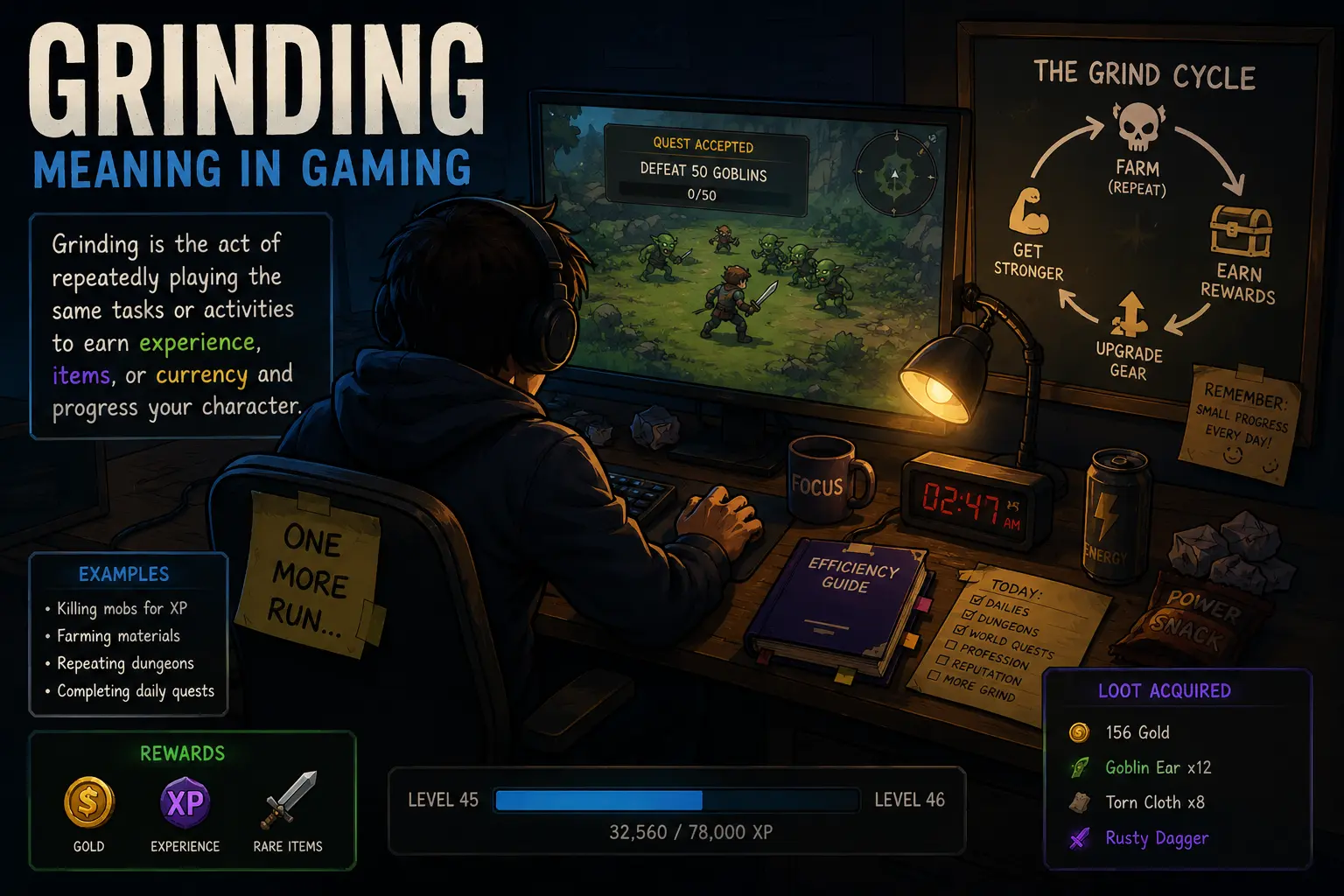
Grinding meaning in gaming centers on repetitive actions taken to progress, often through repeated battles, tasks, or farming loops. This mechanism helps games extend playtime, unlock progression, and shape the player’s sense of growth. While some players see grinding as necessary grind, others view it as a strategic tempo that balances challenge and reward. Understanding grinding involves how it distributes rewards, manages risk, and sustains engagement across sessions and events. When well designed, grinding can feel purposeful rather than tedious, offering goals that align with player skill and ambition.
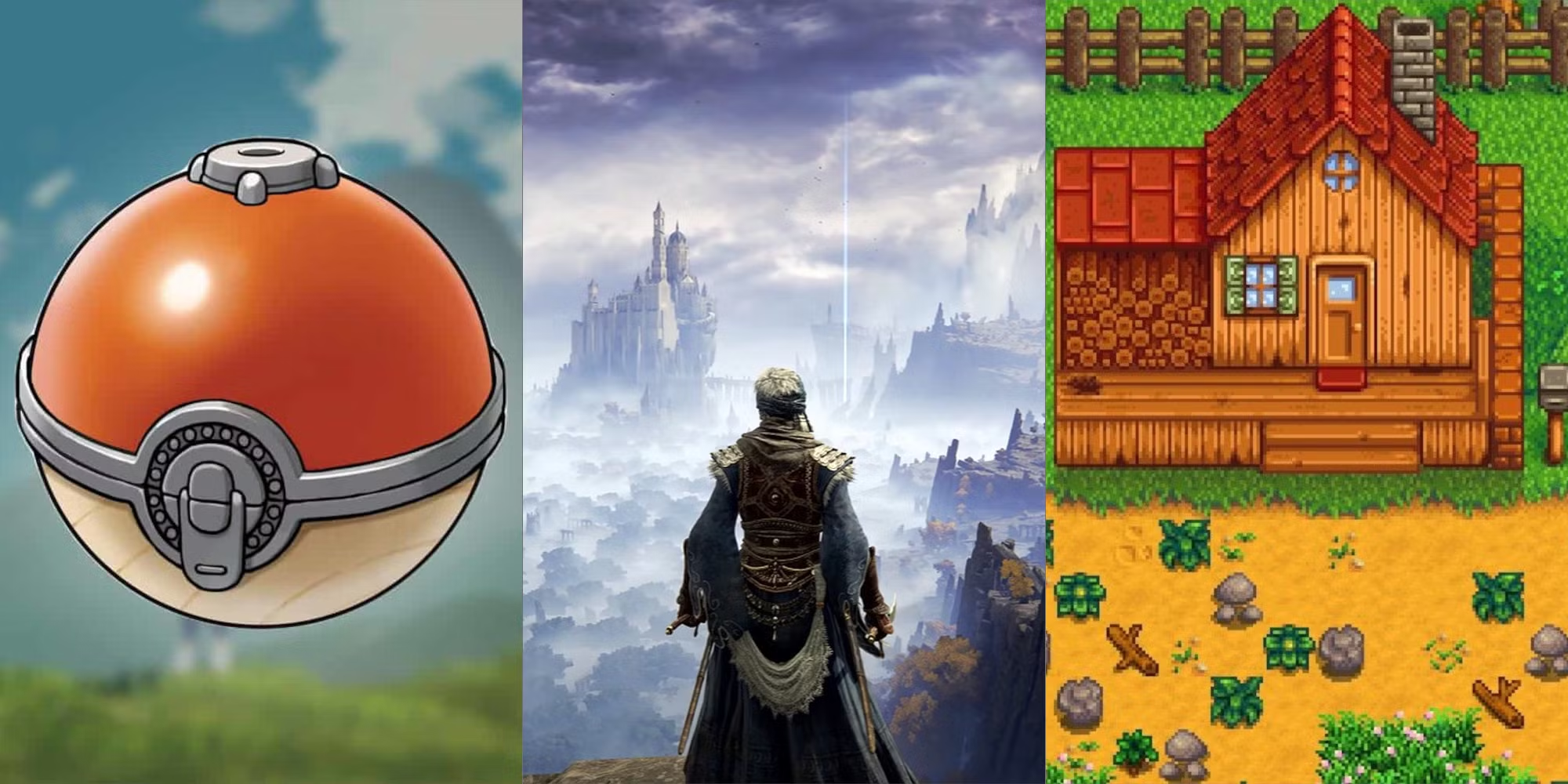
What does grinding mean in games?
Grinding in games refers to the practice of repeating a set of actions to make steady progress over time. It typically involves fighting enemies, performing tasks, or collecting resources to gain experience, currency, or equipment. The core idea is repetition that yields measurable rewards, often through an experience curve, loot tables, or progression gates. Some games frame grinding as a central loop that drives advancement, while others present it as optional side activity that still influences power or status. The perception of grind varies by genre, player goals, and how rewards are delivered. A well balanced grind provides clear milestones, predictable pacing, and meaningful incentives that align with skill development and exploration.
When the loop is transparent about why repetition exists, players are more likely to stay engaged rather than feel ambushed by repetition. Critics point out that poor design can turn repetition into a chore, especially if rewards are rare, heavily time gated, or disconnected from the core gameplay. Designers respond by adjusting drop rates, experience curves, and the rhythm of reward to keep players motivated. In many modern games, grinders are complemented by social elements like cooperative farming or trading so that repetition becomes a shared activity rather than a lonely grind. The bottom line is that grinding is a tool for shaping progression, and its success hinges on aligning repetition with player motivation, meaningful goals, and a rewarding sense of growth. When done right, the grind feels purposeful, even as players invest time and effort to build power, acquire gear, or chase mastery.
Types of grinding (XP, loot, reputation, crafting)
Grinding in action manifests through several common loops, each with its own value and risk profile. The following sections highlight the core types and how they influence progression, decision making, and player experience.
- Engaging in XP grinding means repeatedly defeating enemies or completing tasks to accumulate experience points, unlocking levels, skills, and access to new areas through sustained, rule-based progression over time.
- Loot grinding concentrates on gathering weapons, armor, or items with value driven by random drops, set bonuses, or market demand, often rewarding time investment and persistence over immediate narrative payoff.
- Reputation grinding builds ties with factions, guilds, or cities by completing tasks that improve standing, reputation ranks, and access to exclusive missions, discounts, or alliances across multiple seasons.
- Crafting or material grinding centers on creating items through collecting components, blueprints, or resources, requiring repetition to craft progressively better gear and unlock high-end recipes and enhanced enchantments.
- Hybrid or mixed grinding combines multiple loops, balancing XP, loot, and crafting, often used by live-service titles to sustain long-term engagement and a healthy, evolving in-game economy for broader strategy.
Understanding how these loops interact with player skill and game design helps explain why repetition can feel rewarding or tedious depending on context.
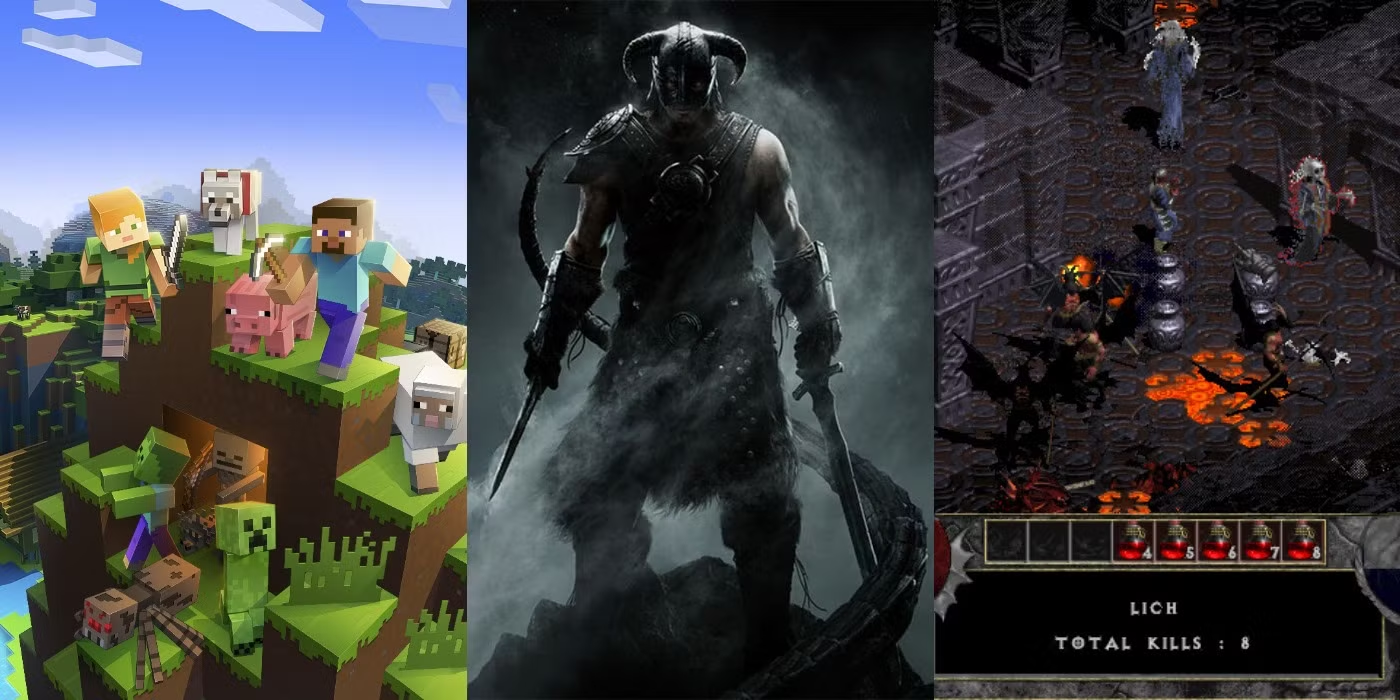
Why developers include grinding
Grinding is a deliberate design choice used to lengthen gameplay and shape player behavior. By creating a loop where players repeatedly perform tasks, designers can extend play sessions, stabilize engagement, and provide steady progression milestones that persist after launch. Repetition helps maintain a predictable cadence, which helps both players and developers plan for content updates. In live-service titles, farming loops can be tuned to invite optional purchases or convenience boosts without breaking balance for free players. The social dimension also matters: group farming, co-op events, and leaderboards turn private routines into shared experiences, reinforcing community and ongoing participation.
Designers balance these factors by calibrating XP curves, loot tables, and gating so progress feels earned but fair. Narrative pacing and world design can further justify repetition when loops align with lore and discovery, making progression feel meaningful. If the grind slows too much or rewards feel undeserved, players may disengage, so transparency and inclusivity in progression signals are essential. Ultimately, grinding serves retention, monetization, social dynamics, and player autonomy, with best results emerging when loops are tightly integrated with core systems rather than tacked onto them.
Effective balancing includes offering a range of paths to progress, including optional daily or weekly tasks, skill challenges, and social goals, so players with different time horizons find value. Developers often gather data on completion times, failure rates, and perceived fairness to adjust curves and drop rates, ensuring a flourishing but not punitive experience.
Grinding vs other progression systems (quests, skill-based)
The following table contrasts grinding with alternative systems such as quests and skill based progression. The goal is to provide a quick reference for designers and players evaluating pacing and rewards.
| Aspect | Grinding (Repetition) | Quests / Immersion-Based |
|---|---|---|
| Definition | Repetitive actions yield rewards over time | Story driven tasks advance progress |
| Pros | Predictable pacing, long term engagement | Narrative flow, meaningful choice |
| Cons | Risk of fatigue, perceived tedium | Possible linearity, one shot rewards |
| Player perception | Detected as grind when rewards feel distant | Perceived as progress when missions stay relevant |
| Examples | XP grinding, loot farming | Story quests, branching endings |
The table illustrates how each approach shapes pacing, rewards, and player motivation.
When grinding adds value vs when it is a chore
Grinding adds value when it supports clear goals, rewards are meaningful, and the loop connects to core gameplay. It becomes a chore when the effort feels disconnected from progress, drops are arbitrary, or activities lack meaningful variation. Value arises when repetition reinforces skill development, mastery, and tactical decision making.
For example, XP farming may be valuable if it unlocks difficult encounters that require improved play, while cosmetics farming may be seen as filler if it lacks functionality. Player choice matters: players who can choose different farming methods, adjust pace through difficulty settings, or opt into shorter loops experience less fatigue. Reward design matters: consistent, predictable rewards with occasional high value drops feel fair and provide motivation. Pacing is key: frequent milestones with tangible outcomes keep players moving, whereas long, unbroken stretches with minimal payoff create frustration. Accessibility influences value: new players should experience progression early to avoid discouragement, while veterans appreciate depth in endgame loops. Social aspects can transform repetition into communal activity; co-op farming, trading, and competition reduce the perception of tedium.
Balancing risk and reward, time gates, and optional shortcuts also shape the perceived value of grinding. Developers may hide repetition behind varied content, such as daily challenges, rotating events, or procedural objectives, ensuring that players feel progress while encountering novelty. The best designs allow players to see the purpose of each action and align their time with personal goals, whether those goals focus on power, collection, or social status.
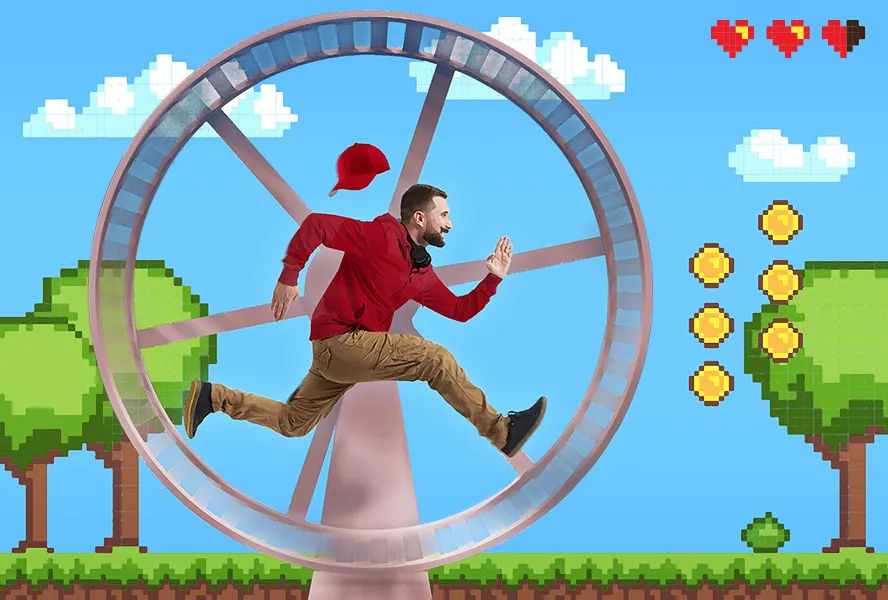
Key Features, Specifications, and Technical Details
Grinding meaning in gaming refers to the repetitive actions players perform to progress, gain resources, and improve their character or account. It thrives on action-reward loops, scalable pace, and carefully tuned progression curves that keep players engaged over long sessions.
This section outlines core mechanics, measurable metrics, pacing strategies, idle or AFK considerations, and the technical safeguards necessary in online titles. By examining these features, designers can balance challenge and reward to sustain player retention without compromising game integrity. The examples here apply to diverse genres, from RPGs and shooters to collaborative live-service games, highlighting how repetitive progression shapes player experience.
Mechanics of grinding loops
Grinding loops in video games are the core action-reward patterns players repeat to advance a character, unlock capabilities, and accumulate resources, with success reinforcing behavior through tangible in-game returns. Each loop begins with a specific objective defeating a set of enemies, harvesting materials, completing a quest, or mastering a skill then proceeds through a sequence of challenges that yield experience points, currency, and items.
Experience points translate into levels or skills, while loot and currency enable equipment upgrades, consumables, or cosmetic enhancements, all of which increase player capability and perceived power, spurring further participation. The loop structure often includes gating mechanisms such as stamina, cooldowns, difficulty tiers, or skill requirements that pace the journey and prevent runaway progression, ensuring players have clear short-term milestones. Loot rarity, crafting potential, and event bonuses modulate the reward curve, so players feel incremental progress without reaching an unsatisfying plateau where effort seemingly yields little return.
Designers frequently implement a mix of short loops for immediate feedback and longer loops for meaningful milestones, plus occasional soft resets or prestige-like resets to refresh incentives without erasing accumulated power. Visual and audio feedback, along with progress UI, reinforce a sense of momentum, helping players connect actions to outcomes and stay motivated through repeated but varied tasks.
Balance is critical: too rapid progression can strip meaning from decisions, while too slow growth can erode engagement, making players abandon the loop for more rewarding experiences elsewhere. Ultimately, a well-crafted grinding loop respects player agency, offers meaningful choices about how to spend time, and harmonizes challenge and reward across both early and late game.

Metrics tracked during grinding (XP rate, drop rate)
To operationalize grinding data, teams monitor a core set of metrics in real time to understand how progression unfolds within both standard play sessions and time-limited events. This approach helps identify where players accelerate or stall, and it guides tuning decisions that affect how quickly rewards scale relative to effort.
- XP rate per hour and level progression pace, detailing XP earned per encounter, quest, and bonus XP from events to gauge overall growth speed.
- Drop rate and loot quality distribution across enemies, including chances for rare items, crafting mats, and prime gear that influence next upgrade paths.
- Currency flow: earned currency through battles and quests, expenditure on repairs and consumables, and inflation trends when large player populations engage concurrently.
- Engagement indicators such as playtime, session length, quit rates after defeats, and completion of optional objectives to monitor stickiness and long-term loyalty.
- Economy health metrics like price stability in the shop, currency sinks, and player-to-player trading activity to detect imbalance.
Together these metrics inform tuning decisions and highlight where players may stall or disengage. Analysts compare current rates with historical baselines to detect drift in engagement and to spot potential exploit paths early.
Balancing grind: pacing and reward curves
Effective pacing centers on aligning the frequency and value of rewards with the effort players invest, across multiple play sessions and content layers. Early progression should deliver tangible wins that reinforce competence, such as quick XP gains, useful equipment, and accessible optional objectives, while later stages must scale rewards to match rising challenges.
The reward curve should feel predictable enough for players to anticipate progress but occasionally surprise them with meaningful upgrades or rare loot to reignite interest. Time-based gates, weekly challenges, and milestone achievements can smooth the journey, preventing stagnation during dull stretches and giving players clear targets. Visual indicators and clear progress bars reduce ambiguity about how near or far players are from next power spikes, which improves motivation and reduces frustration.
Designers also calibrate risk, reward, and difficulty to balance social and competitive aspects, ensuring that solo and group players experience satisfying but distinct pathways. Player feedback, telemetry, and sandbox experiments help refine pacing formulas and guard against early burnout or late-game fatigue. In summary, successful grind pacing invites consistent engagement by delivering both short-term gratification and long-term purpose, enabling players to feel steadily more capable without trivializing choices or creating artificial inflation.
Automation and AFK grinding mechanics
Automation and AFK grind mechanics exist in some titles to offer idle progression and ongoing rewards, but they carry risks for engagement and integrity. Idle systems can provide passive XP, loot, or currency while players are away, yet must be gated by time, resource costs, or diminishing returns to avoid trivializing effort.
Some games implement automated combat, loot collection, or crafting only within strict boundaries and with explicit opt-in, ensuring players retain agency and choice. To prevent abuse, designers deploy server-side validation, anomaly detection, and anti-bot measures, calibrating flag thresholds to minimize false positives. Balancing such systems requires clear expectations about how much progress is earned passively versus actively, plus visible indications of ongoing AFK activity to discourage exploitation.
The best approaches combine optional idle mechanics with opportunities for meaningful interaction, such as limited-time events or strategic decisions that still reward skill and planning. When implemented thoughtfully, AFK grinding can extend play sessions and reward casual players without undercutting the satisfaction of active play. Careful design also helps ensure that heavy automation does not homogenize playstyles or reduce social interaction in multiplayer modes.
Technical considerations for online games
Risks and mitigations in grinding systems
| Aspect | Risk | Mitigation | Notes |
|---|---|---|---|
| Server load | Spikes during events | Auto-scaling, rate-limiting | Ensure stable tick rates |
| Cheating / Botting | Automation bypass | Behavioral analysis, CAPTCHAs, anti-cheat engines | Focus on server-side validation |
| Economy inflation | Excess currency/loot value | Dynamic sinks, capped loot | Balance across community sizes |
| Data integrity | Tampered save data | Encrypted saves, backups | Regular integrity checks |
Online grinding systems require ongoing attention to risk and mitigation strategies to maintain fairness and performance.
Benefits, Use Scenarios, and Competitive Advantages
Grinding in gaming refers to repetitive tasks, enemies, or challenges repeated to gain experience, currency, loot, or stronger equipment. The mechanic is often used to pace progression, reward consistency, and extend playtime. It can be designed to balance risk and reward through escalating goals, unlocks, and time gates. While some players enjoy the routine and mastery it fosters, others worry about fatigue or monetization pressures. Understanding its benefits, use cases, and competitive advantages helps designers balance engagement with fair challenge.
Player retention and engagement benefits
Grinding sustains long-term play by creating a predictable cadence that players can internalize. Repeated, manageable tasks accumulate toward meaningful milestones such as level ups, better loot, or refined skills. Regular loops foster habit formation, as players anticipate daily quests, weekly events, and the satisfaction of seeing their progress accumulate over time. Progression curves provide clear feedback about effort versus reward, encouraging continued participation even when new content is scarce.
Proper pacing makes small wins feel substantial, while longer-term goals prevent early achievement from draining motivation. Social dynamics amplify retention: guilds or clans coordinate grinding sessions, friends share routes for efficient farming, and competitive systems push players to keep honing their routines. These interactions create a community rhythm that keeps players returning long after initial novelty fades.
However, grinding can backfire if rewards lag behind effort or if monetization inserts friction or paywalls. Designers should monitor burnout indicators, ensure meaningful choices, and offer varied paths to progression so players can switch between tasks without losing momentum. In balanced designs, the benefits of repetitive progression include steady engagement, clearer progression paths, and a framework for rewarding skill development without sacrificing challenge.

Monetization opportunities tied to grinding
Monetization in grinding ecosystems often hinges on transparent value exchange and fair time investment, letting players feel they choose progress pacing rather than being forced into spending. The following models illustrate practical approaches where revenue streams align with effort, offering optional upgrades or cosmetics while protecting core progression from pay-to-win concerns.
- Season passes and battle passes reward ongoing grinding by unlocking cosmetic items, boosts, and exclusive challenges as players complete daily tasks and long-term goals, contributing steady, predictable engagement.
- XP boosters, double XP weekends, and temporary leveling timers monetize time spent grinding while offering perceived value without altering core skill-based success in various modes.
- Cosmetics and customization tied to grind progression encourage purchases for unique looks or titles that signal effort, without impacting game balance for dedicated players.
- Gacha-like systems or loot allocation gated by milestones create excitement and revenue by giving players chance-based rewards that correlate with the amount of time invested.
- Subscriptions or premium currencies that unlock vaults of resources when players commit to longer-term grinding loops, delivering steady revenue and predictable engagement over multiple seasons.
- Educational bundles or micro-tutorials unlocked by grinding milestones offer value to new players, bridging onboarding while providing monetization channels for ongoing growth through continued investment.
Careful tuning is essential to avoid pay-to-win dynamics and to ensure revenue remains tied to optional purchases rather than blocking core progression.
Competitive advantages for games using grinding mechanics
Grinding mechanics offer several strategic advantages for games, particularly in maintaining sustained engagement over time. They provide a reliable engagement engine that supports long-tail content, seasonal events, and post-launch updates, because players already expect repeatable loops to progress. This predictability helps teams plan live-ops, balance new rewards, and tune difficulty without overhauling core systems. Progression systems also create intrinsic goals that guide daily activity, encourage routine, and help balance challenge by scaling rewards with effort.
As a result, developers can calibrate XP curves, loot tables, and gating to maintain a stable flow of content and prevent plateaus. From a product perspective, grinding loops generate rich data about player behavior, enabling rapid iteration and experimentation. A/B tests on drop rates, timer bonuses, or milestone rewards yield actionable insights into what motivates continued play and when to introduce new content. Social mechanics around farming parties, guild raiding, or competitive scoreboards foster community, which in turn boosts retention and organic growth through referrals.
Economically, well-designed grinding can support monetization that respects player time cosmetics, convenience items, and optional boosts without creating blockers for progression. Finally, cross-platform considerations mobile energy systems, PC raid pacing, and console comfort expand the reach of grinding design while offering multiple entry points for different player segments.
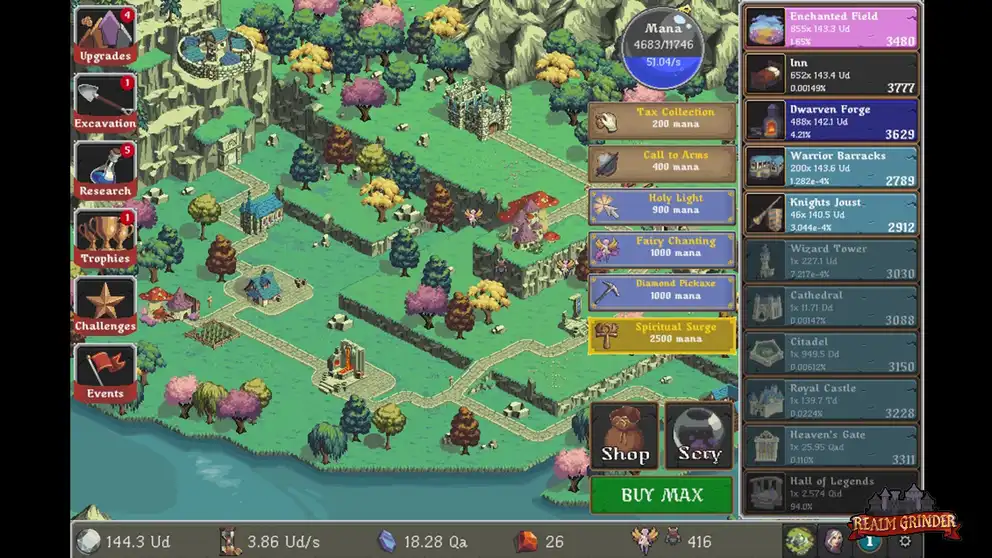
Use scenarios: MMOs, single-player RPGs, mobile games
MMOs rely on large-scale, persistent worlds where players repeatedly perform tasks to earn gear, reputation, and resources that unlock higher-tier content. Typical MMO grinding includes daily quests, faction rep grinding, dungeon runs for loot, crafting mats, and raid preparation, all designed to sustain a predictable play rhythm and social engagement.
Single-player RPGs use grinding to reinforce progression through power spikes, new skills, and accessible builds. Players revisit dungeons, farm equipment for skill trees, and chase rare drops to unlock narrative moments and endgame capabilities.
Mobile games and gacha experiences capitalize on short sessions and monetization tied to time spent grinding, with energy systems, daily tasks, and limited-time events that reward cosmetic items or premium currency. Across platforms, designers balance pacing, provide optional paths, and ensure that progression remains satisfying without excessive repetition.
MMOs
MMOs commonly implement grinding as a core tempo. Players repeat mob-clearing routes for experience, gold, and loot; they converge on crafted mats for gear upgrades; and they chase reputation with factions to unlock access and discounts.
Daily and weekly objectives create predictable rhythms that reward time spent with better gear, unique crafts, and prestige titles. Group content such as raid prep, dungeon farming, and world boss events adds social pressure to maintain schedules and optimize routes, while seasonal rotations refresh available goals. The combo of open-world exploration and content gating ensures players keep returning to test new strategies and exceed past milestones.
Single-player RPGs
Single-player RPGs use grinding to reinforce player agency and narrative momentum. Players revisit dungeons, farm equipment for skill trees, and chase rare drops to unlock narrative moments and endgame capabilities. Progression often ties to the main story or optional side quests, giving players the sense of growing power as they uncover lore.
Equipment upgrades, mastery ranks, and crafting recipes reward repeated exploration and experimentation with builds. Even in solo experiences, timed challenges, mastery challenges, and high-difficulty modes maintain a sense of achievement. Developers balance this loop by scaling enemies and loot so that effort feels meaningful without forcing endless repetition.
Mobile and gacha
Mobile games blend grind with short session length and monetization tied to in-app purchases. Energy systems limit actions, prompting players to return, watch ads, or spend currency to continue grinding. Daily quests, event calendars, and seasonal content push ongoing engagement while offering premium currency for faster progress.
Gacha mechanics gate items behind chance-based rewards that reflect time invested, creating excitement and occasional disappointment. Successful mobile grinding emphasizes accessibility, quick reward cycles, and clear progression ladders that players can complete in 5–15 minute sessions, with cosmetic or convenience upgrades driving monetization without derailing core experience.
Risks and player backlash (grind fatigue, pay-to-win concerns)
Grind fatigue can erode enjoyment when repetition outpaces meaningful rewards, content variety, or personal pacing. Players may perceive progression as a treadmill if milestones drag or rewards arrive too slowly, prompting churn or hostile sentiment on forums.
Pay-to-win concerns arise when power advantages hinge on purchases rather than skill or time investment, damaging trust and player retention. Balancing requires transparent progression curves, clear opt-in monetization, and an emphasis on cosmetics, convenience, or quality-of-life boosts rather than gating access to core content.
Designers should provide diverse progression paths, offer meaningful rewards for free players, and maintain robust, timely communication with the community to address concerns. Community management, data-informed pacing, and ongoing content updates help mitigate fatigue and backlash while preserving the integrity of the grind.