PvE Meaning: Player vs Environment Explained
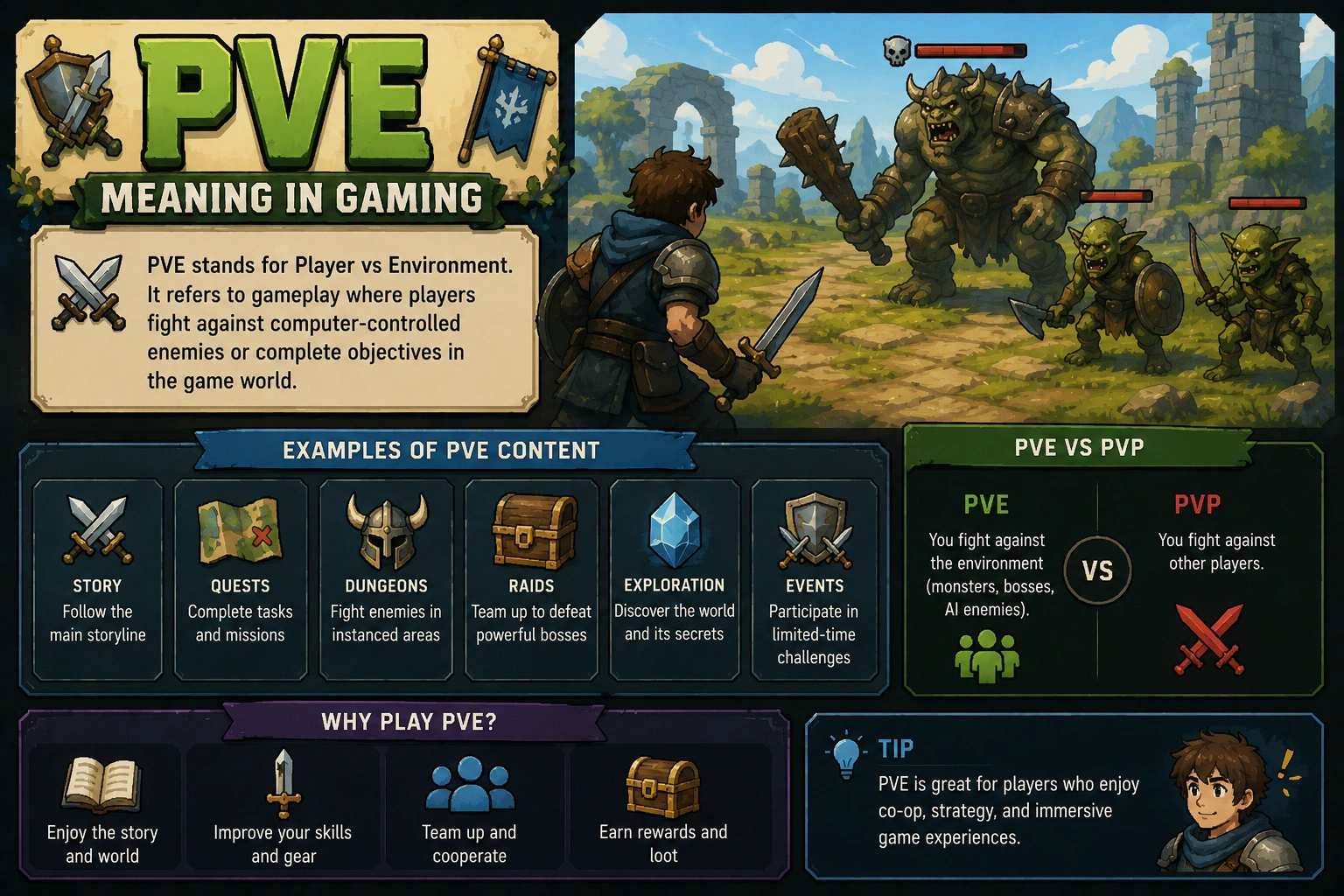
PvE, or player versus environment, defines gameplay where a player faces computer-controlled opponents and environmental challenges within a designed world. Unlike PvP, where outcomes hinge on human rivalries, PvE emphasizes strategy against AI behavior, scripted encounters, and evolving terrain that test planning, timing, and resource management. Players engage PvE through quests, dungeons, boss battles, and cooperative modes that require teamwork rather than direct player-versus-player combat. Progression systems, loot, and difficulty scaling in PvE are designed to reward skill, curiosity, and persistence, offering predictable milestones while preserving challenge across solo and group play. In modern games, PvE content blends story, exploration, and teamwork, providing accessible entry points for newcomers and deep, lasting loops for veterans seeking steady growth.
Definition and origins of PvE
PvE, standing for Player versus Environment, is a term used to describe gameplay where the primary adversaries are computer-controlled entities—monsters, traps, environmental hazards, and the game’s own systems. Historically, PvE emerged from the earliest role-playing games and multi-user dungeons, where players navigated quests, defeated NPC enemies, and progressed through levels independent of other real players. As games evolved into larger online worlds, PvE expanded to include structured dungeons, raids, open-world adventures, and scripted encounters that challenge teamwork or solo skill without direct PvP competition. Developers balance PvE through progression curves, loot tables, and difficulty settings, aiming to deliver a sense of growth while preventing frustration from excessive grind, exploitative AI, or unpredictable spawns. In modern titles, PvE coexists with PvP and hybrid modes, encouraging players to specialize in cooperative strategy, raid leadership, or solo mastery, while still rewarding exploration and narrative immersion. Thus, the PvE concept anchors many games’ design philosophies, providing reliable content streams, scalable challenges, and accessible entry points that allow players to pursue goals regardless of their preference for competitive play. Early PvE content often relied on the repeated killing of generic monsters to grind experience, but modern PvE tends to mix narrative-driven quests with dynamic events that reshuffle enemy spawns and treasure caches. Raid ecosystems, for instance, demand roles such as tank, healer, and damage dealers, while bosses enforce patterns requiring coordination, communication, and contingency plans, often spanning several hours and offering meaningful loot upgrades. Open-world PvE invites exploration and flexible pacing, letting players roam ecosystems, encounter world bosses, undertake optional quests, and stumble upon crafting nodes, hidden discoveries, and seasonal events that renew play value over time. Cooperative PvE further emphasizes social mechanics—team contingencies, role juggling, and shared loot distribution—while instanced content provides controlled environments sized for small groups, isolating encounters from the wider server population. The pacing of PvE experiences often balances risk and reward, scaling enemy power as players accumulate gear, skills, and knowledge, thereby sustaining challenge without tipping into frustration. Additionally, loot systems—ranging from straightforward currencies to randomized drops and tiered sets—give players tangible goals and milestones that chart their progress through a game’s broader PvE arc. Understanding PvE origins helps players appreciate why many modern games provide a spectrum of content, from quick missions to epic campaigns, all anchored in challenging interactions with computer-controlled adversaries.
PvE vs PvP: key differences
PvE vs PvP is a fundamental contrast in game design, pitting AI-controlled environments against live human competition to shape the player’s experience. In PvE, outcomes depend on player skill, strategy, and knowledge of scripted patterns, with predictable enemy behavior and balanced loot that scales to a group or solo effort. In PvP, outcomes hinge on timing, reflexes, communication, and perhaps the psychology of opponents, with competitive matchups, meta strategies, and fluctuating player talent creating a dynamic ladder. PvE tends to emphasize cooperation in team-based modes, progression systems, and cohesive roles, while PvP often highlights competition, risk versus reward, and the potential for disruption by disruptive players. Many games blend both styles, offering separate PvE dungeons and PvP arenas, and they balance rewards, matchmaking, and progression so that players can switch between modes without losing identity. Understanding the distinction helps players align playtime with goals—whether chasing story-driven adventures in PvE or climbing rankings in PvP. PvE’s enemies are designed to teach mechanics through telegraphed cues, environmental hazards, and boss phases that require coordination, anticipation, and patience from the entire team. PvP worlds introduce unpredictability, latency considerations, and the possibility of counterplay in real time as players adapt to human opponents. Loot in PvE is typically deterministic or tiered by drops and bosses, while PvP loot often emphasizes crafting materials, ranking rewards, and ephemeral bonuses tied to competitive seasons. Difficulty pacing in PvE can be tuned with options like normal, hard, or nightmare modes, whereas PvP often relies on matchmaking queues that balance teams by rating and skill. Community dynamics differ as well: PvE communities focus on cooperation, raid leadership, and role specialization, while PvP communities celebrate rivalries, tournaments, and the social pressure of tournament play. In modern games, players may rotate between modes to keep skills fresh, practice timing, and test builds against both AI bosses and human opponents to maximize growth.
Types of PvE content (PvE modes)
PvE content can be categorized into several broad formats, each with unique pacing, crowd dynamics, and progression rewards. The most common formats are captured in the following subtypes, with raids as a subset of structured, team-focused encounters.
- Coordinated multi-boss encounters require precise timing, role swaps, and clear signal calls to manage aggro, interrupt dangerous abilities, and transition smoothly between boss phases.
- Environmental hazards, add mechanics, and enrage timers push teams to coordinate cooldowns, movement, and positioning while maintaining uptime on tanks and healers.
- Loot progression incentivizes access to raid-tier weapons and accessories, with bonus rolls, rarity upgrades, and crafted components that sustain long-term participation across several cycles.
- Communication protocols, raid leads, and trained roles create a disciplined workflow that translates teamwork into reliable execution, adaptive strategies, and a shared sense of achievement after victories.
Raids and dungeons emphasize coordinated team play and complex mechanics. Open-world PvE invites exploration and flexible pacing, letting players roam ecosystems, encounter world bosses, undertake optional quests, and stumble upon crafting nodes, hidden discoveries, and seasonal events that renew play value over time. Cooperative missions and instances emphasize teamwork with objective-based goals, synchronized timing, and shared rewards. Players often enter separate servers or instanced zones to focus on specific challenges, avoiding interference from the larger population. These formats reward planning and communication, encouraging players to optimize roles, callouts, and cooldown management to complete tasks under time pressure. Solo PvE focuses on personal progression through scripted encounters, puzzles, and narrative arcs, offering a controlled pace and opportunities to master mechanics without relying on others. These experiences suit players who prefer solo play or who want to practice builds and timing in a low-pressure setting. Open-world PvE fosters a wide variety of exploration opportunities, world events, and emergent play, while cooperative missions emphasize teamwork and instanced experiences. Solo PvE content also lets players pursue unique narratives independent of group constraints.
Why players enjoy PvE
PvE resonates with a broad audience because it offers predictable, trackable progression and the satisfaction of overcoming challenges through skill refinement. Many players appreciate the opportunity to learn enemy patterns, master tactical rotations, and earn meaningful loot without the pressure of rival competitors. The cooperative aspect of PvE fosters social bonds, guild participation, and shared goals, turning raids, dungeons, or long questlines into community experiences rather than solitary quests. Storytelling and world-building in PvE are often more prominent than in PvP, allowing players to engage with lore, character arcs, and environmental storytelling while progressing through stages. The pacing of PvE can be tuned by difficulty settings, rewards, and matchmaking, providing access for newcomers while maintaining a challenge curve for veterans. For competitive players, PvE can still satisfy competition through speedruns, high-difficulty clears, or community rankings, illustrating that PvE and PvP are not mutually exclusive. Finally, the loot and gear systems in PvE offer tangible milestones that mark growth, enabling players to visualize progress as they complete campaigns, clear raids, or finish seasonal events. In short, PvE is not just about fighting monsters; it is about mastering systems, collaborating with others, and enjoying a curated journey from start to finish. As players complete stories, unlock lore-rich rewards, and conquer endgame challenges, PvE content cements its role as the backbone of many game ecosystems.
Key Features and Technical Specifications
PvE, or player versus environment, is a core game mode where players face AI-controlled foes and complete quests rather than competing against other players. In PvE game mode, teams tackle a variety of PvE activities—from story-driven campaigns and PvE dungeons to PvE boss battles and cooperative raids—collecting loot and advancing through progression. These PvE activities reward strategic planning, precise execution, and efficient resource management as players navigate encounter design, pacing, and environmental challenges. Understanding PvE mechanics, AI behavior, and progression is essential for mastering cooperative PvE gameplay and maximizing PvE rewards across titles and genres.
Core gameplay mechanics in PvE
Core gameplay mechanics in PvE are the heartbeat of any cooperative experience. These mechanics shape how players engage with enemies, navigate environments, and pursue objectives across PvE content such as dungeons, raids, and story missions.
- Engagement with AI-controlled enemies requires positioning, attack timing, and resource management, encouraging players to read telegraphs, exploit weak points, and coordinate cooldowns within a dynamic arena.
- Questing and objective systems drive progression, guiding players through lore-rich stories, optional side missions, and exploration that rewards experience, currency, and unique items.
- Loot and gear loops emphasize drops, crafting, and stat optimization, nudging players toward powerful builds while balancing rarity, set bonuses, and gear progression across PvE content.
- Boss mechanics and encounter design test coordination through phase changes, environmental hazards, and multi-target threats that require adaptive tactics and team communication.
- Cooperative gameplay roles and communication are essential, with players filling tank, healer, damage dealer, or crowd-control slots to survive challenging encounters.
Mastering these mechanics enables teams to align roles, optimize cooldowns, and coordinate resources during increasingly difficult encounters. Teams that synchronize actions consistently see smoother boss fights and clearer paths to progression in PvE activities.
AI behavior and scripts
AI behavior in PvE varies widely to create different pacing and challenges.
| AI Type | Decision Triggers | Typical Behavior | Difficulty Level |
|---|---|---|---|
| Simplified AI | Line of sight and proximity | Basic attack patterns with limited reactions | Low |
| Scripted Pathfinding | Predefined routes and timed events | Chases players along fixed paths and triggers traps | Medium |
| Reactive AI | Player actions and environment changes | Adapts tactics, uses cover, calls for help | High |
| Boss AI patterns | Phase shifts and enraged timers | Complex sequences with multi-stage fights | Very High |
These patterns help players craft effective PvE strategies and compare experiences across games. This knowledge also informs team composition and role assignments in PvE cooperative gameplay.
Progression systems and rewards
Progression systems in PvE are designed to reward players for time invested and tactical decisions. Most titles feature a leveling curve that unlocks new abilities and talents, opening up more complex PvE challenges as players grow stronger. Loot and gear loops emphasize drops, crafting, and stat optimization, nudging players toward powerful builds while balancing rarity, set bonuses, and gear progression across PvE content. Currency, reputation, and crafting systems add depth by enabling gear upgrades, cosmetic rewards, and access to higher difficulty tiers. Additionally, progression pacing is tuned to balance short-term satisfaction from daily objectives with long-term goals such as endgame raids and PvE progression ladders. Finally, many games integrate seasonal or rotating PvE rewards that refresh challenge sets, ensuring ongoing engagement and meaningful progression over time.
Difficulty scaling and matchmaking
Difficulty scaling in PvE is a balancing act between challenge and accessibility. Dynamic scaling adjusts enemy health, damage, and encounter complexity based on player count, gear level, or difficulty mode, ensuring meaningful threats for solo players and groups alike. Many titles introduce multiple difficulty tiers, each with tuned enemy resistances, boss phases, and loot tables to reward perseverance. Matchmaking systems pair players of similar skill, gear, and progression to maintain competitive parity without sacrificing group cohesion. Some games offer opt-in difficulty modifiers or challenge modes that radically alter encounter design, encouraging experimentation with new builds and strategies. Effective PvE strategy includes selecting appropriate team compositions, communicating roles, and pacing fights to prevent overextension. The balance between solo accessibility and group challenge shapes the long-term health of PvE communities by encouraging both individual skill development and cooperative coordination.
PvE Performance and Security Benefits
PvE performance and security are essential to delivering reliable and engaging experiences in Player vs Environment game modes. Smooth latency, stable tickrates, and optimized networking ensure that AI enemies respond predictably during PvE boss battles and PvE dungeons. Security measures such as server authoritative logic and anti cheat tooling protect the integrity of PvE rewards and progression in PvE activities. Scalability strategies like dynamic load balancing and regional hosting keep PvE cooperative gameplay fluid as player counts grow and new PvE content is released. Together, performance and security improvements create a trusted environment where players can enjoy PvE progression and PvE challenges without fear of unfair advantages.
Performance considerations for PvE (server, client)
In PvE game mode, latency and tickrate matter because AI enemies, quest triggers, and team actions are processed on the server and reflected back to every client in a predictable rhythm. Smooth synchronization is especially important during PvE boss battles where precise timing of boss phases, telegraphs, and raid wide mechanics can mean the difference between success and failure. When teams coordinate dps windows and crowd control setups, even small timing discrepancies can cascade into wipes or longer run times. To support reliable PvE activities, developers optimize networking stacks, reduce unnecessary data, and employ client-side prediction with server reconciliation.
Tickrate, network prediction, and server tick duration directly influence hit registration, spell effects, and AI behavior in PvE activities. A higher tickrate reduces perceived latency and helps teams coordinate crowd control and damage rotations through PvE dungeons and PvE boss battles, while balancing calculations must consider hosting dozens to hundreds of concurrent players. Objective checks for rewards and quest progress rely on precise timing as well, so optimization is essential for a fair, responsive experience in PvE challenges.
Optimization also covers content delivery, asset streaming, and level of detail to maintain consistent frame rates across varied hardware. Networking best practices include delta compression and event batching to ensure critical actions are delivered promptly while non essential visuals are managed. Additionally, load testing that simulates PvE co-op sessions helps identify bottlenecks in pathfinding, spawn logic, and treasure distribution. By focusing on these performance improvements, studios can expand PvE dungeons and PvE campaigns to broader audiences seeking PvE cooperative gameplay.
Monitoring and telemetry are vital for ongoing performance in PvE content. Real time dashboards track latency distributions, tick mismatches, and packet loss, while post game analyses help tune difficulty and pacing. A well tuned PvE experience supports progression, rewards, and reliable PvE cooperative gameplay across patches and expansions.
Security and anti-cheat in PvE
Security and anti-cheat in PvE are essential to maintain fair cooperative gameplay, ensuring that PvE rewards, quest progress, and boss mechanics reflect genuine effort rather than automation or manipulation. The following vectors represent common cheat patterns seen in PvE communities and the mitigations that teams deploy to counter them:
- Client-side speed hacks and rapid-fire exploits aim to outpace boss mechanics or dps windows; server authoritative checks and strict input validation prevent these from altering outcomes.
- Aimbotting and auto-aim for ranged PvE combat undermines player skill; robust hit validation, server-side calculation, and anomaly detection maintain challenge without overbearing false positives.
- Loot manipulation and item duplication attempts threaten progression; server-side verification of drops, loot integrity, and cryptographic signing safeguard rewards and preserve the economy.
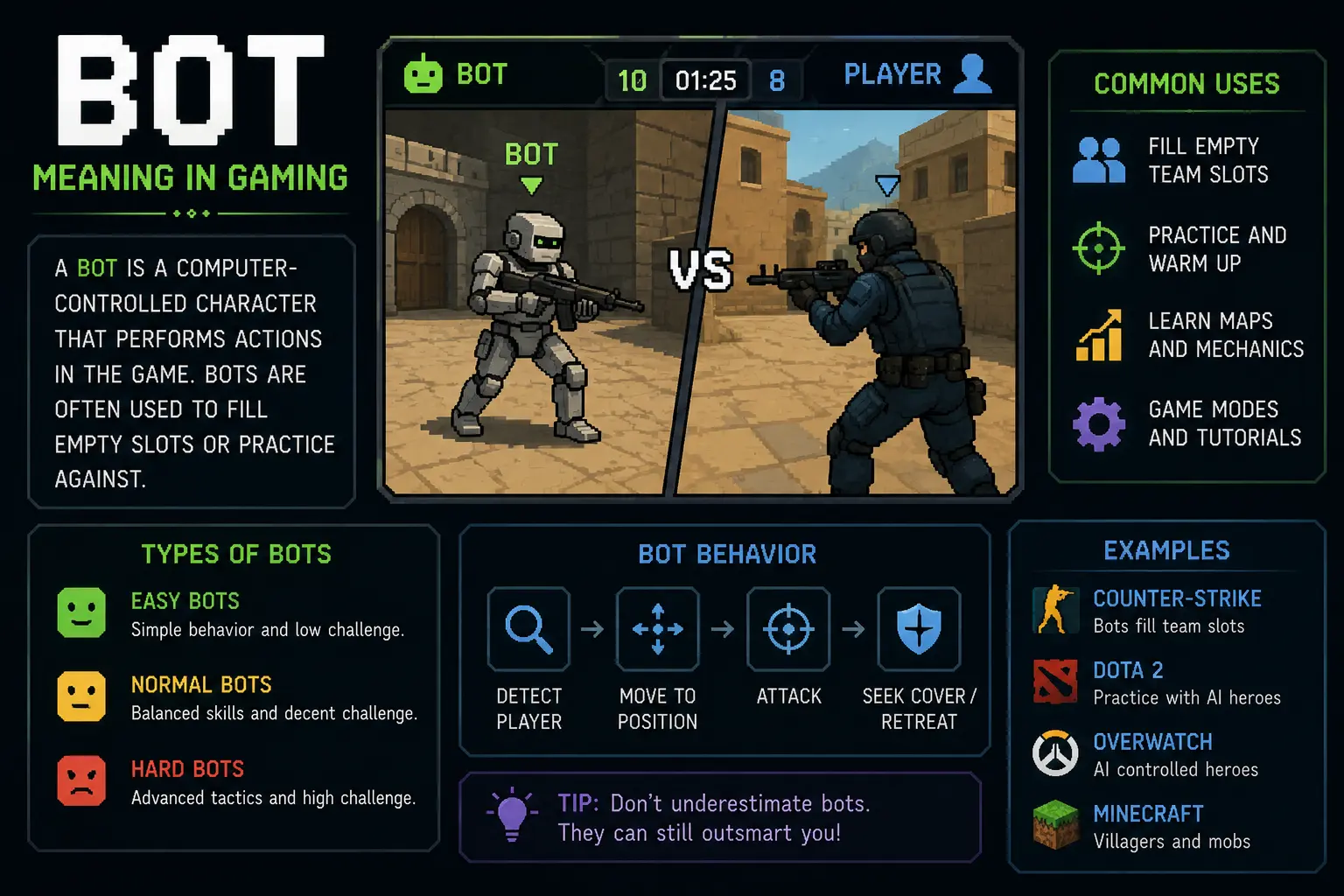
- Automation through bots for repetitive PvE farming distorts economies and progression; behavioral analytics, session monitoring, and CAPTCHAs help distinguish human players from automated activity.
- Memory editing and trainer tools risk bypassing cooldowns and resource caps; obfuscated assets, tamper-resistant clients, and encrypted communications reduce exposure.
- Exploits in quest scripting and event timing risk desynchronization; continuous server checks, replay protection, and tamper-resistant logs help maintain consistency across PvE storylines.
Mitigation strategies rely on layered defense: preventive, detective, and responsive controls. Preventive measures include secure authentication, obfuscated code, and minimal client trust. Detective measures monitor for anomalies in play patterns. Responsive measures involve automated suspensions, player appeals, and timely updates to detection rules. These layers help maintain a dynamic but fair PvE environment.
Cooperation with the community fosters faster identification of cheats; bug bounty programs, public test servers, and transparent patch notes enable players and developers to collaborate on security without sacrificing gameplay quality. In practice, anti-cheat in PvE balances risk and reward, focusing on prohibiting unfair advantages while avoiding over policing non-cheating players.
Security considerations also include privacy, data minimization, and secure telemetry practices to respect players while enabling effective protection. Ongoing investments in anti-cheat technology are balanced against the need to preserve smooth gameplay and positive player experiences in PvE cooperative gameplay.
Stability and scalability for PvE content
Stability and scalability for PvE content require careful planning of server architecture, data consistency, and fault tolerance as new content ships. Teams designing PvE progression and PvE activities must plan for spikes in concurrent players, especially during events and PvE boss battles that draw crowds. Architectural choices such as stateless services, event-driven microservices, and distributed databases help separate concerns and improve resilience. By employing region-based hosting, load balancing, and caching, publishers can provide consistent experiences for PvE questing and raid encounters across geographic areas.
Scaling strategies include dynamic autoscaling groups, sharded worlds, and edge caching to reduce latency and server load. A combination of regional data centers and cross region replication supports reliable PvE cooperative gameplay during peak hours while limiting the risk of single point failures. Failover plans, data backups, and disaster recovery drills ensure that PvE content remains accessible even after hardware or network incidents. These approaches balance PvE difficulty and progression by maintaining stable performance through PvE boss battles and PvE challenges.
To ensure uninterrupted PvE experience, developers implement fault tolerance at multiple layers, including rated retries, idempotent operations for quest progress, and graceful degradation when services momentarily fail. Content deployment pipelines favor canary releases and blue-green testing to minimize user impact during PvE updates. High availability for lobbies, instance creation, and loot distribution is essential for sustaining PvE cooperative gameplay without abrupt disconnections.
In practice, stability and scalability work hand in hand with player expectations for PvE rewards, PvE progression, and consistent PvE content pacing. By planning ahead for traffic, coordinating with cloud providers, and continuously testing under realistic workloads, teams can deliver reliable PvE experiences that scale with the size of PvE communities.
Offers, Pricing, and Onboarding
PvE stands for player versus environment, and it drives a wide range of gameplay experiences beyond direct PvP competition. In PvE, players tackle AI-driven enemies, complete quests, explore stories, and cooperate with others to overcome challenges. This section outlines how offers, pricing, and onboarding influence access to PvE activities like PvE dungeons, PvE boss battles, and PvE rewards. Understanding these elements helps players plan progression, select a game mode that fits their PvE strategies, and know what to expect from ongoing PvE cooperative gameplay.
Monetization models for PvE games
Monetization models in PvE games influence access to new content and the ongoing development of PvE activities. The table below covers common models, their price ranges, and likely effects on PvE progression, gear rewards, and cooperative gameplay.
| Model | How it works | Typical price | Impact on PvE players |
|---|---|---|---|
| Cosmetic DLCs | Skin packs and outfits that do not modify gameplay | $4–$25 per bundle | Low impact on progression; preserves balance; appeals to cosmetic-focused players |
| Season Pass / Battle Pass | Tiered rewards across a season; includes free and paid tracks | $9.99–$14.99 per season | Encourages PvE activities and progression by completing quests and challenges |
| Expansion packs | New dungeons, storylines, bosses and gear | $14.99–$39.99 | Deepens PvE content and adds rewards; can shift balance and content scope |
| Subscriptions or VIP access | Monthly access granting early access, boosts, or exclusive areas | $9.99–$19.99 per month | Provides steady revenue and ongoing cooperative PvE opportunities; may affect pacing |
Understanding these models helps players anticipate how PvE rewards and progression may shift under different monetization schemes. Readers can compare titles to find a balance between engaging PvE content and fair monetization.
Starter guides and onboarding for new PvE players
Starting in a PvE focused game means learning both the environment and the systems that reward your time. For new players, clear onboarding reduces friction as you discover how PvE game mechanics work, including questing, dungeons, and the paths to gear and experience. Look for a gentle introduction to combat rhythms, enemy tells, and loot paths, and seek early missions that demonstrate how progression feels in PvE content. Early dungeon runs and story quests provide immediate feedback on your character and team dynamic, showing how gear and upgrades translate into stronger options for tackling PvE boss battles. A well designed onboarding flow helps newcomers chart a path through PvE progression while preserving the challenge that makes PvE compelling.
Important onboarding elements include guided tutorials, in game glossaries for PvE terms, and accessible difficulty options. Players should experience a mix of PvE questing, PvE activities, and PvE loot and gear to understand how rewards scale with effort. Clear indicators for friendlies and foes, loot drops, and upgrade paths connect player decisions to long term PvE rewards. Co op PvE experiences often rely on communication and role clarity; onboarding should encourage players to discuss team compositions, callouts for boss phases, and strategies for escalating difficulty levels. As you progress, a smart onboarding curve introduces more complex PvE encounters, such as PvE dungeons and group boss fights, while preserving an approachable pace.
Beyond initial tutorials, ongoing onboarding should reinforce core strategies for PvE activities. Players unfamiliar with the environment can benefit from a starter guide that explains how to balance risk and reward, select appropriate gear, and coordinate with teammates. The best PvE onboarding includes short practice runs, annotated maps, and quick access tips on crowd control, healing rotation, and resource management. It should also highlight social features, enabling players to join existing teams, join a starter party, and learn about PvE challenges that test teamwork. By emphasizing allied play and consistent progression benchmarks, onboarding reduces churn and encourages players to explore PvE content like PvE boss battles, PvE dungeons, and PvE events with confidence.
Finally, onboarding benefits from accessible documentation and in game help. A concise glossary, a FAQ aligned with PvE game mechanics, and a straightforward path to practice runs make it easier to adopt PvE strategies without information overwhelm. As players complete early objectives, reward structures should reinforce positive feedback—tangible gear, experience, or cosmetic unlocks tied to milestone PvE rewards. When onboarding is successful, new players feel invited to participate in PvE activities, understand the cadence of PvE progression, and recognize how PvE resources support social play and cooperative gameplay. The result is a smoother transition from curiosity to consistent participation in PvE content, including PvE cooperative gameplay sessions, reliable PvE loot, and balanced PvE challenges tuned for beginners and veterans alike.
Free vs paid content and season passes
Free content updates provide ongoing PvE challenges and story progression without requiring an upfront purchase. This approach keeps players engaged with new PvE activities, balanced scaling, and fresh rewards that fit into a title’s PvE progression loop. Paid content, such as season passes and expansions, typically adds deeper PvE stories, new dungeons, tougher boss battles, and unique gear that can accelerate progression but may raise the entry bar for casual players. A season pass often includes a free track and a paid track, with the latter offering enhanced PvE rewards, cosmetics, and temporary access to special events. Both free and paid content can coexist to sustain cooperative PvE gameplay while giving players clear choices about how to invest time and money in their PvE journey.
Season passes provide a structured cadence for PvE challenges, pushing players to engage with PvE questing and activities on a defined schedule. This model supports ongoing PvE rewards and loot and gear progression while maintaining a steady revenue stream for developers. DLCs and expansions extendPvE storylines and environments, offering longer term PvE progression and new PvE encounters that can shift balance and team strategies. For players, the decision to engage with free updates or to purchase season passes or expansions often hinges on perceived value, the quality of new PvE content, and how well the content aligns with their preferred PvE strategies, such as cooperative PvE gameplay, PvE boss battles, and progression paths.
Balancing these models is crucial to avoid gatekeeping essential PvE content behind paywalls, while still rewarding regular contributors who invest in longer term PvE experiences. Transparent communication about what is included in free updates, what requires a season pass, and what is offered in paid DLC helps players plan their PvE activity calendar and maintain trust in the game ecosystem. Ultimately, the right mix of free and paid content supports PvE accessibility, sustains ongoing PvE challenges, and preserves a healthy, cooperative environment for PvE players across skill levels.