AoE Meaning Overview
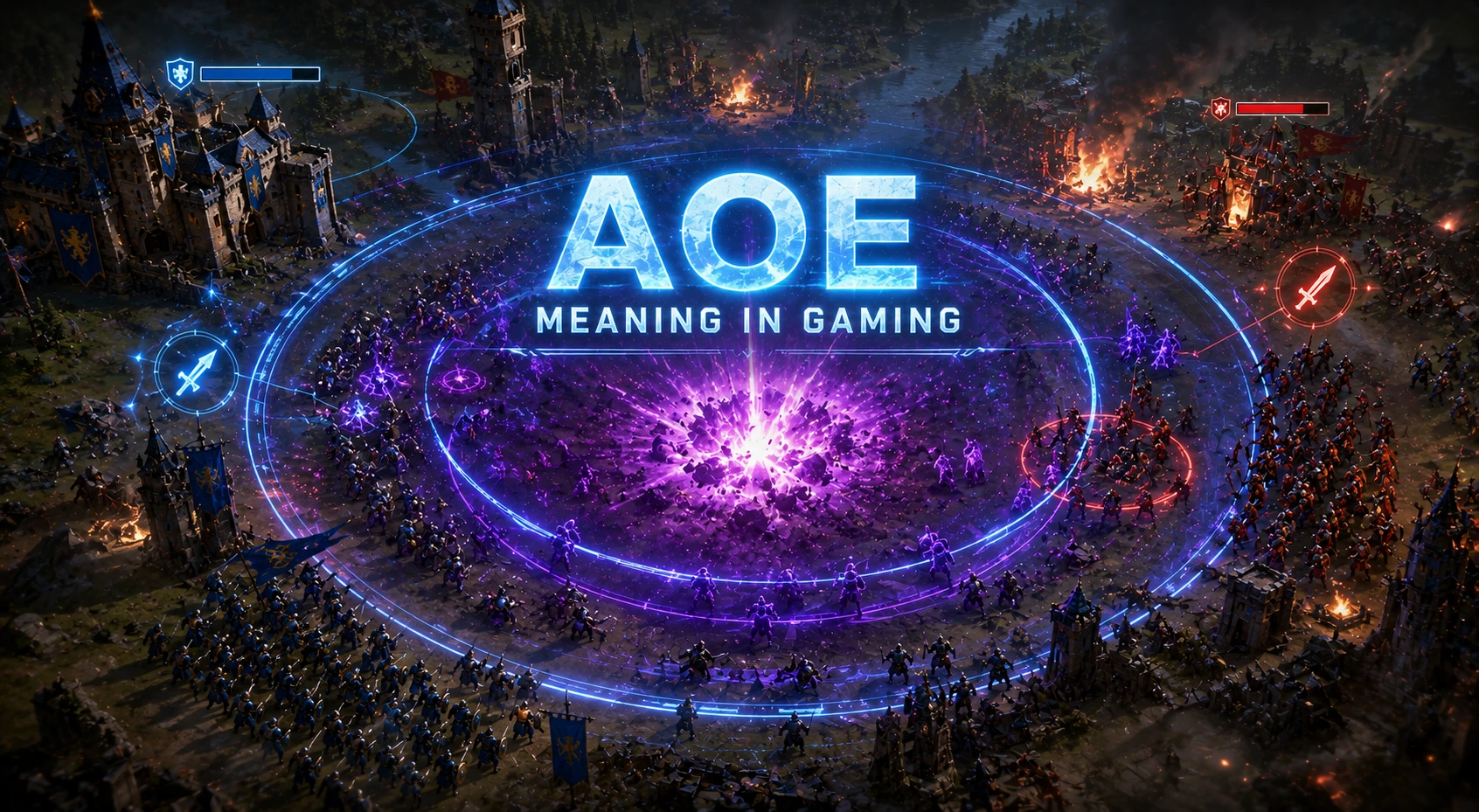
AoE stands for Area of Effect, a term used to describe attacks or abilities that affect multiple targets within a defined area. Understanding AoE is central to mastering many genres, from MOBAs and RPGs to strategy and shooter games, because it changes how players position, time casts, and prioritize threats. This overview breaks down the core concept, common categories, and practical implications of AoE for both players and teams. We will also explore how AoE interacts with cooldown management, crowd control, and damage mitigation to shape competitive play. By learning the differences between single-target and AoE abilities, players can optimize damage output and avoid friendly-fire pitfalls.
Definition of AoE in Gaming
AoE stands for Area of Effect, a term used to describe abilities that affect more than one target within a defined space rather than a single foe. In practice, an AoE spell or attack will impact every enemy caught inside its radius, cone, or line, and may also affect allies if the design allows friendly zones. The term is widely used in gaming communities and guides, and you may see it written as AoE or AOE casually; both refer to the same concept. The shapes of AoE zones vary by game, with circular or spherical areas common in many RPGs and MOBAs, cone shaped blasts that sweep forward, or linear beams that strike along a path. The size of the effect, typically described as a radius or width, depends on the ability level, character stats, or equipment bonuses, and can scale with talent trees or item effects. Some AoE effects apply damage immediately, while others deal damage over time, heal or shield multiple allies, or apply buffs and debuffs to everyone within the zone. The timing of activation matters as much as the radius: a wind-up or cast time can be the difference between landing a critical hit and wasting a cooldown. In team play, AoE can create safe zones for allies, zone out enemies, or punish grouped opponents during skirmishes or large team fights. Because AoE strengths come with tradeoffs, players weigh factors such as mana or ammunition cost, cooldowns, line of sight, battlefield terrain, and favorable matchups when deciding where and when to cast. Understanding how crowd control interacts with AoE is also important, since CC can amplify the impact by holding enemies in place while your area lands. You should study common AoE ranges in your favorite games, then practice precise spacing so your casts hit clustered targets rather than scattered ones. In practice, the value of any AoE is not just the raw numbers but how reliably you can reproduce its effects in battles, raids, and ranked matches. Different genres use AoE differently; in shooters, grenades and incendiary sprays create space; in strategy games, artillery barrages shape frontlines; in RPGs, mass area spells give parties a chance to recover between skirmishes.
Types of AoE effects (damage, heal, buff/debuff)
AoE effects come in several core types, each with distinct mechanics and strategic implications. The table below outlines common categories and how they typically function in games.
| AoE Type | Mechanics | Typical Examples |
|---|---|---|
| Damage AoE | Deals area-wide damage to all targets within the radius, may include falloff or periodic ticks | Large explosions, firestorms, or meteor-like blasts |
| Healing AoE | Heals multiple allies inside the zone, sometimes scaling with missing HP or max HP | Mass heals or healing auras during boss fights |
| Buff AoE | Grants positive effects to allies within area, such as attack speed or damage boosts | Aura buffs from support characters and team-wide shields |
| Debuff / Crowd-control AoE | Imposes status effects like slow, silence, or stun on enemies in the area | Slow zones and stun fields in various games |
Understanding these categories helps players anticipate responses and coordinate team actions.
Examples from Popular Games
Examples from popular games illustrate how AoE is implemented across genres. The following bullets showcase distinctive uses that highlight zoning, healing, buffs, and crowd control in action.
- MOBA team fights frequently center around skillshot and auto attack combos that exploit well-timed AoE spells to zone enemies and secure objectives while protecting allies.
- In arena-style games, AoE heals and buffs frequently define pacing, allowing squads to sustain through clustered harm while pressuring opponents with well-timed positioning.
- RPGs often use large-area spells to shape exploration and party dynamics, where everyone is watching for complementing ranges, resistances, and safe zones to maximize survivability.
- Strategy games balance broad convoys of artillery and infantry with siege engines, so AoE choices influence map control, resource allocation, and enemy breakout moments.
- Truly effective AoE in popular titles relies on timing, radius, and environmental cues, ensuring area effects punish enemies without turning friendly units into collateral.
These examples demonstrate how AoE shapes team fights, map control, and resource management in real titles.
How AoE differs from Single-target abilities
AoE abilities deal damage or utility to multiple targets within a defined area, while single-target abilities focus on one enemy or a specific ally. This fundamental difference drives a large portion of strategic decision-making in every genre. When you cast AoE, you aim to maximize impact on clustered foes, but you risk hitting your own team if spacing is poor or if allies stand within the area. In many games, larger radii come with higher mana costs, longer wind-up times, or increased cooldowns, so players trade reach for reliability. Single-target abilities often deliver higher raw damage or utility per cast, but require multiple casts to clear a group, which can delay objective pressure or create windows for the enemy to reposition. The choice between AoE and single-target depends on threat density, crowd control availability, ally positioning, and the objective at hand. In team fights, a well-timed AoE can swing the engagement by applying damage, healing, or buffs to several allies while debuffing enemies, but misplacement can leave the team exposed or waste valuable resources. Radius, shape, and timing matter: circular areas catch more enemies, cones punish runners, and lines threaten forwards. Quick and accurate execution separates good players from great ones, as tempo often determines whether your team keeps pressure or resets. The best players learn to weave AoE with targeted skills, so their output scales with the number of affected targets. Finally, understanding the interplay between AoE and movement, line of sight, and enemy counterplay is essential for translating raw stats into strategic advantage in both competitive and casual play.
Core Features and Benefits of AoE Explanation Service
AoE explanations translate a core gaming concept into clear, actionable insight for players, designers, and content creators. By breaking down area of effect into observable mechanics, we help readers understand how zone size, timing, and targeting shape every encounter. This service highlights how AoE effects alter pacing, positioning, and team coordination, turning abstract terms into practical guidance for in-game decision making. We also connect AoE theory to real-world gameplay examples, so readers can apply concepts to familiar titles and future titles with confidence. With a focus on readability, SEO-friendly phrasing, and accurate terminology, the explanation aligns with player expectations and developer concerns while supporting sustainable traffic growth.
Why AoE matters in gameplay
AoE matters in gameplay because it expands strategic space beyond single-target threats, enabling players to influence groups of enemies, allied positioning, and the tempo of encounters. When an ability covers a radius or a zone, it changes how combat flows, encouraging players to think in area, not just line by line. This shifts attention toward positioning, spacing, timing, and geometry, so victory often comes from controlling space while mitigating risk. AoE tools create windows where mismatches between offensive pressure and defensive setup are exposed, rewarding anticipation and teamwork. In many games, Area of Effect effects provide both utility and raw damage, letting sustain and aggression coexist and trade off against one another. They also influence enemy behavior. Opponents must decide whether to stay clustered for maximum output or break apart to minimize exposure, which in turn shapes camp routes, retreat patterns, and rotation timing. Because AoE can punish tunnel vision, experienced players learn to read indicators such as wind-up cues, cast zones, and telltales of impending bursts, turning hesitation into opportunity. Visual clarity matters here; well-communicated cues, crisp hitboxes, and intuitive range indicators help players forecast outcomes and coordinate responses with teammates. When designers balance these aspects well, AoE becomes a core lever for pacing, risk, and engagement, not a liability that drains attention. From a player experience standpoint, AoE interactions often feel cinematic and consequential. They create memorable moments when careful positioning blends with well-timed casting to swing a fight in a single moment, while poor execution can lead to over-commitment and costly mistakes. The appeal lies in mastering the choreography of space, timing, and resource management under pressure. In co-op scenarios, AoE forces teams to practice stacking, spacing, and callouts to avoid overlapping effects that waste damage or trigger friendly-fire penalties. In competitive contexts, the reliability and predictability of AoE effects become a measure of a player’s or team’s plan refinement, reflexes, and collaborative discipline.
Tactical advantages and drawbacks
In practice, AoE decisions shape how players read the battlefield, manage space, and time their actions around evolving threats, requiring quick spatial awareness, precise timing, and the ability to visualize multiple impact zones even as the fight shifts rapidly, while accounting for the positions of teammates, enemies, and environmental hazards that can alter line-of-sight and collision dynamics.
The strategic value of area-based effects emerges not only from raw damage but from forcing opponents to adapt their routes, seek safe lines, and coordinate with teammates to maximize impact while preserving personal safety and resource economy during extended engagements, which in turn influences callouts, pacing, and tempo across a whole match.
- Predictable patterns let teams line up safe zones and maximize damage, turning chaotic skirmishes into coordinated pushes that punish isolated targets.
- Timing AoE windows introduces metagame decisions about cooldown management, trading, and balancing risk versus reward in both solo and team-based encounters.
- Positioning and spacing become core skills as players learn to avoid trap zones, while damage dealers optimize placement to maximize hits without overextending.
- AoE utility often blends with crowd control, enabling combos such as stuns followed by area damage, or heals synchronized with allies in danger.
- Counterplay opportunities arise as opponents learn to dodge, kite, or interrupt channels, adding depth to the strategic layer beyond raw damage output.
- Terrain denial and obstacle placement can funnel enemies into kill zones, creating opportunities for double AoE damage or weapon-proc synergies.
- Resource constraints like mana or cooldowns shape when and where AoE is deployed, encouraging thoughtful sequencing rather than indiscriminate usage.
Yet the effectiveness of AoE is highly contextual, relying on map geometry, target clustering, and the tempo of engagements, so teams must adapt their plans rather than rely on brute force, accounting for terrain elevation, line-of-sight blocks, and the likelihood of follow-up actions from allies that can amplify or dampen the impact. Balancing these forces requires clear feedback, predictable hitboxes, and options for counterplay, ensuring that players feel rewarded for skill while avoiding frustrating, opaque interactions that erode trust, confuse newcomers, or collapse strategic depth into a single button-mush approach.
Balancing AoE also involves enemy reactions and counterplay. If AoE is too easy to dodge or too punishing to resist, it disrupts pacing. Conversely, if it locks teams into repetitive patterns, the game may feel stale. Designers should consider diminishing returns for overlapping effects, physics-based reactions, and the interplay with crowd-control or defensive mechanics to promote dynamic exchanges rather than static sequences. Finally, thorough playtesting across modes, maps, and difficulty levels helps ensure that AoE remains a meaningful choice rather than a forced playstyle.
Design considerations for developers
Designing AoE systems requires balancing power, precision, and player perception. The radius of an AoE effect should reflect its intended threat zone and the scale of the battlefield, with larger radii offering broader control but increasing the risk of friendly-fire and frustrating targets. Targeting rules must be unambiguous; intuitive targeting helps players learn how to chain abilities, aim at the right moment, and coordinate with allies. Developers should implement clear visual and audio cues that communicate range, impact timing, and damage potential, reducing cognitive load during tense moments.
Cooldown management is a key balancing tool. Short cooldowns enable rapid toggling of control, but can encourage spam and muddy decision-making; longer cooldowns reward timing and resource planning but may reduce perceived agency. Solutions such as cooldown refunds, partial resets, or phasing can help. Resource costs, mana, energy, or stamina constraints should be aligned with the role’s expected output so that AoE abilities complement rather than overshadow single-target tools.
UX and accessibility must be central. That means scalable UI indicators for different screen sizes, colorblind-friendly palettes for range and impact indicators, and the option to display or suppress ambiguous visual effects to support players with sensitivity to motion. Performance considerations matter too: complex particle systems and dense zone visuals can impact frame rates; developers should optimize effects and provide quality settings without compromising clarity.
Balancing AoE also involves enemy reactions and counterplay. If AoE is too easy to dodge or too punishing to resist, it disrupts pacing. Conversely, if it locks teams into repetitive patterns, the game may feel stale. Designers should consider diminishing returns for overlapping effects, physics-based reactions, and the interplay with crowd-control or defensive mechanics to promote dynamic exchanges rather than static sequences. Finally, thorough playtesting across modes, maps, and difficulty levels helps ensure that AoE remains a meaningful choice rather than a forced playstyle.
Player skill and AoE use cases
AoE use cases reveal how skill, timing, and map awareness shape outcomes, not merely raw power. In early lane phases, experienced players use small-area effects to deny space, force unfavorable trades, and establish control of the minion wave, while careless timing can invite punishments that swing the lane in the opponent’s favor. In mid-game team fights, seasoned players coordinate clustered targets with stuns, slows, and heals to maximize group damage while preventing friendly-fire, turning chaotic clashes into coordinated sequences that someone can lead. Siege encounters often hinge on predicting rotations and sealing off choke points with deliberate zone placement, denying access to crucial routes and amplifying the impact of a single well-timed cast.
PVE encounters test a different facet of AoE skill, emphasizing rhythm and reaction as bosses telegraph patterns and environmental hazards that demand precise responses. In high-skill play, players execute advanced combos that weave CC, displacement, and continuous area damage, rewarding precise timing and position while maintaining resource discipline. The best performers also manage cooldown economy, saving a potent AoE for the optimal moment rather than wasting it on a trivial opening, and coordinating with teammates through concise callouts to synchronize pressure.
Across genres, a core skill is accuracy under pressure: landing the right hit at the right moment, in the right place, with the right allies. Players learn to read density, anticipate clustering after eliminations, and pivot to safer angles when counter-plays emerge, such as cleanses or interrupts that blunt the effect of an area spell. This mastery extends to learning where and when to apply zone denial, zoning off objectives to exploit map geometry and create advantages that are not possible with single-target options. In short, AoE proficiency is a canvas on which timing, teamwork, and situational awareness paint the most impactful combat performances.
Performance Specifications and Technical Details
This section introduces performance specifications and technical details for AoE effects in gaming. It covers how circle, cone, and line shapes are calculated and how hit detection interacts with physics and networking. It also discusses optimization strategies, server client synchronization, and scaling considerations to keep gameplay fair across modes. You will find practical guidance on formulas, tables, and design pitfalls to avoid when implementing AoE mechanics. The goal is to provide a rigorous reference for developers designing Area of Effect systems in fast paced multiplayer or large scale battles.
AoE calculation methods (radius, cone, line)
This section lays out the core AoE calculation methods used in games, capturing shapes, hit detection, and practical unit conventions. The following table summarizes the common shapes and checks that determine what counts as a hit.
| Shape | Formula | Hit criteria |
|---|---|---|
| Circle (Radius) | Area = pi * r^2; dist2 <= r^2 | All units with dist to center <= r |
| Cone (Direction) | Sector area approximated; dist <= R and angle <= theta/2 | Units within radius R and in forward cone |
| Line (Beam) | Beam length L, width W; distance to line <= W/2 and projection within L | Units along the line segment with tolerance |
Below the table, note how shapes influence hit detection and why exact checks matter for gameplay fairness and performance.
Radius/Circle calculations
Radius and circle calculations address the simplest AoE form, emanating from a center. The standard check is distance-based: a unit is hit if (dx)^2 + (dy)^2 <= r^2. By using squared distances, developers avoid costly square roots on every evaluation, which is essential when hundreds or thousands of entities are checked each frame. In practice, r^2 is cached and coordinates are stored in the same world-unit space to ensure consistent results across systems. When working in 3D, extend to dz and compare (dx^2 + dy^2 + dz^2) <= r^2, or project to a common plane for performance. Decide whether boundary cases are inclusive or exclusive and apply the rule consistently to avoid perceived unfairness. Edge cases include units exactly on the edge, which can look inconsistent if physics and rendering disagree, so tests should validate boundary behavior under timing variation. For speed, organize checks with spatial partitioning such as grids or quadtrees so only units near the center are tested; then apply the exact circle test to those candidates. Deterministic, server-authoritative checks are critical in multiplayer to prevent cheating and ensure same results on all clients. In practice, designers often expose a parameter r in world units and derive r^2 for the comparison, keeping the math lightweight and predictable across platforms.
Cone and line calculations
Cone and line calculations extend the circle to directional sprays and elongated beams. For a cone, the hit region is a sector with radius R and angle theta. A practical check is dist <= R and angle between the forward vector and the target vector is <= theta/2. In 2D, compute the dot product to avoid trig: if dot(normalized(dir_to_target), forward) >= cos(theta/2) and dist <= R then hit. Precompute cos(theta/2) and reuse it; avoid calling acos in the hot loop. For line like effects, test the perpendicular distance to the line segment and clamp to the segment length: hit if the projection falls within the segment and the distance to the line is within W/2, or if endpoints are within a usable radius for endcaps. Use squared distances when possible; rely on dot-product tests to prevent expensive trig. In 3D, decide whether to project to a plane or to use full 3D checks depending on whether vertical tolerance matters. Ensure that the user facing cue matches the actual hit result to maintain trust. For replication in multiplayer, transmit core parameters (center, direction, R, theta, width) and perform a single authoritative calculation path on the server for all hit determinations.
Optimization and performance impact
Developers can implement a combination of batching, spatial hashing, caching, and measured update rates to reduce the cost of AoE checks. The following techniques apply across many games and help maintain frame times during intense encounters.
- Batch AoE checks with spatial hashing (grid or quadtrees) to limit distance calculations to nearby units, reducing distance tests and expensive trig operations.
- Use squared distances and avoid square roots whenever possible; compare squared radii and line lengths to speed up presence checks dramatically.
- Cache AoE footprints for common abilities so repeated casts reuse precomputed shapes, reducing per-frame math while preserving dynamic reactivity and responsiveness.
- Tune update frequency to balance responsiveness with load; use event-driven triggers for large-scale effects rather than constant polling in dense combat scenarios.
- Profile and instrument with realistic test cases and benchmarks, focusing on frame time, memory use, and hit-detection accuracy across levels.
Adopting these strategies helps keep AoE gameplay responsive while scaling to the demands of multiplayer and large scale battles.
Networking and synchronization issues
Networking and synchronization for AoE require careful attention to timing and authority. In most multiplayer games the server remains the single source of truth, while clients predict and render visuals. Latency, jitter, and packet loss can cause desynchronization between what players see and what actually happened. Techniques such as tick-based updates, sequence numbers, and time stamps help align events across clients. Predictive rendering can improve responsiveness but must be reconciled when server results differ; consistent prediction errors can be exploited or lead to unfair outcomes.
Common mitigation strategies include server-authoritative hit checks, deterministic math for AoE shapes, and explicit distribution of AoE parameters in state updates. Using fixed update rates reduces divergence, and event-driven notifications for large effects keeps bandwidth in check. Additional measures like client-side interpolation and lag compensation help smooth visuals while preserving accurate outcomes on the server. Finally, ensure that critical combat outcomes do not depend solely on client prediction; always revalidate on the server before applying damage.
Balancing damage and scaling
Balancing damage and scaling for AoE effects requires a design discipline that accommodates player progression, equipment, and game mode variety. If base damage scales with level, ensure that higher level players do not trivialize content or create a snowball effect where early encounters become trivial. Consider separate scaling curves for base damage, radius, and application probability, and guard against compounding advantages in crowd-control synergy.
Two common approaches are damage scaling and falloff. Damage scaling increases the raw hit value with level, while falloff reduces damage based on distance from the center or based on target attributes. Soft caps help prevent runaway power while preserving feels. For fairness, match scaling across roles so tank, support, and DPS classes have comparable impact in large fights. Rely on a predictable, well-documented formula and verify it across a spectrum of gear sets and skill trees. Radius scaling must also be managed; larger radii can amplify the effect across fights but risk outclassing smaller, precise abilities. Address edge cases in team fights by ensuring that buffs and debuffs apply consistently, avoiding scenarios where one side receives disproportionate benefits. Finally, evaluate performance implications of scaling: bigger radii or higher damage may cause CPU or network strain as more targets are evaluated; balance this with optimization and reasonable cooldowns. Collaborative testing with players and data-driven tuning helps ensure that adjustments remain fair across multiple skill levels and playstyles.
Pricing, Plans, and Exclusive Offers
Pricing, plans, and exclusive offers around AoE mechanics reflect how publishers balance access, revenue, and player experience in contemporary games. Cosmetic AoE visuals, season passes, and optional convenience items let players tailor how area of effect effects look and feel without directly increasing core power, preserving fair play. Monetization often combines cosmetic unlocks with time-limited bundles and tiered subscriptions, creating predictable renewal cycles while funding ongoing updates and live events that involve AoE systems. Transparency about what is paid versus free, clear value statements, and careful balancing across PvP and PvE modes help maintain trust even when AoE content changes the pace of battles. As you explore the offers on GuiltyGearGame or similar platforms, consider how exclusive AoE features align with your play style, and whether the price reflects real value and long term engagement.
Monetization models involving AoE mechanics
Area of effect, or AoE, mechanics sit at the intersection of gameplay depth and monetization potential in many genres, from MOBAs to action RPGs and shooters. The most responsible path is to keep paid content cosmetic or otherwise non-disruptive to core power, ensuring that a paying player does not gain a direct advantage simply by purchasing a feature. Cosmetic AoE options include alternative particle systems, color palettes, glow effects, and distinct launch sounds for area spells, as well as signature win animations that accompany large AoE moments. These cosmetic variants allow players to express identity and style during battles without changing hit boxes, damage values, or timing. By contrast, premium features that modify cooldowns, radius, or damage can create a pay-to-win dynamic and should be avoided or carefully gated behind non-competitive milestones, such as progression or account-wide unlocks that apply to all players equally. Some studios expand monetization through battle passes or seasonal events that introduce premium AoE skins and variants tied to clear challenges, coin earnings, or achievement milestones, while still regulating access so that free players can earn equivalents over time. Subscriptions or club models can offer rotating selections of premium AoE visuals, early access to new effects, or exclusive emotes that accompany AoE moments, but the core gameplay must remain balanced for everyone. When premium features do touch mechanics indirectly, they should be designed with strong constraints: the actual radius, cast time, and damage should remain consistent with the free version so that advantage rests on strategy and coordination rather than raw power. Communication matters; publishers should clearly label what is cosmetic, what affects progression, and how premium content interacts with competitive modes. Balancing teams and communities through data-driven testing, player feedback, and staged rollouts helps prevent sudden shifts that could alienate long-term players. Finally, monetization models involving AoE mechanics tend to succeed when they emphasize value and creativity over gating a stronger win condition, ensuring each purchase enhances the visual or experiential feel of area-based combat without undermining fair play.
Cost of implementing AoE systems
Developing a robust AoE system requires careful planning across design, engineering, art, and QA. At the design stage, teams define the shape and behavior of AoE zones, including radius, duration, feedback loops, interactions with terrain, and how allies and enemies respond to the effects. Engineering work covers replication across clients, server authoritative checks to prevent cheating, collision detection, and synchronization of visuals and sounds to ensure consistent experience in multiplayer. Art and FX costs include creating particle systems, shaders, lighting, and audio cues that communicate radius and impact clearly to players, as well as ensuring accessibility for color-blind players. Testing and balancing are ongoing investments: iterative tuning of radius sizes, cast times, overlap rules, and stacking behavior across dozens of weapons, spells, and abilities; automated tests, playtests, and agent-based simulations help reveal edge cases quickly. QA must cover cross-platform performance, latency scenarios, and regression checks whenever new AoE content is added. Additional costs come from localization, marketing assets, and ensuring compatibility with existing animation systems and progression frameworks, as well as documentation for designers and analysts. In proportion to game scope, small indie projects may implement AoE with modest costs, while larger live-service titles can push tens of thousands to hundreds of thousands of dollars across development, testing, and ongoing maintenance. The key drivers of cost are complexity, the number of unique AoE variants, the need for custom VFX, and the degree to which AoE interacts with crowd control, physics, and damage calculation systems. Although estimates vary, teams should plan for a multi-disciplinary effort, with clear milestones and a feedback loop that ties monetization goals to gameplay balance and player satisfaction.
Tooling and asset store prices
Most studios augment AoE development with third-party tools and assets from engine marketplaces and specialized vendors. Common categories include particle FX packs with explosion and glow effects, shader and material libraries to achieve distinctive AoE appearances, and tutorials or templates for radius visualization, trajectory paths, and hit feedback. Prices vary widely: independent asset packs can cost from five to fifty dollars, while premium FX kits with turn-key variants, multi-spell systems, and color customization often run from fifty to three hundred dollars. More ambitious collections, such as full shader suites, procurement of custom Niagara or Unreal material graphs, or licensed middleware for physics and audio, can reach into the low three figures and occasionally higher for enterprise-grade assets. Asset stores also offer sound libraries, UI overlays, and icon sets that help communicate AoE warnings and cooldowns; these typically cost between ten and one hundred dollars per item. In addition, many studios rely on licensing or subscription access to development tools, such as extended asset libraries or render pipelines, which may add ongoing monthly costs. When budgeting, teams should consider not only the upfront purchase price but also ongoing maintenance, compatibility with engine versions, and the need for technical support or updates. For teams optimizing for speed, premade AoE templates or starter kits can dramatically reduce iteration time, albeit sometimes at a premium price. Finally, remember that asset quality and integration effort strongly affect total cost, so it is prudent to allocate resources for polishing, optimization, and compatibility testing to avoid performance bottlenecks in live-service environments.
Examples of premium AoE features in games
Premium AoE features appear across genres as expansions of visual spectacle, new tactical options, and exclusive content. Some games offer premium AoE spells as part of expansion packs, introducing new spells with unique cast animations, distinct impact visuals, and extended radius for dramatic moments in boss fights or field control sequences. Other titles release limited-time bundles that include new AoE variants tied to events, such as meteoric rains, volcanic eruptions, or frost storms that glow with exclusive particle effects. Premium features may also include dynamic AoE modifiers that pair with crowd-control combos, enabling players to unlock a curated set of interactions with allies and enemies through paid bundles. Some games ship premium AoE features as unlockable seasonal content through battle passes, earning special emotes and victory poses that accentuate big AoE moments during multiplayer matches. A few titles experiment with early access to experimental AoE tools for creators and communities, allowing players to design and share user-generated area spells that can be showcased alongside official content. Regardless of format, premium AoE features should enhance spectacle and strategy without automatically overpowering free players; strong attention to balance, feedback, and rate limits preserves competitiveness. Developers often use premium features to reward participation in events or to celebrate anniversaries with memorable, highly visible effects that players remember long after the event ends. In the long run, premium AoE features can contribute to a richer, more diverse ecosystem by offering new ways to enjoy area-of-effect combat, provided that implementation remains transparent, balanced, and aligned with the game’s overall design philosophy.