
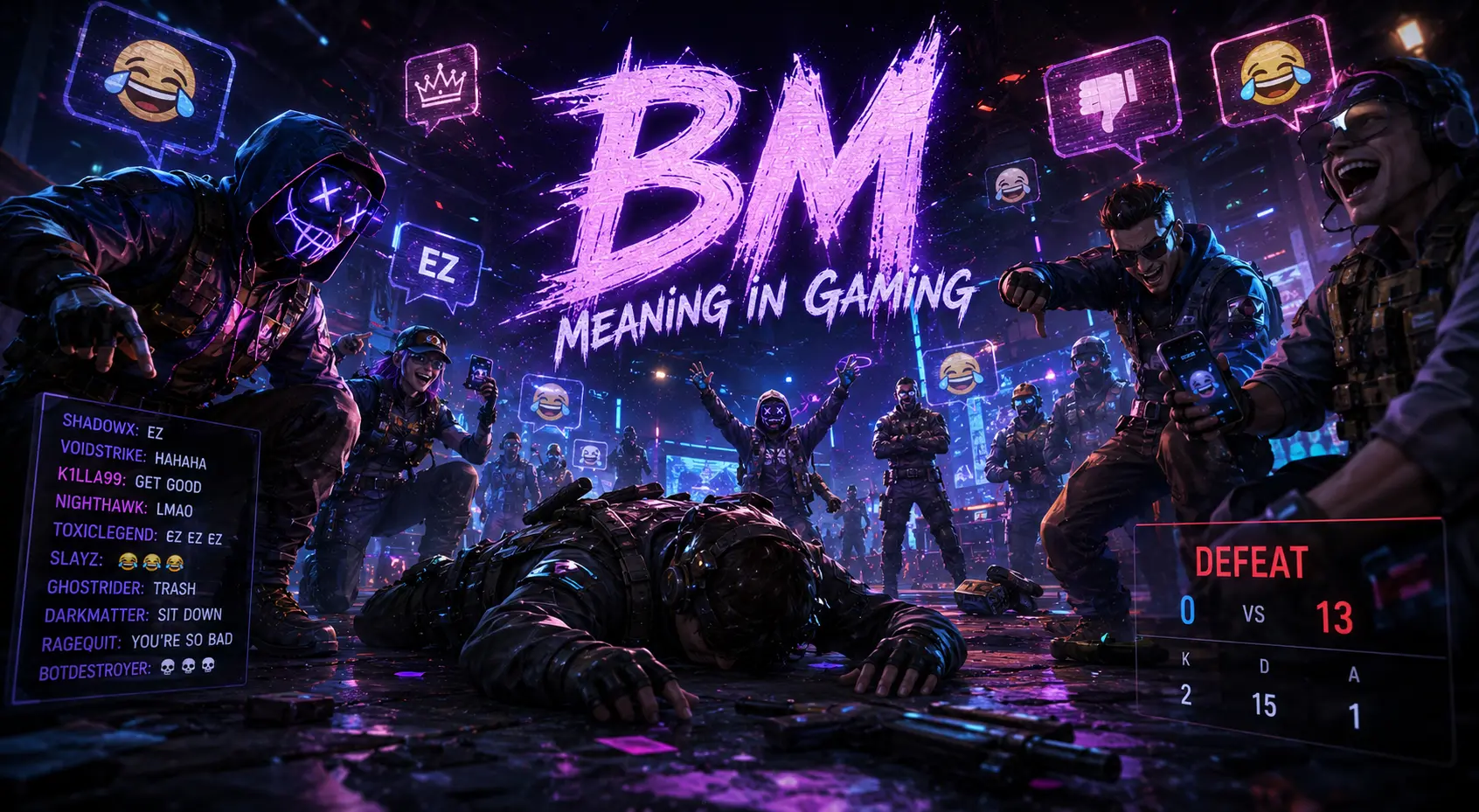
BM Meaning in Online Gaming
In online gaming, BM stands for bad manners and refers to conduct that degrades others, disrupts teamwork, or undermines fair play. This section explains how BM manifests, why it matters for communities, and how players can respond with better etiquette. Understanding BM helps players set expectations, protect newcomers, and uphold fair play across titles and platforms. By distinguishing toxic conduct from competitive banter, players can strengthen community guidelines and promote respectful competition. Exploring these aspects supports responsible play and a friendlier gaming environment for all players.
Definition of BM (Bad Manners)
Bad Manners BM in online gaming refers to conduct that degrades others, disrupts teamwork, or undermines fair play. Below are common examples that illustrate the range of BM in practice:
- Taunting or trash talking opponents or teammates in voice or text to humiliate, provoke, or demoralize them during matches.
- Flaming involves hostile, insulting messages that intensify conflict instead of addressing strategy or teamwork, often targeting individuals’ behavior.
- Griefing or sabotaging teammates progress through intentional feeding, blocking, or misusing game mechanics to ruin the chances of victory.
- Harassment or repeated abuse based on identity, including race, gender, or religion, creating a toxic and unsafe environment for players.
- Toxic sarcasm or belittling comments that shame players for mistakes or losses, eroding confidence and discouraging experimentation.
- Trolling to provoke reactions or waste teammates time by delaying actions or baiting others into conflict.
These expressions of BM can ruin match enjoyment, erode trust within teams, and discourage players from learning, collaborating, or continuing to play together.
Common BM behaviors and examples
| Behavior | Example | In-game impact |
|---|---|---|
| Taunting and trash talking | Saying easy win after a loss | Distracts teammates, escalates conflict, harms team morale |
| Flaming in chat or voice | Calling teammates noobs during a run | Triggers heated exchanges, disrupts coordination, may lead to muting or reports |
| Griefing and sabotaging | Blocking objectives or feeding the enemy team | Damages performance, erodes trust, invites sanctions |
| Harassment and hate speech | Slurs or demeaning remarks based on identity | Creates a hostile environment and risks penalties |
| Toxic humor and blaming | Blaming teammates for losses with sarcastic jokes | Undermines learning and collaboration, sustains negativity |
Understanding these patterns helps players identify toxicity and respond constructively within community guidelines.
Why players BM: motivations
BM motivations in gaming are driven by a mix of psychology and social dynamics. Anonymity online lowers fear of real world consequences, making hostility more tolerable for some players. The competitive urge can amplify arousal and the belief that winning justifies rough behavior. When skill gaps are exposed or losses feel unfair, some players lash out rather than reflect on strategy. The availability of chat and voice channels provides immediate outlets for such impulses, often reinforcing negative patterns.
Social status and group norms also shape BM. Some players adopt a tough gamer persona and use insults to signal dominance or belonging. Others test boundaries to feel included or to guide teammates through fear of failure. Cultural expectations about how to argue or joke vary by region and community, creating different thresholds for what counts as acceptable banter versus harassment. Lurkers can escalate things by laughing along, increasing perceived approval of the behavior.
Reward and reinforcement help BM persist. Positive reactions, attention, or a sense of control can create a quick dopamine spike reinforcing the behavior. When toxicity goes unpunished or is ignored, players learn that BM is tolerated or ignored. Conversely, effective deterrence, clear reporting, and supportive feedback encourage respectful exchanges and reduce the perceived benefits of BM. The balance of consequences across games and platforms significantly shapes how often BM occurs.
Educators, developers, and community managers can mitigate BM by combining education with practical tools. Clear guidelines, visible consequences, and accessible reporting channels empower players to set boundaries. Mentoring programs for newcomers, in-game coaching, and prompts for constructive feedback promote healthier communication. By reinforcing respectful interactions and showcasing positive examples, gaming communities can preserve competitive spirit while protecting players from toxic conduct.
Historical and cultural context
BM has deep roots in the history of online play, evolving from early chat in MUDs and arcade titles to modern multiplayer ecosystems with complex rules. Early communities relied on player-led norms, with informal punishments like exclusion or clan sanctions. As online systems grew, platforms introduced conduct codes, reporting tools, and automated penalties to curb abuse. Across regions, the interpretation of BM has shifted with changing social norms, language, and the availability of voice communication. The arc of BM reveals both progress and ongoing challenges in maintaining respectful play.
Across cultures, tolerance for direct confrontation, humor, and critique varies. Some gaming cultures valorize blunt, competitive talk as honesty, while others prize harmony and restraint. Local laws, platform policies, and community guidelines further influence what behavior is sanctioned. Enforcement examples include chat mutes, temporary or permanent suspensions, and matchmaking restrictions. Understanding history and culture helps players approach conflicts with nuance and supports the creation of inclusive, globally connected gaming communities.
Core Features and Benefits of BM Meaning
BM meaning in gaming refers to ‘bad manners’ and encompasses a range of toxic behaviors that undermine fair play and positive interaction. To leverage BM as a constructive concept, communities emphasize education, reporting, and consistent conduct standards. Core features include clear definitions of unacceptable behavior, accessible reporting tools, and transparent consequences that deter toxicity while preserving free expression. By documenting typical BM behaviors and providing examples, guides help players recognize when behavior crosses a line without overreacting to accidental mistakes. Implementations often pair policy with community norms to foster welcoming environments where new players can learn and longtime fans feel respected.
How recognizing BM improves community health
Recognizing BM is the first step toward measurable improvements in community health. When players, moderators, and developers share a common understanding of what constitutes bad Manners, it becomes easier to identify patterns that degrade the experience. This awareness supports education initiatives, such as in-game prompts, onboarding tutorials, and official guidelines that explain why certain behaviors are harmful and how they affect others. Over time, consistent recognition helps set expectations about acceptable conduct, reduces ambiguity during tense moments, and makes enforcement more legitimate in the eyes of the community. It also allows services to collect data on toxicity trends, enabling targeted interventions like cooldown periods, message filtering, or targeted prompts that remind players of rules. By distinguishing between unintentional mistakes and intentional harassment, communities can apply proportionate responses that preserve freedom of play while protecting vulnerable players. When recognition is paired with timely intervention, players learn to adjust their behavior rather than escalate conflicts. This reduces the likelihood of spirals in which small slights attract retaliatory comments, leading to a toxic cycle. In addition, recognition supports mental well-being by signaling that disrespect is not tolerated, which can reduce anxiety and improve retention for new players. Finally, a well-informed understanding of BM helps streamers and content creators shape their own channels toward constructive interaction, setting expectations for chat behavior and modeling respectful discourse for audiences. The cumulative effect is a healthier ecosystem where sportsmanship and fair play are visible norms, attracting diverse participants and encouraging longer-term engagement. Organizations that invest in recognition also benefit from clearer accountability, which reduces confusion during disciplinary processes and supports fair, transparent decisions. Community health metrics become more actionable when stakeholders understand what BM looks like and why it matters. Educators and moderators can tailor micro-learning resources to address recurring issues, while policy designers can align consequences with the severity of each incident. This alignment helps sustain trust among players who might otherwise disengage after repeated misunderstandings. Ultimately, recognizing BM is not about labeling individuals as bad, but about nurturing a shared culture of respect. As communities evolve, ongoing dialogue about what constitutes BM ensures the norms stay relevant across genres, cultures, and evolving game mechanics.
Benefits for players, streamers, and developers
Players
Players benefit from a more welcoming and predictable gaming environment where expectations are clear and misuse is addressed consistently. Clear BM guidelines help newcomers learn appropriate behavior quickly, reducing intimidation and discouragement that often accompany toxic exchanges. With well-communicated standards, players experience fewer interruptions to their gameplay and a greater sense of safety in both competitive and cooperative modes. The environment becomes easier to navigate when harassing language, taunting, or baiting are recognized and managed, enabling players to focus on strategy, teamwork, and skill development. As respectful norms take hold, friendship and collaboration flourish, encouraging longer playing sessions and more positive social connections. In practice, this translates to better retention, more meaningful in-game friendships, and a community where newcomers feel seen and supported rather than marginalized. The cumulative effect is a healthier player base that grows through positive experiences rather than shrinking due to repeated negative encounters.
Streamers
Streamers benefit from calmer chats and a clearer path to moderation, which reduces burnout for content creators who live to entertain while maintaining a respectful environment. Transparent conduct standards help moderators act consistently, preventing disputes over what constitutes BM and minimizing accusations of unfair treatment. A healthier chat atmosphere also improves audience retention, as viewers feel safer engaging in constructive discourse rather than wading through hostility. Clear guidelines encourage sponsors and collaborators to engage with the channel, knowing that community norms are actively enforced. For streamers, the result is more sustainable growth, higher engagement rates, and a stronger sense of community stewardship that aligns with brand values and audience expectations.
Developers
Developers gain from structured, data-driven approaches to toxicity management, enabling more effective feature design and policy enforcement. With defined BM behaviors, product teams can implement targeted interventions, such as adaptive filters, customizable reporting flows, and context-aware moderation tools that scale with community size. Clear standards also help prioritize safety-related investments, improving user trust and long-term engagement. In addition, developers can more accurately measure the impact of anti-toxicity features on retention, monetization, and player satisfaction, guiding iterations that balance free expression with respect for others. A well-defined BM framework supports cross-title consistency, making it easier to apply learnings from one game to another and to coordinate with publishing platforms around shared safety objectives.
Limitations of labeling behavior as BM
Labeling behavior as BM is not a perfect, one-size-fits-all solution. Context matters immensely: sarcasm, competitive banter, cultural differences, and online persona can blur lines between playful teasing and genuinely abusive conduct. What one player perceives as fair ribbing may feel harassing to another, and legitimate criticism can be misread as disrespectful humor, especially in fast-paced multiplayer environments where tone is hard to convey. False positives can erode trust in reporting systems if innocent exchanges are scrutinized too aggressively, while false negatives may allow persistent harassment to go unaddressed. The problem compounds in cross-cultural communities where norms vary, requiring ongoing education, local adaptations, and flexible guidelines that avoid blanket judgments. Enforcement decisions risk overreach or inconsistency if there is insufficient context, lurid history, or evolving player behavior that a static definition cannot capture. Additionally, labels like BM can stigmatize players who may be transitioning, experiencing stress, or experimenting with new communication styles, potentially alienating a portion of the community rather than helping them learn. To mitigate these challenges, platforms should pair labeling with context-rich moderation, transparent appeal processes, and opportunities for restorative actions that preserve community cohesion while discouraging harmful patterns. Regular review of the definitions, continuous community feedback, and data-driven analysis are essential to keep BM policies fair, relevant, and effective across diverse games and communities. It is also important to distinguish between intent and impact; even well-intentioned remarks can cause harm, while some repeat offenders may exhibit persistent patterns that require graduated responses. The goal should be to reduce harm while maintaining a dynamic, participatory, and inclusive gaming landscape. By acknowledging these limitations, communities can pursue guidance that evolves with language, technology, and social norms, rather than clinging to rigid, outmoded criteria.
Competitive Comparison and Differentiators
Understanding how BM fits into the broader spectrum of in-game behavior helps players recognize acceptable conduct and the consequences of crossing lines. While BM describes disrespectful behavior, toxicity refers to persistent hostility, griefing targets game flow, and trolling aims to provoke reactions. This section uses a competitive comparison to clarify how these behaviors differ, overlap, and are policed across platforms. Clear differentiators help players report correctly and empower moderators to apply consistent discipline. Regional and genre factors also shape how players perceive and respond to these behaviors, making context a crucial part of any policy or guideline.
BM vs toxicity, griefing, and trolling
To help readers differentiate terms, the following quick, structured comparison clarifies how BM sits among related behaviors.
| Term | Definition | Typical Examples | Impact on Others | Recommended Response |
|---|---|---|---|---|
| BM (Bad Manners) | Disrespectful, non-harmful behavior that undermines sportsmanship, such as taunting, sarcastic remarks, or dismissive chat aimed at teammates. | Taunting after a loss; sarcastic comments; trash-talking voice chat can snowball into a hostile lobby atmosphere. | Raises frustration levels, undermines trust, and can spark minor conflicts. | Document and report repeated incidents; mute or disengage; promote reminders of online gaming etiquette. |
| Toxicity | Sustained, aggressive hostility that targets individuals or groups with demeaning language and deliberate hurtful intent. | Chronic insults, slurs, deliberate demeaning remarks; flaming across sessions. | Reduces participation, increases churn, creates a hostile atmosphere for spectators. | Apply moderation tools, temporary or permanent bans, and community-wide rules enforcement. |
| Griefing | Intentional actions to disrupt gameplay, damage progression, or frustrate teammates regardless of personal outcome. | Blocking pathways, feeding opponents, sabotaging objectives, exploiting glitches to stall match progress. | Direct gameplay disruption, fairness concerns, can ruin the match experience. | Investigation with replay/video evidence, appropriate penalties, and mechanics that counteract disruption. |
| Trolling | Behavior designed to provoke reactions rather than win, often unpredictably disrupting chat and coordination. | Provocative baiting in chat, gloating after losses, arranging fake teamwork signals. | Emotional distress, reduced cooperation, and longer-term disengagement. | Mute or ignore, avoid feeding the troll, enforce chat restrictions as needed. |
Understanding these distinctions helps players report appropriately and keeps gaming communities safer and more respectful.
Regional and genre differences in BM perception
Regional norms shape what is considered acceptable in-game communication. In some regions, direct, expressive language is more tolerated, while others prefer restrained phrasing and formal etiquette. Perceived severity of BM can differ based on language, culture, and common in-game expectations.
Similarly, genre matters: fast-paced shooters with high-stakes rounds can amplify feelings and trigger stricter enforcement, whereas collaborative or social games may reward calm, supportive conduct. Some genres emphasize competitive merit and strict objective focus, while others prioritize community building and long-term engagement, which may lead to broader definitions of what counts as bad manners.
For players and moderators, recognizing these regional and genre nuances is essential to applying guidelines fairly, communicating conduct standards clearly, and avoiding misinterpretation that could silence newcomers or punish accidental missteps.
Examples from popular games
Here are recognizable in-game moments that illustrate BM in action across titles.
- League of Legends — After a teammate misses a skill shot, taunting comments, sarcastic emotes, and trash-talking voice chat can snowball into a hostile lobby atmosphere.
- Overwatch 2 — Gloating after victories, blaming teammates publicly, and shouting insults in voice chat contribute to a toxic team environment and discourage beginners.
- Fortnite — Teammate baiting or leaving squads mid-game to provoke reactions, followed by mockery in chat, undermines cooperation and erodes enjoyment for the remaining players.
- Call of Duty — Consistent use of slurs or slander in voice chat after losses creates a chilling experience that pushes teammates away and harms the competitive community.
- Valorant — In-game taunts combined with ping abuse or misdirected calls to team members, disrupting coordination and turning friendly matches into heated arguments.
These concrete moments show how different game ecosystems handle misconduct and help players identify when to report.
Pricing, Offers, and Implementation Options
Addressing BM in online gaming isn’t only about setting rules; it also involves practical decisions around how communities invest in moderation technology, staff, and player education. Platforms and developers can choose from pricing models and offers to sustain anti-toxicity initiatives, including subscription-based moderation tools, pay-per-seat licenses, or bundled training that reinforces online gaming etiquette. Implementation options range from automated detection and real-time chat filtering to streamlined reporting workflows and explicit gaming conduct standards embedded into onboarding. A well-planned budget should align with scale, user base, and the desired level of fair play in online gaming, while respecting privacy and avoiding overreach. Publicly outlining pricing and implementation choices helps support a healthier gaming community, where reporting bad manners in games and adhering to gaming community guidelines become built-in expectations.
Tools and moderation options to reduce BM
Tools and moderation options to reduce BM involve a layered approach that combines technology, people, and community standards. Automated systems powered by AI and machine learning can monitor chat streams for patterns of taunting, harassment, or insults, using sentiment analysis and contextual checks to reduce false positives. Real-time filters can block or mask offensive language and prevent harmful phrases from appearing before players see them, while dynamic reputation scores help surface risky behavior to moderators without overwhelming the queue. These tools should be complemented by clear reporting pathways that enable players to flag instances of bad manners quickly, with fields that capture context, severity, and involved players. Integrated dashboards give moderators and community managers visibility into hotspots, trends, and the effectiveness of interventions, enabling second chances alongside consequences. In practice, moderation needs to balance privacy, transparency, and safety: players should feel protected but not surveilled, and decisions should be explainable when possible. Machine-assisted triage can route cases to human staff based on urgency and potential impact on ongoing matches, while automation handles routine tasks like muting for a fixed duration or enforcing chat restrictions. Ongoing calibration is essential; developers should test filters against diverse language use and regional dialects to minimize bias, while also updating the rules to reflect evolving toxic behavior. Importantly, tools must align with online gaming rules and online gaming etiquette, ensuring that interventions reinforce respect for others in online gaming rather than creating new forms of gatekeeping. Community guidelines should be living documents that players can access and understand, with examples of acceptable and unacceptable behavior that cover taunting, harassing, doxxing, and flaming. To foster a healthier environment, tools should enable mentorship and positive reinforcement, such as highlighting good sportsmanship and rewarding constructive communication. Finally, it is crucial to provide channels for appeal and feedback on moderation actions, so the process remains legitimate and trusted by the gaming community. Additionally, cross-platform coordination can help; if a player misbehaves in one title, shared sanctions across related games can reduce recidivism while preserving fairness. Data retention policies should be clear: how long logs are kept, who has access, and how players can request deletion in line with privacy laws. Accessibility considerations include language localization and support for players with disabilities, ensuring moderation actions are comprehensible and fair across diverse communities. Finally, iteration cycles through A/B testing, quarterly reviews of thresholds, and user surveys keep tools aligned with evolving community norms and the aspiration for a welcoming, competitive, and inclusive gaming experience.
Costs and resource implications for developers
Implementing effective moderation to reduce BM requires more than clever code; it requires sustained investment across people, technology, and governance. Initial costs include licensing or building moderation tooling (AI, sentiment analysis, profanity filters, chat suppression), plus integration with existing game engines and backend services. Ongoing expenses include cloud hosting, data storage for chat logs, and bandwidth for real-time analysis, all of which scale with the number of concurrent players and the diversity of supported languages. Staffing is a major portion: dedicated moderation teams, escalation queues, and community managers who handle reports, mediate conflicts, run mentoring programs, and enforce consequences in line with gaming community guidelines. The budget should also cover training for moderators to handle nuanced contexts and to maintain consistency in applying rules, a continuous improvement program to refine detection thresholds, and regular audits to reduce bias and prevent overreach. In addition to human resources, developer teams need time for policy design, legal review, and privacy compliance, which can be substantial when addressing cyberbullying in gaming and protecting user data. ROI considerations include improved player retention, higher perceived fairness, better word-of-mouth, and fewer in-game disputes that disrupt matches; however, these benefits may take time to materialize. Many studios adopt a staged approach: a pilot program in a subset of titles, followed by an expansion plan, and finally a standardized global rollout that aligns with platform-specific requirements. External factors such as regulatory changes, platform rules, and evolving threat models can influence both cost and scope, so budgeting should retain flexibility for adjustment. Finally, developers should consider cost-sharing options with publishers, partnerships with trusted moderation providers, or community-driven initiatives that can supplement staff without compromising safety. Transparent reporting on costs and expected outcomes can also help secure funding and maintain trust with players who value online gaming etiquette and respectful interactions.
Tips for players: how to respond to BM
Dealing with BM as a player requires practical, calm, and effective strategies. First, take a breath and avoid responding in kind; reacting with anger often escalates the situation and can reflect poorly on you in any reporting process. Use in-game muting and reporting tools to stop the harassment without engaging, and document incidents by capturing context, times, and involved players to aid moderation. Focus on your well-being: step away from the match when needed, use the pause option, and seek support from teammates or friends who model respectful communication. Rely on community resources and mentoring programs that promote healthy dialogue and sportsmanship in gaming, and try to steer conversations toward game-related topics when possible. For persistent issues, escalate through official channels and keep a record of incidents, ensuring you do not retaliate or share personal information about others. Adjust privacy settings, block or restrict interactions with offenders, and apply language filters to reduce exposure to toxicity. Remember that your behavior shapes the broader culture of the gaming community, so modeling respect for others in online gaming remains a powerful countermeasure to BM. Familiarize yourself with the gaming community guidelines and the platform’s reporting flow so you can respond quickly and effectively when bad manners occur. Constructive engagement—asking clarifying questions, offering calm feedback, and redirecting conversations toward teamwork—can reduce hostility and encourage better conduct. In team-based games, designate calls to focus on strategy and cooperation rather than blame. If a player continues to target others, report after the match and consider leaving the lobby if you feel unsafe. For new players, seek mentorship and education on how to handle online toxicity, and practice resilience to build a positive player path within the community.
