AFK Meaning Overview
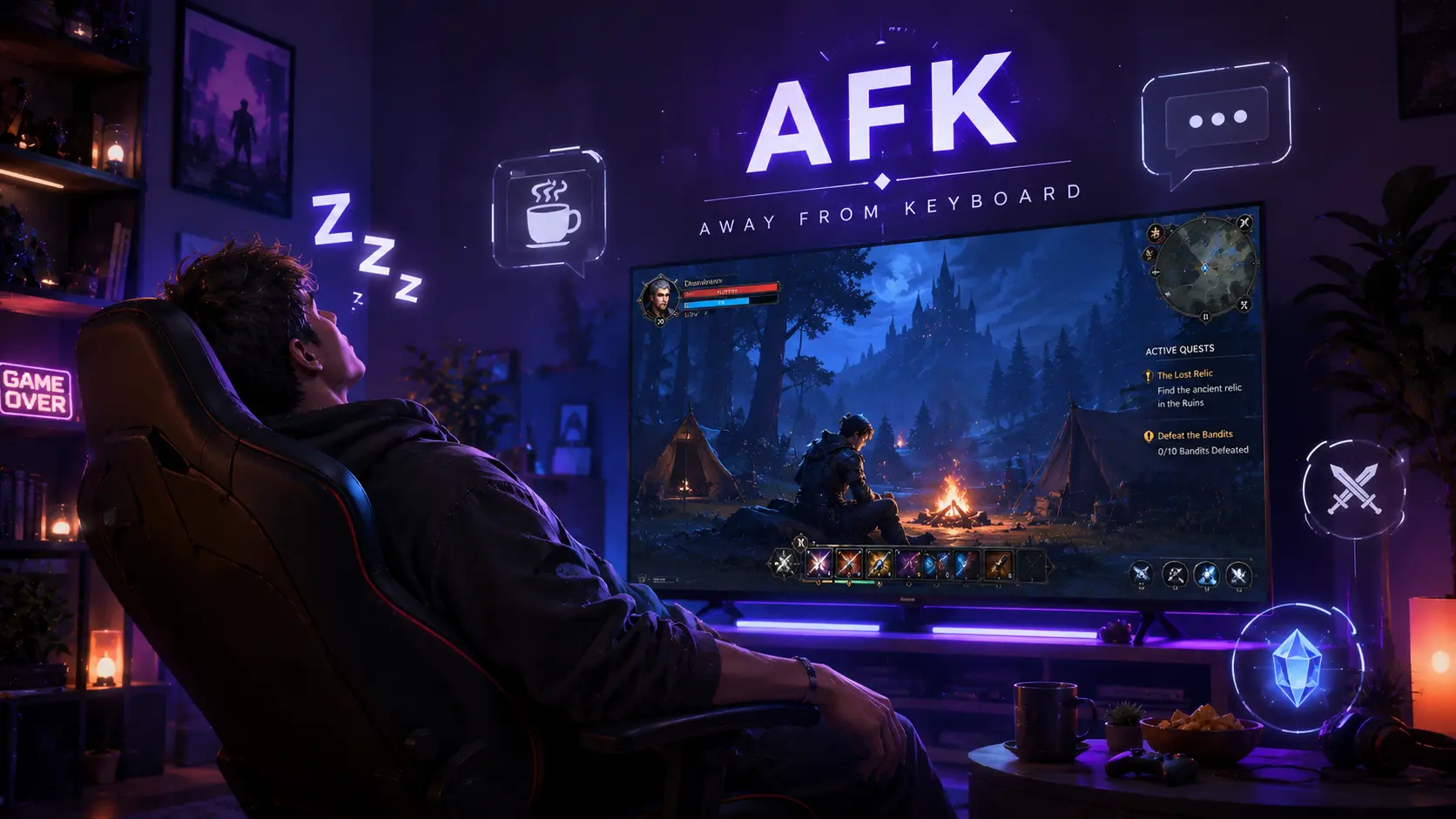
AFK meaning is rooted in online gaming culture as a practical signal of temporary absence. It stands for Away From Keyboard and is used across genres to indicate a player is not actively participating at that moment. In many communities AFK can be polite, simply acknowledging a need to step away, or it can be a reminder of etiquette and expected return times. Understanding AFK helps teams coordinate, manage expectations, and reduce disruptions during matches or chats. This overview explains the meaning, origins, and everyday usage of AFK in gaming contexts.
What AFK Stands For
AFK, short for away from keyboard, has become a practical label used by players to denote a temporary interruption in gameplay during online sessions, and its utility goes beyond a simple absence by encoding not only a momentary disengagement but also expectations about response time, interaction, status visibility, and channel ownership in team settings that rely on prompt communication to maintain flow. Across diverse genres—from high tempo shooters and MOBAs to open world RPGs and cooperative adventures—the term has accumulated a nuanced ecosystem of expansions and connotations that reflect the social dynamics of gaming communities, the expectations of teammates who rely on coordinated action, and the real-world realities that occasionally intrude on digital play, including work obligations, family duties, urgent messages, or the simple need for a quick breath or snack break without derailing a match.
- Away From Keyboard commonly denotes a player temporarily inactive due to real-world needs, such as a quick break, a doorbell, or coordinating with teammates during a busy moment.
- Common expansions include Away From Keyboard and variants like Away From the Keyboard, while some players jokingly shorten it to other phrases; the core idea is temporary absence.
- In some non‑competitive contexts, AFK simply signals a pause for nonessential chat, streaming breaks, or updating in‑game inventories, rather than a persistent detachment from the match.
- In older online communities, AFK served as a status label indicating short lags or disconnections, evolving into a broader shorthand for any temporary inactivity across multiplayer titles.
- Modern usage often distinguishes between polite AFK signals in teams and disruptive silent AFK, recognizing etiquette and automated safeguards that reduce unfair advantages during group play.
- Some players treat AFK as a strategic tool in longer campaigns, using it to manage resource planning or coordinate with others during multi-hour sessions.
These expansions help players communicate more clearly, reduce friction when a teammate steps away, and preserve fair play during essential moments, whether the interruption is brief during a contested objective or a longer pause during a cooperative quest, because teams that align expectations can reorganize roles, adjust tactics, and reassign responsibilities without collapsing into chaos. They also reveal how etiquette evolves in different communities and why modern game design increasingly incorporates signals, timers, and automated safeguards to accommodate brief disengagement while still honoring the overall objectives of the game, balancing individual needs with team progress, and providing players with a fair chance to return without punishing those who must pause for legitimate reasons.
Common Situations Players Use AFK
AFK usage in gaming spans a wide range of scenarios, yet several core patterns recur across genres. In fast-paced shooters, players may step away to answer a door, take a brief phone call, grab a snack, or respond to an urgent real-life matter during a natural lull between engagements. In team-based titles like MOBAs or tactical shooters, AFK often arises during farming phases, respawn timers, cooldown windows, or moments when a player must coordinate a strategy change with minimal risk to the team. In expansive MMOs and cooperative RPGs, longer pauses can occur during travel, inventory management, or real-life interruptions that require attention but do not end a session outright. The context and duration of the absence influence how teammates adapt, rotate roles, or adjust objectives to maintain progress without derailing group goals.
Chat and voice communication shape how AFK is perceived. Some players post a quick note in text or voice chat to signal intent to return soon, while others rely on in-game status indicators or timers to set expectations. Etiquette varies by community: some groups tolerate brief silences if players indicate intent to return, while others penalize repeated absences that disrupt quest progression or raid schedules. Casual play often emphasizes flexibility and mutual understanding, whereas competitive play emphasizes adherence to rules, penalties for extended inactivity, and clear signaling to minimize the negative impact on teammates.
The social dynamics around AFK are not universal. In tournaments and high-stakes matches, penalties, queue adjustments, or disconnection rules aim to limit the damage of inactivity. In casual play, players may be more forgiving when there is context and the absence is brief. The spectrum—from permissive pauses to structured constraints—reflects how communities balance individual needs with group objectives, fairness, and the overall enjoyment of the game.
Understanding AFK in practice means recognizing how a game’s design influences behavior. Some titles provide explicit indicators, warnings, or anti-AFK mechanisms that trigger actions after a period of inactivity. Others rely on community norms to guide responses during play. By evaluating how AFK is defined and managed across genres, players can adapt strategies, assign roles that tolerate brief interruptions, and sustain team cohesion even when real life demands attention.
AFK vs Similar Terms (BRB, OOO, IDLE)
In fast-paced matches, players frequently encounter shorthand signals to indicate available status or temporary unavailability, and these signals carry different implications depending on the game mode, the duration expected, and the social norms of the player base. To help players navigate these signals, the table below compares AFK with BRB, OOO, and IDLE across typical meanings, contexts, signaling methods, and etiquette considerations.
| Term | Typical Meaning | Common Contexts | Signaling | Etiquette Notes |
|---|---|---|---|---|
| AFK | Away From Keyboard; temporary absence | During matches, chat, inventories | Indicates non-participation for a moment | Provide status or return estimate when possible |
| BRB | Be Right Back | Friend lists, informal chat, quick tasks | Typically signals imminent return | Generally considered brief; less disruptive than AFK |
| OOO | Out Of Office | Longer absences, external commitments | Indicates unavailability for an extended period | Set expectations and plan for hold on actions |
| IDLE | Idle/Not Active | Connected but not performing actions | Often auto-detected; may trigger penalties | Avoid leaving high priority tasks unattended |
By understanding these distinctions, players can respond appropriately and maintain momentum during sessions. Recognizing the nuances of AFK helps preserve fairness and teamwork across titles and communities.
Key Features and Benefits of AFK Management
AFK management refers to the deliberate handling of away-from-keyboard behavior in multiplayer games and communities. By understanding why players go AFK, teams can reduce disruption and maintain smoother matchmaking experiences. Effective AFK practices combine clear communication, fair etiquette, and system-aware strategies to minimize negative impact on game flow. This section explores the core features and benefits of thoughtful AFK management, including how to interpret AFK signals, set expectations, and balance player experience with competitive integrity.
Why Players Flag Themselves AFK
Understanding why players flag themselves AFK requires recognizing a complex blend of strategic choices, technical realities, real life obligations, and social dynamics that can shift dramatically from one moment to the next, especially in fast paced, high pressure matches where split second decisions carry outsized consequences for personal performance, team cohesion, and the perceived fairness of the game, even when the player intends only to pause briefly rather than exit entirely.
These motives are rarely black and white; they reflect a spectrum from necessary reconnection or safety checks to temporary disengagement aimed at preserving a team’s longer term viability, and they interact with game design features such as queue timers, match length, voice/chat expectations, and teammate psychology to shape how players signal AFK and how others respond.
- Network instability or hardware glitches can abruptly render a player unresponsive, prompting a temporary AFK pause while they troubleshoot, reconnect, or recover before rejoining the action.
- Social or in-game coordination sometimes requires a brief absence so teammates can confirm strategy, reposition, or adjust roles without dismantling a planned play.
- Players may experience real‑world interruptions such as emergencies, deadlines, or fatigue, and they choose to announce AFK to prevent misperceptions about intent or commitment to the match.
- Strategic cooldowns or performance concerns can motivate a temporary AFK, giving a player time to reset focus, manage stress, or avoid tilting the team during a critical phase.
- Technically compliant pauses during allowed breaks, such as queue timers or spectator modes, may be used to preserve fairness by preventing sudden disconnections from punishing teammates.
- Account linking or multi‑account pressure in ranked modes can cause players to step away, either to avoid accidental penalties or to protect their standing while they sort notifications.
- Family duties or personal care needs may require brief AFK moments, and players often choose to communicate ahead of time to minimize disruption and enable teammates to reflow strategy.
When AFK signaling occurs, the community benefits from clear conventions that distinguish temporary pauses from intentional tilting or abandoning, reducing confusion, enabling teammates to adjust rotations, and preserving the integrity of the match for players who are actively engaged. Clear rules and consistent responses make it easier to recover from pauses without punishing sustainable participation.
Ultimately, understanding and managing AFK requires coordinated norms, supportive tools, and fair accountability so that players feel respected, teams stay functionally balanced, and the gaming environment remains inclusive and competitive across skill levels, regions, and modes, even as new formats test the boundaries of acceptable AFK behavior.
Impact of AFK on Team Play and Match Outcomes
AFK events extend beyond a single player and can alter the tempo of a match, affecting timing windows for rotations, objectives, and resource control. When a player is unresponsive, the team loses a portion of its planned dps, vision, or map control, forcing others to cover while hoping the deficit is temporary. The interruption also changes the perceived reliability of teammates, influencing how remaining players pace their own risks and how aggressively they execute plays. As a result, decision making becomes more conservative or more reactive, depending on the team’s experience and communication quality. Coaches and observers often track AFK patterns to determine whether the absence is situational or symptomatic of deeper issues. The immediate practical effect is slowed momentum, which compounds as the match progresses.
From a strategic standpoint, AFK disrupts rhythm and cohesion. When one cog in the wheel stops turning, others compensates by shifting responsibilities, which can lead to suboptimal rotations and misaligned timing. In games with strong lane control or objective-based pacing, the absence can lead to missed opportunities, delayed respawns, and a temporary drop in map presence. Over time, teams adapt by creating contingency plans, such as pre assigned secondary plays, more explicit callouts, or flexible positional roles that can be covered by multiple players. These adaptive practices help mitigate the cost of AFK but do not eliminate it, and their effectiveness depends on how quickly teammates recognize and respond to the absence. In some cases, frequent AFK behavior is correlated with higher tilt and poorer overall communication, further reducing the team’s ability to rebound.
AFK can also influence morale and confidence. The pressure of losing momentum can tilt even strong players into riskier decisions or, conversely, suppress initiative, making coordinated engagement harder. When teammates observe a pattern rather than an isolated incident, they may overcorrect by overcommunicating or micromanaging, which itself can degrade performance. Conversely, teams with established norms for handling pauses tend to weather AFK events more smoothly, because roles remain clear and expectations are updated in real time. The resulting dynamic often shows up in slower but steadier late-game decision making, with a higher probability of successful hold or retake attempts when the pauser returns. Finally, AFK behavior has implications for matchmaking and player retention; persistent pauses can extend game times and decrease perceived fairness, encouraging players to seek shorter, more predictable experiences or to abandon matches entirely.
Overall, the impact of AFK on team play and match outcomes is a function of duration, frequency, context, and the quality of in-game communication. Short and transparent pauses are typically less damaging than long, unannounced gaps, and teams that anticipate, normalize, and quickly integrate pauses tend to maintain performance more effectively under pressure.
Best Practices for Communicating AFK Status
Effective communication of AFK status starts with a quick, clear heads up that states the reason, rough duration, and any expected impact on the team. A concise message in chat or voice chat helps teammates adjust rotations, callouts, and priorities without guessing about intent. Prefer direct, respectful language and avoid accusing others; framing the pause as a temporary adjustment rather than a withdrawal preserves team morale and reduces defensiveness. If possible, attach a rough time estimate to the notice so teammates can plan around the absence and reflow strategies proactively.
Standardization matters. Teams benefit from agreed signals, such as a specific phrase for brief pauses or a standard pause time that aligns with game rules, operators, and the pace of the current match. Consistency minimizes confusion and ensures that all players interpret the pause in the same way, even in high-stress moments. When you return, promptly rejoin the conversation and provide a brief recap of your status and intended role, so teammates can reintegrate smoothly and avoid re triggering a sequence of miscommunications. In longer pauses, consider updating the team with new estimates as conditions change, rather than leaving teammates guessing. Tone is also important; be respectful, patient, and constructive, and avoid sarcasm or blame that can escalate tension during a critical phase.
Practical tips include using in-game timers, pinging the map to indicate your absence, and asking a coach or captain to help fill in gaps while you are away. If you anticipate a longer pause, consider suggesting a formal substitution with agreement from your team or seeking a pause through official channels to maintain fairness and clarity. Finally, when you re join, acknowledge the pause, share relevant observations, and reset your focus so the team can quickly regain momentum and continue the match on even footing.
Technical Specifications and Compatibility
AFK stands for away from keyboard, and in gaming it describes a player who is temporarily inactive during matches, lobbies, or chat. Technical specifications behind AFK handling involve idle timers, input monitoring, and server-side checks that help maintain fair play without breaking immersion. Compatibility concerns arise across PC, console, and mobile games, where input devices, networks, and session architectures differ. This section introduces how games detect AFK, how platform differences shape implementation, and how players interact with tools or settings related to AFK. The goal is to balance timely responses to true inactivity with the need to accommodate legitimate pauses.
How Games Detect AFK (Idle Detection Methods)
Developers rely on idle-detection techniques to decide when a player is AFK. Modern schemes combine client side timers with server side checks to balance fairness and responsiveness.
| Detection Method | Idle Threshold | Key Features | Notes / Real-World Applications |
|---|---|---|---|
| Inactivity Timer (Client-side) | 5–10 minutes | Monitors the absence of input events like keypresses and mouse movement; may include window focus; supports automatic status changes after threshold; helps reduce false alarms by requiring consistent inactivity across moments in time | Works across PC and console builds; can be tuned by game mode; often triggers a warning before disconnection or moves the player to spectator mode |
| Input Event Monitoring (keyboard/mouse) | 3–5 minutes | Tracks any user interaction including movement; resets on activity; used to distinguish brief hitches from true AFK; can be combined with activity in the UI or chat to avoid misclassification | Common in fast-paced genres; risks false positives if players use alternative controllers or touchpads; often paired with a secondary check |
| Server-heartbeat and Position Checks | 10–120 seconds after last input | Cross-checks last known position, velocity, and server latency; detects freezes or abnormal predictability in movement; leverages continuous synchronization data | Reduces client-side spoofing; sensitive to network issues; may temporarily mark players AFK during lag spikes |
| Presence Verification (optional camera/microphone) | Not always applicable; sometimes 1–2 minutes | Uses device sensors or presence signals to confirm human presence; raises privacy considerations; often disabled by default or restricted to specific modes | More common in moderation tools or experimental features; not standard in competitive play; may require user consent and settings adjustment |
Thresholds and features vary by game and genre, and developers tailor them for different modes. Privacy concerns and accessibility preferences also shape how AFK penalties are applied.
Platform Differences (PC, Console, Mobile)
Platform differences create distinct AFK challenges because input modalities, session management, and network expectations vary by platform. On PC, precise mouse and keyboard activity can be tracked with low latency, but players may use alternative controllers or accessibility devices that complicate idle detection. Console games rely on standard gamepads and system wake behavior, which can result in longer idle thresholds to avoid penalizing players during cutscenes or loading screens. Mobile titles must cope with touch input variability, intermittent connectivity, and device power states, leading to adaptive thresholds that try to avoid false positives while preserving game flow.
Other platform-specific features influence AFK handling, such as wake gestures, activity indicators, and cross platform play. Some games implement multi-factor checks that combine input absence with network activity and in-game state, while others rely on explicit user messages or pause options. Enforcement actions vary by title, including warnings, temporary spectate modes, or automatic disconnections after prolonged idle periods. Developers also consider accessibility tools such as screen readers or switch controls, ensuring that AFK systems do not unfairly penalize players who need assistive technologies.
Better cross-platform consistency often requires abstractions in the game engine that decouple input detection from platform internals. When done well, players experience fair treatment regardless of device, with predictable penalties that preserve match balance. When not done well, platform-specific quirks can create gaps that players exploit or misinterpret, undermining trust in the AFK system.
Third-Party Tools and Mods Related to AFK
Third-party tools related to AFK span a spectrum from legitimate conveniences to tools that can undermine fair play. Some utilities automate routine in-game actions or simulate AFK presence to maintain matchmaking in crowded queues, while others provide presence indicators for streaming or social groups. In moderation contexts, here are common categories and their implications.
Automation macros or scripting tools can trigger input sequences to simulate activity, but most modern games employ anti-cheat and server-side checks to detect unnatural patterns. Those tools may be detected through inconsistent timing, improbable movement, or abnormal input rates, potentially resulting in penalties or account suspension. Streaming or social tools sometimes offer verified AFK statuses or planned break notices that help teams coordinate while respecting privacy.
Assistive technologies for players with disabilities can impact AFK dynamics by enabling longer pauses for accessibility reasons, provided they are disclosed and accommodated by game settings. Parental control software and account management apps may also affect how long a user can be away without being marked AFK, especially in family-shared contexts. Overall, the ethical use of AFK tools revolves around transparency, consent, and maintaining fair competition; misuse can degrade the experience for other players and invite moderation intervention.
Pricing, Offers, and Use Cases
AFK, or away from keyboard, is a common term in online gaming that signals temporary inactivity during matches, chats, or multiplayer sessions. As developers add AI-assisted monitoring and premium solutions, distinguishing between legitimate absences and unsportsmanlike idling becomes central to fair play. This section outlines how pricing, offers, and use-case scenarios shape player behavior, with attention to penalties, monetization models, and community etiquette. From free-to-play queues that tolerate brief gaps to subscription-backed protections and cosmetic indicators, the ecosystem balances accessibility with competitive integrity. By understanding these dynamics, publishers and players can navigate AFK more transparently, ensuring smoother team dynamics and clearer expectations across casual, ranked, and streaming contexts.
Typical In-Game Penalties and Premium Solutions
Developers implement a range of penalties to deter prolonged inactivity, but the aim is to preserve fair play rather than punish players indiscriminately. Penalty design often blends progression consequences, temporary disconnections handling, and optional premium features that can soften friction for occasional absences.
- Temporary matchmaking bans during peak hours and after multiple AFK incidents block access for a fixed period, signaling that consistent participation is required to rejoin competitive pools.
- Loss of ranking points or season credits for repeated AFK behavior reduces progression incentives and reinforces accountability, encouraging players to stay engaged or queue with more reliable teammates.
- Soft queues or grace periods allow brief returns with minimal punishment, using timers or prompts to maintain flow while giving players a real chance to reconnect.
- Performance-based suspensions scale with season length and offense severity to deter chronic AFK without freezing new players from learning the game.
- Premium anti-AFK features grant access to configurable alerts, on-screen indicators, and automated rejoin tools that help players stay informed while preserving the competitive balance.
- Soft monetization options include queue skips or temporary protections purchased through microtransactions, designed strictly for unavoidable disconnects or hardware issues rather than exploiting idle time.
These measures are typically tuned to match game mode, league tier, and player history, so a first-time AFK moment feels different than a repeated offense. Premium options give studios a way to offer flexibility while funding ongoing server costs and anti-cheat infrastructure.
Use Cases: Casual Play, Competitive, Streaming
In casual play, AFK moments are often tolerated for a brief window but should not become a habit. Players may step away to take a quick phone call, grab a snack, or manage a real life interruption, but most groups expect a prompt return once the delay is clear. The key in this context is communication: pinging the team, leaving a note in the lobby, or coordinating a substitution when available helps protect everyone’s time and enjoyment. Long AFK stretches in casual games degrade team cohesion and undermine the social contract that makes online matchmaking enjoyable for newcomers and veterans alike. Communities frequently codify these norms through lobby etiquette guides, chat templates, and in-game indicators that reflect a player’s current availability. Competitive play treats idle time as not just a minor annoyance but a direct threat to fairness and progression. Most titles feature automated AFK detection that logs idle time, assigns warnings, or places offenders in separate queues until a certain threshold is cleared. The penalties may include temporary removal from ranked queues, loss of entry fees on tournaments, or temporary reductions in matchmaking priority. Teams relying on coordinated timing and skill will feel the impact sharply when a single player sits idle, so captains often prepare bench strategies, standby rosters, and automatic substitution rules when allowed by the rules. Spectator and replay features are designed to minimize the social cost of AFK by offering clear visibility into timing, status, and the impact on scores. For players watching streams of these matches, visible AFK indicators help maintain transparency about what is happening in real time. Streaming adds another layer of complexity, since audience expectations around pacing and engagement are high. Streamers may mitigate idle moments with automated pause options, signature overlays that display status, or live moderator teams that handle substitutions in chat. Viewers often tolerate a short break if the streamer explains the cause and shares an estimate for return, but prolonged AFK can break immersion and impact sponsor metrics. In some games, dedicated spectator modes or live rewinds help preserve fairness by letting the audience follow the action even when the main player is temporarily unavailable. Ultimately, the acceptable use of AFK in streaming depends on platform policies, community norms, and the willingness of the group to pause or rotate players without penalizing teammates unfairly. In summary, AFK use cases are diverse and context-dependent; best practices emphasize clear communication, reasonable allowances, and consistent penalties that scale with the level of play.
How Developers Monetize AFK Features (Subscriptions, Cosmetics)
Monetization around AFK features is a careful exercise in balancing fairness with revenue opportunities. Subscriptions can unlock premium protections that improve the clarity and reliability of AFK handling, such as enhanced alerts, advanced rejoin tools, or exclusive access to more transparent status indicators. These features are positioned as productivity and quality-of-life improvements for players who want more control over their online presence and fewer disruptions for teammates, rather than as shortcuts to get ahead. Cosmetics play a prominent role as well, offering avatar frames, emotes, or AFK-themed skins that visually communicate a player’s status or commitment to fair play without altering core mechanics. Battle passes and seasonal tracks can incorporate anti-AFK perks, such as early access to robust rejoin tools, priority queuing during off-peak times, or exclusive leaderboard badges that recognize reliable participation. Data and analytics packages may be bundled into premium plans, providing developers with insights into idle patterns while offering communities clearer metrics around fairness and engagement. Ethical considerations govern these models to avoid gating essential playability behind paywalls; the most successful implementations keep core AFK protections free while reserving optional enhancements for paying customers. Ultimately, monetization strategies should reinforce trust and transparency, ensuring that players who cannot participate temporarily are treated fairly and that the overall experience remains accessible to non-paying users.