XP Meaning in Gaming: Definition, Scope, and Relevance to Players
XP, or experience points, are a universal mechanic in modern gaming that tracks a player’s growth. They represent a player’s accumulation of effort across battles, quests, and exploration. As XP increases, characters reach new levels, unlocking abilities, gear, and access to more challenging content. This H2 will explore the meaning, scope, and relevance of XP for players, including how XP is earned, how progression shapes motivation, and how XP systems influence the design of games. Understanding XP helps players set goals, optimize play, and gauge progress within virtual worlds.
What ‘XP’ stands for and its origin
XP stands for experience points, a simple label that captures the idea of earned growth. Origins trace to tabletop role-playing games, where players gained experience for defeating enemies, completing quests, and overcoming challenges, gradually bolstering a character’s capabilities. In early computer RPGs and arcade titles, developers formalized XP as a measurable currency rewarding persistence and skill, encouraging players to press on through difficult sections. In subsequent decades, designers refined XP into structured progression, balancing curve rates with reward variety to sustain long play sessions. Over time, variations such as soft caps, diminishing returns, and alternative XP types emerged to keep pacing engaging and prevent grinding. Today, players encounter a spectrum of XP systems across genres, from pure level ladders to skills-based progression and hybrid rewards that blend XP with in-game currency and unlocks.
How experience points work (basic mechanics)
XP mechanics differ by genre, but the core idea remains constant: players earn points, which push their character toward the next milestone. The table below outlines common mechanics across several game types, highlighting how XP is earned and how it affects progression.
| Genre/Mechanic | XP Source | Progression Pace | Level Unlocks | Notes |
|---|---|---|---|---|
| Role-Playing Games (Traditional) | Defeating enemies, completing quests, exploring | Stepped, predictable leveling curves | New abilities, talents, and access to higher difficulties | Often includes soft caps and prestige tiers. |
| Action RPGs and Shooters | Kills, objective completions, team actions | Faster early, slower later | Guns, combat skills, faster movement | Sometimes uses gear thresholds instead of pure XP. |
| MMOs | Quests, dungeon clears, group events | Varies by player group and server rules | Raid access, professions, mounts | Often features multiple XP curves and events. |
| Quests-Heavy / Narrative Games | Quest completion and story milestones | Story-driven, with pacing aligned to chapters | Narrative options, companions | Less grind-focused, more pacing-focused. |
| Exploration / Sandbox Games | Discovery, experimentation, and skill usage | Flexible, player-driven pace | Skills, customization options | Promotes curiosity and experimentation. |
Understanding these patterns helps players anticipate pacing, set goals, and choose titles that suit their preferred play style.
Types of XP (combat, quest, exploration, social)
Understanding the categories of XP helps players identify where progress tends to come from in different games. By recognizing these sources, players can plan their play sessions to maximize growth and learning.
- Combat XP: Earned through defeating enemies, landing skillful combos, and achieving victory in challenging battles, with XP typically scaled by enemy difficulty and encounter length.
- Quest XP: Awarded for completing main and side quests, solving puzzles, or fulfilling narrative objectives, often tied to quest complexity and branching outcomes.
- Exploration XP: Granted for discovering new areas, uncovering hidden locations, or mapping unexplored regions, encouraging players to roam and experiment.
- Social XP: Accumulated through cooperation, helping teammates, completing group challenges, mentoring new players, and earning reputation within guilds or online communities.
- Crafting/Trade XP: Gained by crafting items, refining resources, or trading goods, often emphasizing economy participation, player-driven preparation, and optimization of gear.
Recognizing these XP sources helps players tailor strategies, balance risk and reward, and build a broader sense of progression beyond simple level counts.
Why XP matters to players (motivation, mastery, rewards)
XP matters to players because it taps into core motivations: mastery, achievement, and meaningful rewards. People stay engaged when progress is visible, goals feel reachable, and new capabilities unlock appealing options. XP systems also reinforce learning curves, providing feedback that players are improving at skills they practice, adapt to tougher challenges, and experiment with different playstyles. On the design side, XP balances determine pacing, reward timing, and long-term retention, shaping how players experience difficulty, exploration, and collaboration.
XP Meaning in Gaming: Core Features, Benefits, and Player Outcomes
XP Meaning in Gaming: Core Features, Benefits, and Player Outcomes explores what experience points represent in modern games. Experience points quantify effort across quests, battles, and exploration, turning momentary actions into a cumulative progression that underpins leveling, skill access, and reward structures. By examining how XP curves, caps, and decay shape pacing, players and developers can balance progression to keep challenges engaging without causing fatigue. This section also highlights how XP tied to leveling intersects with gamification elements like skill trees, quests, achievements, and the broader gaming progression system, driving player investment and identity within virtual worlds. Understanding these dynamics helps readers assess how different titles reward time, strategy, and cooperation, and why XP remains a central mechanism in the evolution of gaming progression systems.
Core features of XP systems (scaling, caps, decay)
XP systems shape the tempo of play by assigning value to actions, defining how fast players advance and what counts as meaningful progress. Scaling refers to the rate at which experience is earned relative to the experience needed to advance, with developers choosing linear, curved, or mixed progressions to shape pacing. Many games use non-linear curves where early levels are quick to reach but late levels require substantial effort, which keeps new players engaged while providing long-term goals for veterans.
Caps and soft caps are common tools: a hard cap stops XP from exceeding a maximum in a given period or per level, while soft caps gradually reduce XP gains after a threshold to encourage players to diversify activities. Decay exists in a few designs, though less frequently; it can remove a portion of unspent XP or reset progress after a long absence to reintroduce players to the core loop. Together, these elements determine how fast players move, how predictable the journey feels, and how much agency they have in choosing which paths to pursue.
Core XP mechanics influence the action economy of a game. Action-based XP rewards, for example, give value to combat encounters, successful stealth, or skill usage, encouraging players to experiment with different builds. Quest-based XP rewards guide narrative progression and help players feel a sense of story-driven advancement.
Player benefits from XP (progression, customization, unlocks)
XP benefits extend beyond mere numbers on a level bar; they translate into tangible gameplay advantages and customization options.
- Access new abilities and skills across skill trees, enabling players to tailor their build toward preferred playstyles and strategic goals.
- Earn cosmetic rewards and equipment upgrades tied to levels, reinforcing progression with visible changes that showcase time invested and status within the community.
- Unlock access to new game modes, dungeons, or competitive features, expanding the range of challenges and experiences available to a single player or team.
- Improve efficiency through in-game perks and reduced cooldowns, allowing faster progression and more consistent performance during longer play sessions across various activities.
- Drive long-term motivation via milestones and achievements that reward steady practice, fostering a sense of competence and personal growth over time in games.
These benefits help players invest time in a title while allowing for personal expression through builds and rewards.
Outcomes and behaviors XP encourages (grinding, retention)
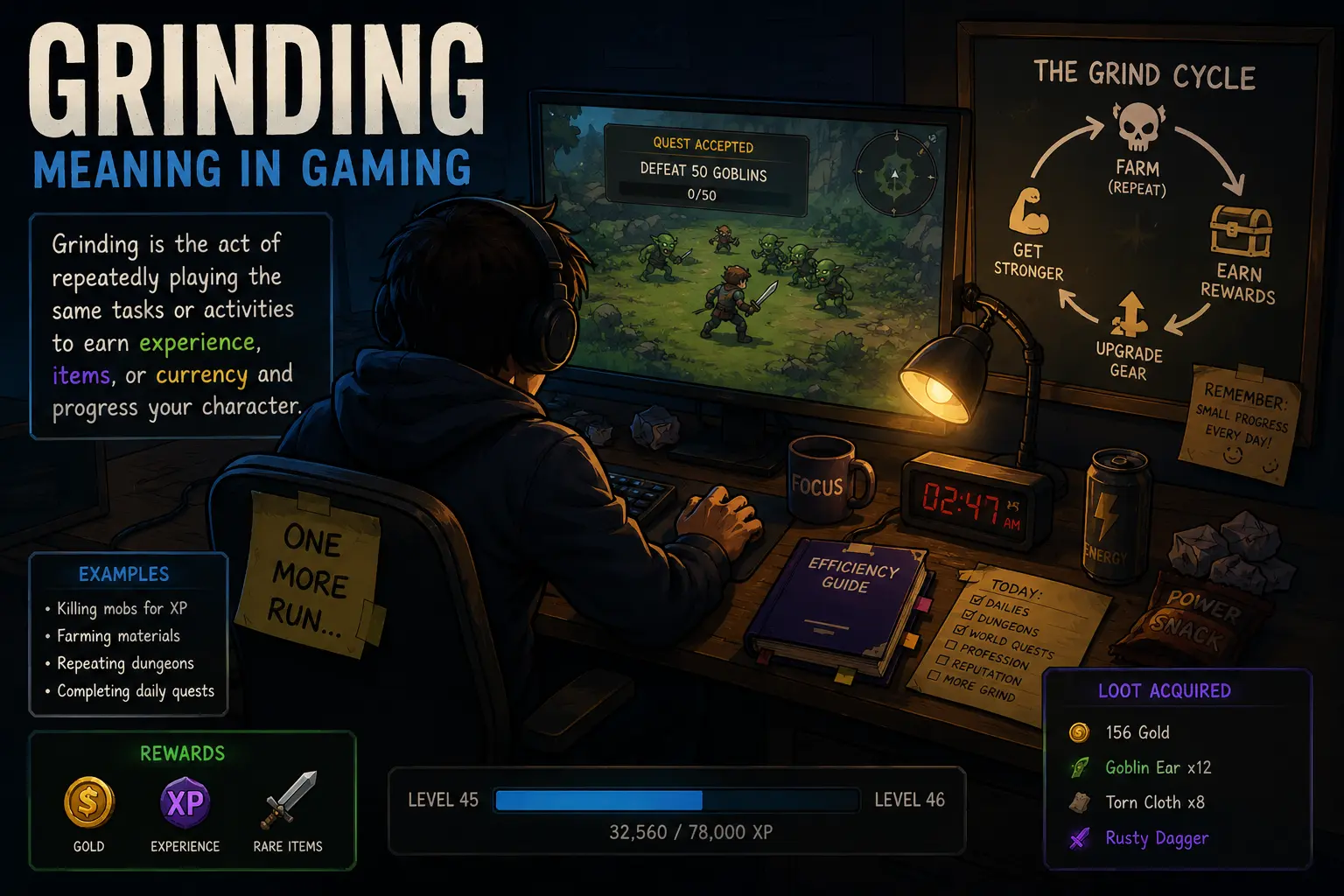
XP systems shape player behaviors by incentivizing repetition and time investment. Grinding emerges when players chase XP through the most efficient routes, repeating battles, quests, or routine tasks to reach the next level. While many players find satisfaction in mastering mechanics and optimizing routes, excessive grinding can reduce perceived variety and slow the pace of discovery.
On the positive side, grinding can deepen skill mastery as players develop muscle memory for rotations, timing, and strategic decisions. It can also foster social dynamics in co-op play, with teams coordinating XP farming, synchronized quests, and event participation.
Retention mechanics are central to XP design: daily bonuses, streaks, and time-limited events create predictable rhythms that bring players back. However, if XP demands outpace perceived value, players may feel stuck or burned out and abandon a title. Designers often pair XP with meaningful rewards beyond levels, such as new areas, crafting recipes, or cosmetic options, to maintain excitement.
Balancing XP with alternative progression paths or skill-based advancement can reward practice and mastery without forcing endless time investment. This helps accommodate players who value speed runs, exploration, or social play.
Community feedback and ongoing tuning are crucial; patches that modify XP curves, caps, or rewards influence player behavior and trust in the long term. Understanding these dynamics helps explain why some games sustain momentum for months while others struggle to keep players engaged when initial novelty fades.
XP Meaning in Gaming: Comparisons with Alternative Progression Systems
XP meaning in gaming sits at the core of how players grow, adapt, and unlock new content. Experience points provide a measurable path of progress that many genres use beyond simple story milestones. This section compares XP-driven progression with alternative models such as level-based checkpoints and skill-focused development. We will look at pacing, rewards, and player choice across different systems, showing how each approach affects engagement and long-term progression. By understanding these mechanics, developers can tailor experiences to diverse audiences and players can decide which path best fits their playstyle.
XP vs. level-based systems vs. skill-based systems
Progression systems come in several flavors, and the most common contrast is XP-based progress versus explicit level targets and skill-driven growth. Here is a practical side-by-side look at how XP-based, level-based, and skill-based systems differ in structure, pacing, and player experience. The following table presents a compact comparison across model definitions, progression mechanics, unlocks, and typical pacing to help designers and players reason about their options. XP-based systems reward players for a broad range of actions such as main quests, side objectives, exploration, crafting, and social activities; total XP accumulates in a single counter and gradually increases the character level or tier, creating a continuous sense of advancement. Level-based systems track discrete milestones; players reach a fixed level by completing challenges or defeating opponents, with XP often serving as a byproduct rather than the primary driver, which makes progression feel predictable and tangible. Skill-based systems shift focus to talent trees or skill slices that enhance specific playstyles, allowing power to scale through deliberate choices and practice rather than simply by accumulating total XP. Time-gated or hybrid variants can appear, but the core differences remain: XP curves can be smooth yet variable, level gates offer clarity and structure, and skill trees reward mastery and flexible builds. The table below lays out five representative models to illustrate how mechanics translate into rewards, pacing, and player choice.
| Model | Progression Mechanic | Unlocks | Typical Pace |
|---|---|---|---|
| XP-based | Experience points are earned through quests, combat, exploration, and social actions; XP totals grow continuously and govern level tiers. | Unlocks include increasing levels, new abilities, passives, and access to advanced areas as thresholds are met. | Early gains are slower to accelerate, then progress can creep upward with diminishing returns as players near endgame content. |
| Level-based | Advancement occurs at fixed level milestones after completing specific challenges or combat targets; XP often serves as a byproduct rather than the driver. | Each level grants predefined perks, and sometimes class or role unlocks; equipment tiers may accompany levels. | Milestones are predictable and easy to schedule, offering clear goals but potentially rigid pacing if thresholds are too spaced or tight. |
| Skill-based | Growth comes from investing in a talent or skill tree that shapes abilities; power scales with choice and practice rather than total XP. | New skills unlock in branches aligned to playstyle, enabling varied builds and end-game roles. | Progress pace depends on mastery; players who refine sequences may grow quickly, while others progress more slowly as they experiment. |
| Time-gated | Content unlocks follow a calendar or season schedule; XP can accumulate but primary progress follows time gates. | Seasonal rewards, cosmetics, and modes unlock on a timetable, sometimes resetting or rotating. | Pace aligns with season length; players are encouraged to log in regularly to maximize progression. |
| Procedurally varied | Progression relies on randomized events or loot drops; growth can feel unpredictable but scalable through repeated play. | Unlocks vary run to run, often tied to loot or shard systems, creating diverse builds. | Pace fluctuates with RNG, rewarding persistence and adaptability rather than fixed milestones. |
The table highlights how each model shapes player incentives, difficulty curves, and the sense of achievement. This understanding helps teams tailor pacing and reward density across genres.
Currency, unlock trees, and battle pass comparisons
XP can coexist with currencies, unlock trees, and seasonal battle passes, and in practice this combination often defines a game’s pacing more than any single mechanic alone. Currencies—whether gold, crystals, or crafting coins—offer players optional paths to power or convenience, letting them decide when and how to invest in gear, cosmetics, or quality-of-life upgrades. When currencies are abundant, players enjoy greater flexibility to experiment with builds and playstyles; when scarce, every purchase becomes a meaningful strategic decision that stretches gameplay over longer periods. Unlock trees translate power growth into visible, branching choices, guiding players toward preferred roles or archetypes and increasing replay value as different paths are explored. Battle passes add a time-based rhythm to progression, coupling XP or currency earnings with tiers that unlock cosmetics, boosts, or exclusive modes across a defined season; free tracks invite broader participation while paid tracks reward deeper progression for dedicated players. The interplay among XP, currency, unlock trees, and battle passes shapes pacing by balancing steady growth with meaningful choices and social incentives. For designers, these mechanics require careful tuning of earn rates, gate costs, and reward density to preserve fairness and avoid pay-to-win perceptions, while still providing compelling incentives to invest time, effort, and money where appropriate.
Hybrid systems and modern implementations
Hybrid systems are now common in contemporary games, combining XP with currencies, skill trees, and seasonal cadence to accommodate diverse playstyles and budgets. A typical approach ties early growth to a smooth XP curve while using currencies to unlock gear, cosmetics, and quality-of-life options, so players feel rewarded for effort and time without becoming overpowered too quickly. Some titles layer in a skill tree that lets players choose specialization paths, ensuring a sense of identity even when character level walls exist. Season passes or live events add fresh gates and new currencies to sustain ongoing engagement and provide social talking points. The combination creates a multi-layered ladder where players can accelerate or decelerate their progress by choosing how to spend XP, earn currencies, and invest talent points. Live-service environments especially benefit from this blend because updates rarely reset progress; instead they expand the ladder with new nodes, currencies, and seasonal rewards, inviting players back to test new builds and re-optimize strategies. Developers must calibrate earn rates, cap systems, and perceived value so that neither XP nor currencies dominate the player experience; if players feel forced to pay to keep up, retention suffers. A well-tuned hybrid also clarifies progression signaling: visible milestones, clear paths through a skill tree, and transparent costs for upgrades help players understand their options and stay motivated. When implemented thoughtfully, blended systems support a wide range of content, from exploration and puzzle-solving to competitive modes and team-based challenges. Ultimately, the right mix depends on the game’s genre, target audience, and monetization goals. The strongest designs offer meaningful personalization, meaningful choice, and a predictable sense of progression that remains accessible to newcomers while offering depth for veterans. Testing with players, analyzing progression metrics, and iterating on reward density are essential to avoid stagnation and ensure a healthy long-tail.
XP Meaning in Gaming: Availability, Offers, and Implementation Guidelines
XP meaning in gaming refers to experience points earned by players as they engage with a game’s challenges, quests, and activities. It serves as a currency for progression, unlocking levels, abilities, and rewards within a virtual world. Availability and implementation of XP systems vary across genres, from traditional RPGs to live-service titles, shaping how players experience growth and accomplishment. A well-designed XP model balances reward frequency, difficulty, and pacing to sustain engagement and prevent burnout. Understanding XP systems helps players strategize and helps developers optimize progression to support skill development and long-term satisfaction.
How games award XP (systems and triggers)
XP in games is awarded through several mechanisms, not just defeating enemies. Most titles employ a base set of XP earners: quest or mission completion, defeating foes, discovering new areas, solving puzzles, and crafting items. Some games also grant XP for exploration bonuses, social interactions, and meeting optional objectives, creating a broader map of what counts as meaningful progress. Systems may scale XP with difficulty or player performance, using multipliers for challenging encounters, group play, or time limited events. Seasonal events, daily challenges, and streak bonuses add short term windfalls that keep players returning, while diminishing returns or soft caps help prevent runaway growth. In addition, many titles separate XP sources into categories that influence leveling pace, skill unlocks, and narrative progression, ensuring players feel a sense of momentum without overloading early levels. Data structures typically track XP earned, current level, and the XP threshold for the next level, enabling you to compute progression bars, milestone rewards, and unlocks in real time. Some games also implement prestige systems or alternative currencies that require XP to exchange for cosmetic perks, boosts, or endgame access, extending the lifecycle beyond a single playthrough. Effective XP systems balance clarity and mystery: players should see how actions convert into XP, but the precise equations may be tuned behind the scenes to maintain challenge and fairness. When designed thoughtfully, XP encourages players to experiment with different playstyles, coordinate in groups, and pursue a mix of story driven and optional content, all while maintaining a sustainable growth curve for new and veteran players alike.
Balancing XP: avoiding inflation and power creep
Balancing XP requires managing inflation and power creep while preserving a sense of reward. If XP rewards accumulate too quickly, players reach the max level or unlock powerful perks far earlier than intended, diminishing challenge and reducing long term satisfaction. Conversely, overly stingy XP slows progression and can kill motivation, causing players to abandon content before reaching meaningful milestones. Common mitigation strategies include separating XP from in game currency, applying soft caps and diminishing returns on repetitive tasks, and tailoring XP curves to the game’s lifecycle. Designers often tune the XP pace around content cadence, ensuring new skills or areas unlock at consistent intervals and that endgame activities remain engaging without invalidating earlier progress. Implementing multiple progression streams, such as skill trees, cosmetic unlocks, and narrative milestones, can reduce pressure on a single XP track. Regular data analysis and playtesting help identify inflation signals, such as leveling speed deviations between new and veteran players, or sudden jumps in average XP per session. Season passes or periodic resets can recalibrate long term progression, while maintaining continuity through new content. Finally, balance should consider monetization strategies to avoid pay to win perceptions, preserving merit based advancement and fair competition in leaderboards and ranked modes.
Design guidelines for implementing XP systems
Design guidelines for implementing XP systems start with clear goals and a well defined progression model. Begin by deciding whether players advance through levels, a skill tree, or a hybrid path that blends both. Map each activity in the game to an XP source and assign a base value that aligns with its difficulty and risk. Choose an XP curve that fits the desired pace, whether linear for steady growth or an S shaped curve that accelerates early and then soft caps later. Establish level thresholds, caps, and prestige options if applicable, and design endgame milestones that reward continued play without devaluing early progress. Provide a transparent UI that shows current XP, progress to the next level, and upcoming unlocks, while keeping the precise math comprehensible but not overwhelming. Plan for balance experiments, such as A B tests or seasonal adjustments, and set metrics like time to reach key levels, average session length, and completion rates for major milestones. Integrate XP with other reward systems, including currencies, loot, achievements, and narratives, to reinforce meaningful progression across play sessions. Document the rules clearly in designer notes and implement data driven tooling to adjust values without code changes. Finally, emphasize accessibility and player agency, offering optional ways to earn XP and ensuring players can pursue content at a pace that matches their preferences.
Common pitfalls and ethical considerations
Common pitfalls and ethical considerations should guide early decisions and ongoing tuning. Avoid creating grinding loops that reward repetitive actions with little variety, which can erode enjoyment and lead to burnout. Be cautious with XP boosts tied to purchases, as pay to win perceptions can damage trust and balance in competitive modes. Ensure fairness across players by preventing XP farming and botting and by having robust anti cheating measures. Provide transparent pacing so players understand why content unlocks occur and how much effort is required, while protecting the sense of discovery. Consider accessibility and inclusivity by offering multiple viable playstyles and avoiding mandatory, monotonous chores. Monitor for harmful outcomes such as excessive skin deep engagement, and implement breaks or duration limits where appropriate. Finally, align XP with ethical monetization, so optional purchases support cosmetics or convenience rather than direct progression advantage, and keep strong narratives and social layers intact to maintain a healthy player community.