Witcher 3 vs Skyrim – RPG Comparison Guide
Since its original release, Witcher 3 and Skyrim have defined how players experience open-world RPGs. By 2026, both games have evolved through patches, remasters, and an enduring modding scene that shapes gameplay, visuals, and replay value. This guide compares Witcher 3 and Skyrim across story, combat, quests, exploration, graphics, mods, and replayability to help you decide which RPG fits your taste today. We consider core mechanics, narrative design, and player agency to show how each title ages in a modern gaming landscape. Whether you gravitate toward a tightly written epic or a sprawling sandbox, this comparison highlights what matters most for long-term enjoyment.
Quick verdict: Which to choose in 2026
In 2026, the choice between Witcher 3 and Skyrim depends on what you value most in an RPG. If you crave a focused, cinematic narrative with a concise, well-woven story arc, Witcher 3 remains hard to beat. Its writing teams refined characters, relationships, and plot twists to deliver a memorable journey with tightly designed set pieces and memorable boss encounters. The DLCs and remasters have kept pace with modern expectations, offering improved visuals, field-of-view options, and quality-of-life tweaks without diluting the game’s identity.
On the other hand, Skyrim continues to thrive as a sandbox that invites experimentation, role-playing, and personal myth-making. Its open world is expansive, with countless story seeds, factions, and environments ready to be explored, modded, and reinterpreted by players over years. If you want to craft your own legend, Skyrim hands you the wheel and asks you to steer. The combat in Witcher 3 is deliberate, with light, heavy, and sign-based actions that reward timing and strategy. Skyrim’s combat emphasizes flexibility, with melee, magic, archery, and stealth blending into an improvisational system that adapts to your build and the demands of surrounding mobs.
In 2026, both games feel modern in spirit, even as they arrive from different design philosophies. The best choice ultimately depends on whether you prefer curated storytelling or emergent role-playing freedom.
How we compared Witcher 3 and Skyrim
Our comparison method combines qualitative analysis with practical testing across a set of core criteria: narrative design, combat pacing, quest variety, exploration density, visuals and performance, and the impact of mods and patches up to 2026. We evaluated the games using canonical playthroughs, long-form exploration sessions, and community benchmarks to capture both scripted excellence and emergent player-driven moments. We also considered accessibility, UI design, and platform differences that affect day-to-day play. The goal was to capture how each title handles pacing, player choice, and world presence, rather than prescribing a single best path.
To structure the assessment, we divided the evaluation into four focal aspects that map directly to how players experience the games: gameplay mechanics, story and character development, open-world exploration and quest design, and the role of graphics, performance, and mods in 2026. Each area receives dedicated attention, with concrete examples from notable quests, combat scenarios, and exploration routes to illustrate strengths and trade-offs.
Gameplay mechanics comparison
Casual RPG players and open-world fans often prioritize freedom, accessibility, and a sense of discovery without heavy rules. Skyrim delivers a living world you can inhabit at your own pace, with factions, varied environments, and a wide range of playstyles. Its skill trees unfold naturally, combat can be tailored to your chosen approach, and a large modding scene adds texture packs, quests, and new areas for experimentation.
Witcher 3 can also satisfy casuals when you focus on main quests or enable guided modes, but it expects engagement with a structured progression and curated moments that emphasize narrative momentum. For those who want a low-friction entry into RPGs with immediate exploration, Skyrim is often the smoother start.
Storytelling and character development
Story-focused players who crave meaningful choices will likely prefer Witcher 3’s tightly written arcs and character development. The game presents a curated sequence of quests that flow toward a coherent finale, with choices that ripple through later chapters and endings.
Skyrim offers branching through factions and multiple paths, but the writing is more emergent and less tightly braided; you shape your tale through towns, guilds, and radiant quests rather than a single central thread. For players who value crafted storytelling and cinematic moments, Witcher 3 remains the stronger option; Skyrim rewards personal mythmaking with a broader scope of personal experimentation.
Open-world exploration and quest design
Open-world exploration and quest design: Skyrim presents a vast, high-contrast world with numerous locations, radiant quests, and faction-driven stories that can be pursued in any order. It rewards exploration with loot, lore, and environmental surprises, though quest quality can vary. Witcher 3 anchors its exploration to handcrafted hubs and standout quest arcs, weaving location, story, and combat into dense, memorable sequences. The result is a curated sense of place where exploration always serves the narrative engine, producing cinematic, story-forward experiences as you roam.
Graphics, performance, and mods in 2026
Graphics, performance, and mods in 2026: Witcher 3 benefits from modern updates that improve lighting, textures, and loading, aligning its visuals with contemporary expectations while preserving a distinct art direction. Skyrim, updated through Special and Anniversary Editions, remains visually impressive on PC and console with classic charm; its performance has been stabilized for many setups. Mod accessibility is a strong suit of Skyrim, with thousands of texture packs, gameplay tweaks, and quest mods continually expanding the game’s life. Witcher 3 also supports a robust mod scene, but the scope is more curated and patch-sensitive.
Context: updates and editions through 2026
By 2026, both titles have received meaningful updates that impact gameplay, visuals, and compatibility with newer hardware. Witcher 3’s Next-Gen Update improved ray tracing, loading times, and texture streaming, while enhancing photo mode and accessibility.
The HoS and BOC expansions remain canonical; The major console versions now support faster loading and better resolution on Series X|S and PlayStation 5. Skyrim’s Special Edition and Anniversary Update continued to evolve with revamped lighting, terrain, and AI improvements, along with ongoing mod compatibility tweaks to support newer software and hardware. Remasters and re-releases kept the games accessible on current platforms with improved performance and bundled DLCs. Additionally, modding communities maintained a steady pace, with popular mods being updated for stability and new tools enabling better texture packs, quest mods, and gameplay tweaks.
In 2026, both games are more accessible and visually competitive than ever, even though their core experiences remain distinct. PC platforms see continued patch cycles, with community-run patch projects continuing to refine controls, UI, and accessibility.
Audience fit: who should play which game
Choosing between Witcher 3 and Skyrim often comes down to your playstyle and what you seek from an RPG experience. If you want a story-forward adventure with memorable characters, Witcher 3 offers a crafted journey where your choices carry weight and narratives resolve with clear consequences. If you prefer absolute freedom to roam, experiment with builds, and create your own quests, Skyrim excels as a sandbox that invites ongoing personalization.
For players who value high production values and modern conveniences, Witcher 3’s modern updates and streamlined UI help minimize friction. For players who want to minimize constraints and explore every valley, dungeon, and town at their leisure, Skyrim rewards patience and curiosity. In practice, those who enjoy tight scriptwriting, character arcs, and cinematic set pieces will likely lean toward Witcher 3, while those who love open-ended role-playing, community-driven content, and constant discovery will lean toward Skyrim.
Each game offers a distinct flavor of immersion, and both provide ample room for replay, experimentation, and long-term engagement. Now, below are the audience-fit subpoints that map specific preferences to each title’s strengths.
Key takeaway table: high-level feature summary
For a concise, at-a-glance comparison, the table below highlights how Witcher 3 and Skyrim stack up on core features as of 2026. It focuses on narrative weight, exploration opportunities, combat pacing, visuals, and the scope of player-driven content. The entries reflect both titles’ strengths and the realities of modern updates and community mods.
| Feature | Witcher 3 | Skyrim | Notes |
|---|---|---|---|
| Story depth and quest design | Highly cinematic, mission-driven, strong quest arcs | Emergent storytelling, many side quests | Quality varies by quest, Witcher 3 is more curated |
| Open-world exploration | Dense hubs, varied environments, narrative anchors | Huge sandbox with endless exploration opportunities | Skyrim rewards curiosity; Witcher 3 maps feel more purposeful |
| Combat system and pacing | Combo-based, sign casting, tactical timing | Real-time combat, skill trees, survivability | Different pacing; Witcher 3 feels more crafted |
| Graphics and performance (2026) | Modern updates, strong lighting, optimized for new hardware | Classic engine with remasters, still visually striking | Mods help equalize visuals |
| Modding and community support | Strong but curated mod scene; official updates | Robust modding ecosystem, long-tail support | Skyrim remains the king of mods; Witcher 3 catching up |
Use this snapshot to decide which experience aligns with your preferred fantasy lens and desired level of control over the world around you.
Key Features and Specifications
In 2026, Witcher 3 and Skyrim remain benchmarks for open-world RPGs, each offering distinct strengths in storytelling, world-building, and player agency, with a modern gaming landscape that values robust mods, continued hardware support, and cross-generation accessibility.
This guide compares them across key pillars such as narrative depth, combat sophistication, exploration systems, visual fidelity, and the enduring impact of community content, aiming to help players choose the experience that best matches their preferences for story-led sagas or expansive sandbox discoveries.
In terms of storytelling, The Witcher 3 delivers a tightly woven main plot with cinematic sequencing, morally nuanced choices, and consequences that ripple through the world, while Skyrim offers a sprawling, lore-rich canvas where emergent quests and personal sagas emerge from the player’s own actions.
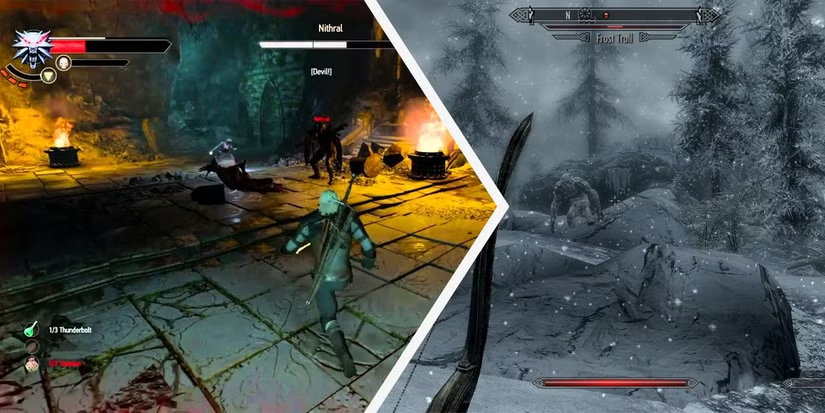
On the battleground, Witcher 3 blends precise melee timing with crafted signs and alchemy into a strategic rhythm, whereas Skyrim emphasizes real-time combat, a mix of magic and melee, and flexible approaches that reward experimentation in diverse environments.
For exploration and visuals in 2026, Witcher 3 showcases handcrafted regions with modern lighting and atmosphere, while Skyrim leverages its massive open world and texture mod ecosystem to stay visually compelling, underlining how ongoing mods and platform upgrades keep both titles relevant long after their original release.
Story and narrative depth
The Witcher 3’s storytelling centers on Geralt of Rivia, a seasoned monster hunter drawn into a grand game of survival and politics as a coming storm threatens the Continent. The main quest to locate Ciri acts as a strong spine that guides players through a series of carefully crafted episodes, each built around moral dilemmas, meaningful encounters, and a cadence that blends action, investigation, and choice.
Unlike conventional fetch quests, many missions in Witcher 3 unfold with cinematic rhythm, replete with memorable set pieces, dynamic conversations, and consequences that ripple across cities, kingdoms, and personal relationships. The writing quality is reinforced by a cast whose loyalties shift under pressure, creating a sense of a living world where decisions matter.
Character development in Witcher 3 feels earned through dialogue options, uncertain loyalties, and the tangible fallout of your decisions whether it’s bargaining with a rival faction, negotiating mercy, or selecting a path that closes other possibilities.
Side characters like Yennefer, Triss, and Cirilla offer arcs that reflect your reputation and the choices you’ve made, often tied to memorable quest lines such as the Bloody Baron or the Crones, where tone shifts from humor to tragedy. This contrasts with Skyrim, where the emphasis is on a broad lore canvas and player-driven storytelling rather than a single narrative line, letting your choices live through faction memberships, marriage options, and the way you shape your character’s path.
The Dragonborn saga in Skyrim exists within a wider ecosystem of guilds, civil conflicts, and traveler encounters, so quests frequently begin with a rumor or a chance meeting and then expand into a longer journey that reflects the player’s exploration rather than a prescribed track.
Environmental storytelling discovering ruins, deciphering old inscriptions, and meeting NPCs with personal agendas helps the setting feel lived-in even when you are not pursuing the central plot. The quality of side quests in Skyrim often shines in these details, offering bite-sized adventures that deepen the world without demanding a singular narrative focus. Both titles reward attentive play by rewarding players who connect dialogue, choices, and consequences to the evolving world.

Combat systems and mechanics
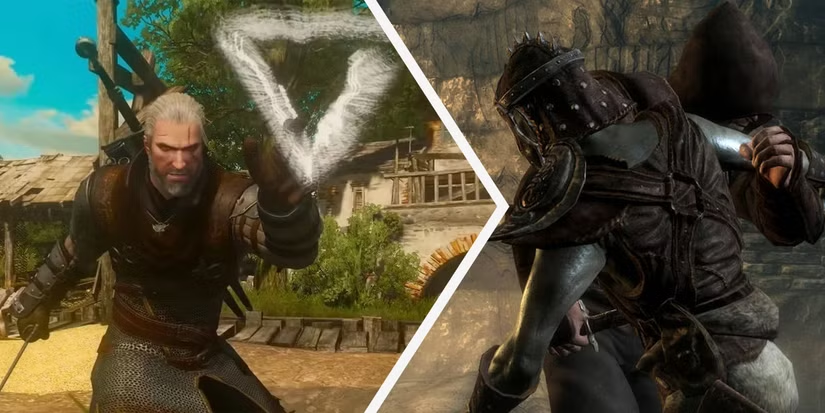
The Witcher 3’s combat design blends timing, stamina management, and posture-based counters with a versatile sign tree and alchemy, creating a rhythm that rewards preparation and enemy observation. Players must study enemy tells, choose the right blade and blade oils, and switch strategies when groups of foes appear or when a boss traps you with magic, so every fight feels like a tactile puzzle that challenges both reflexes and planning.
The sign system Quen for defense, Aard for crowd control, Igni for offense, and Axii for manipulation adds a layer of magic that can turn the tide in tight encounters, while potion use and blade oils provide strategic depth that scales with upgrades and loot. Mastery comes from learning which signs best complement swordplay against specific foes and how to sequence your injections and traps for maximum effect.
Skyrim’s combat emphasizes real-time action across melee, ranged, and magic, with shouts acting as powerful, finite-aura abilities that can alter crowd dynamics, plus a robust spell system that covers destruction, illusion, restoration, and conjuration, letting players customize a fighting style that matches their build. The absence of a strict stamina cap in many encounters encourages experimentation, from dual-wielding to archery-powered skirmishes, and dragons frequently demand adaptive tactics rather than rote button-mashing.
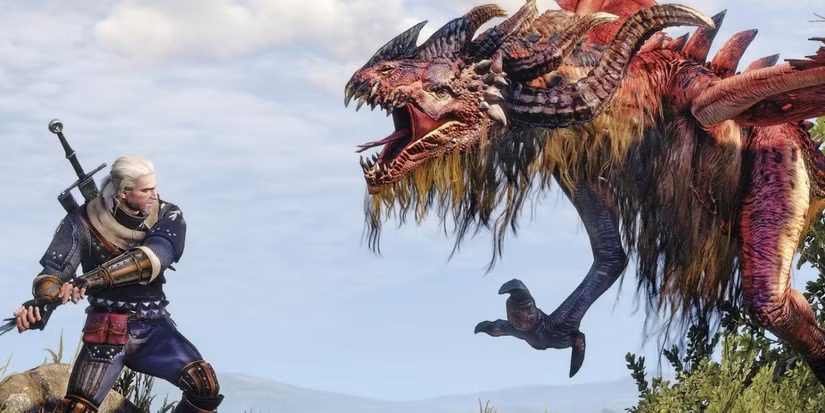
Enemies in Witcher 3 are designed to test timing and resource management, with monster weaknesses that push players to craft the right oils and signs, whereas Skyrim presents a broader spectrum of foes and sandboxed strategies that encourage experimentation, from dragons to necromancers, often rewarding clever use of the environment.
Character progression in both games offers a similar feel improving combat prowess and magical capacity through skill trees and gear but Witcher 3 requires you to align class choices with a defined progression path rooted in the story, while Skyrim grants wide freedom to dip into multiple schools of magic, weapons, and perks, enabling highly personalized combat identities.
World design and exploration
Witcher 3 world design and exploration highlight handcrafted landscapes with dense ecosystems, diverse biomes, and a narrative-driven map that guides you toward pointed destinations while still leaving space for detours and discovery. The regions Velen, Novigrad, and Skellige are filled with meaningful side quests, atmospheric weather, and visually cohesive environments that feel purpose-built to support storytelling and world immersion.
Map structure emphasizes interconnected hubs connected by roads, ferries, and fast-travel networks, with quests that reveal lore about factions and the Continent’s history, creating a sense of place that you actively influence through your choices and actions.
Skyrim’s world design prioritizes scale and variety, offering a vast land filled with diverse climates, dungeons, towns, and hidden locales that invite long explorations and repeated visits. The Radiant Quest system generates dynamic content, ensuring that even familiar routes can yield new encounters, while settlements, factions, and civil conflicts provide ongoing hooks for player-driven exploration. Traversal and discovery are enhanced by mod support that can alter textures, lighting, and geography, enabling players to continually reimagine the world as they roam.
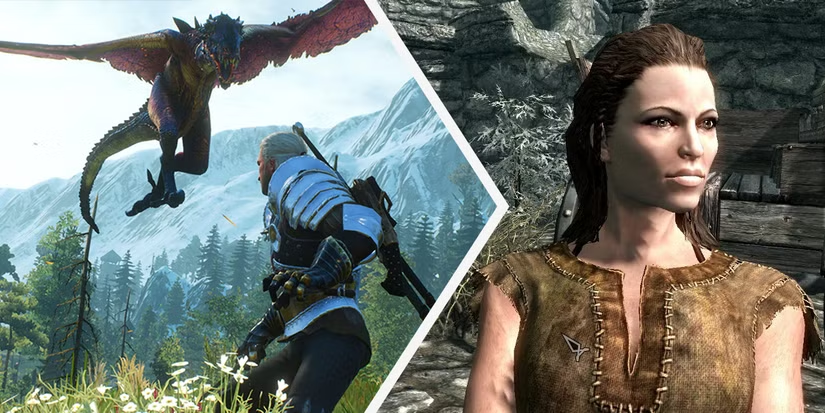
Graphics, performance, and tech requirements
Below is a concise, side-by-side look at how the two games stack up on visuals and system demands.
| Aspect | Witcher 3 | Skyrim SE |
|---|---|---|
| Release year | 2015 | 2016 |
| Engine/Graphics direction | REDengine 3 | Creation Engine (updated for SE) |
| Recommended PC specs | CPU: i7-3770 3.4 GHz; RAM: 8 GB; GPU: GTX 770 | CPU: i5-4690K; RAM: 8 GB; GPU: GTX 970 |
| Storage/install size | ~35–40 GB | ~12–15 GB |
Despite the age of both titles, modern hardware and ongoing mods keep both experiences accessible and visually compelling.
Comprehensive Feature Comparison and Benefits
Witcher 3 and Skyrim remain landmark RPGs that sculpt the genre’s expectations, each approach resonating with different types of players in 2026. This comprehensive feature comparison examines quests, progression, mods, and exploration to determine how the games hold up as living experiences, not just as completed campaigns. By analyzing core pillars such as story structure, character development, and open-world activity, we illuminate why players keep returning to these titles and how updates and mod ecosystems extend their lifespans. The goal is to present a balanced view that highlights each game’s strengths while identifying areas where one title may suit your preferred playstyle better. Readers should come away with a clear sense of which RPG aligns with their goals, whether they prioritize narrative immersion, sandbox freedom, or long-term replayability.
Multiplayer, mods compatibility, and third-party tools
Multiplayer support is a longstanding point of contrast between Witcher 3 and Skyrim. Witcher 3 is strictly a single player experience with no official multiplayer mode, which shapes how players judge content longevity and replayability. Skyrim, by contrast, has inspired a variety of multiplayer mods and community projects that allow cooperative exploration, though these are unofficial and can vary in stability. The mod ecosystem around Skyrim remains vibrant, with tools like Creation Kit, Mod Organizer 2, and Vortex helping players manage large mod libraries and maintain compatibility across game updates. For third party tooling, players frequently rely on patchers, script extenders, and compatibility patches created by the community to resolve conflicts and optimize performance across different mod setups. Both ecosystems reward careful mod management and an awareness of how patches can alter balance.
Offers, Pricing, and Support
In 2026, Witcher 3 and Skyrim remain staples of the open-world RPG scene, offering distinct value depending on how you play. This section breaks down offers, pricing, and support, then evaluates how game editions, DLCs, and patches affect long-term value. You’ll see how base games compare to GOTY/Complete editions, what major DLCs add, and how official updates and the thriving mod ecosystems influence replayability. We also cover sales cycles, bundles, platform differences, and tips for buying smart in 2026 so you don’t miss a great deal. By the end, you’ll have a practical framework for choosing the edition that fits your budget, your preferred playstyle, and your plan for ongoing support.
Editions, DLCs, and value for money
Witcher 3 and Skyrim both employ layered edition strategies that can dramatically affect value depending on how much content you want and how much you’re willing to spend. For Witcher 3, the base game offers a rich, self-contained adventure, but the true value often comes from the two major expansions, Hearts of Stone and Blood and Wine, which add substantial narrative depth, new areas, and additional questlines.
The Game of the Year or Complete Edition bundles the base game with these expansions, delivering a bundled experience that tends to be more cost-effective than purchasing everything separately, especially during sale periods. Skyrim follows a parallel path with editions that bundle the base game with DLCs like Dawnguard, Hearthfire, and Dragonborn, plus remasters in Special and Anniversary Editions. The Special Edition modernizes the engine and adds console stability, while the Anniversary Edition consolidates Creation Club content and a vast library of community-created mods.
In terms of value, Witcher 3’s expansions are widely praised for their narrative quality and longer playtime per dollar, while Skyrim’s longevity is amplified by its enormous mod ecosystem, which can significantly extend both gameplay length and variety. When evaluating value, consider not just the sticker price but the hours of content, the quality of the new quests, and how much you value official expansions versus user-created content.
While Witcher 3’s expansions offer tightly crafted stories and unique environments, Skyrim’s DLCs and mod support tend to deliver near-endless exploration and player-driven replayability that can rival or exceed the base game with the right mods.
If you want a concise, story-forward experience, GOTY editions may be the most cost-effective route; if you crave a mod-friendly sandbox with virtually limitless exploration, the Anniversary or Special Editions of Skyrim present compelling long-term value. Always compare current sale prices and bundled offers across platforms to identify the best deal for your preferred edition and format.
Support, patches, and developer responsiveness (CDPR and Bethesda)
Patch cadence and post-launch support are crucial when judging long-term value. CD Projekt Red has a track record of delivering substantial free DLC and two major expansions for Witcher 3, followed by a series of patches that improve performance, fix quests, and refine gameplay across PC and consoles.
The studio has also shown commitment to a robust quality-of-life program, with transparent patch notes and, in many cases, free enhancements for next-gen console versions. Bethesda’s approach with Skyrim has historically emphasized bug fixes and engine improvements across generations, along with ongoing Creation Club content and, later, the Anniversary Edition that bundles new content.
While patch cadence can fluctuate, Bethesda’s community-centric approach and strong modding support have sustained the game’s vitality for years. Both developers encourage feedback through official channels and newsletters, and both maintain active moderation of patch notes and bug reports to guide subsequent updates.
For players who rely on mods, be aware that major patches can temporarily affect compatibility; however, both ecosystems typically provide workarounds or updated mod versions once compatibility is re-established. In practice, Witcher 3’s updates tend to refine the narrative and quest flow with fewer disruptive changes to core systems, while Skyrim’s patches often address engine stability and allow a broader range of mods to function together, which is central to its enduring appeal.
Overall, both titles demonstrate solid post-launch support, with Witcher 3 skewing toward narrative polish and Skyrim toward expansive, tool-friendly flexibility for players who enjoy modding.
Which offers to watch in 2026 and tips on buying
In 2026, the most reliable offers come from standard sales events and publisher-promoted bundles rather than rare one-off deals. Steam, the Epic Games Store, and platform storefronts regularly run seasonal discounts, with mid-year summer sales and year-end promotions typically offering the steepest discounts on both Witcher 3 and Skyrim bundles or DLC packs. Watch for Anniversary Edition and GOTY bundles for Witcher 3, as well as the various Skyrim editions that include multiple DLCs or Creation Club content; both title lines often see price dips when a new platform generation or major patch cycle begins.
To buy smart, set price alerts, compare offerings across stores, and verify that any DLC codes or expansions included in a bundle are compatible with your platform. If you are a PC gamer with access to mods, the Steam and GOG catalogs frequently provide the best base prices, while console players should check the official store for platform-specific bundles and digital codes.
Finally, be mindful of add-ons that may come with Anniversary or Creation Club content, as these can affect both initial price and long-term value. In short, plan purchases around major sale windows, prioritize GOTY or Anniversary Editions if you want comprehensive content, and leverage platform-specific bundles to maximize value without sacrificing accessibility.

Final verdict and buying guide
Think about your preferred playstyle and appetite for content when deciding between Witcher 3 and Skyrim in 2026. If you value tight, story-driven quests with a cohesive narrative arc and high-quality expansions, choose Witcher 3’s GOTY/Complete Edition and plan for the two expansions to unlock the fullest experience.
If you prize vast open-world freedom, a thriving mod scene, and near-endless replayability, Skyrim’s Anniversary or Special Editions offer lasting value that grows with community-made content. For budget-conscious buyers, target major sale events and evaluate whether you want the tangible content of official DLCs or the potentially limitless content that mods provide.
Practical steps: decide on your platform, select the edition that bundles the content you most want, monitor upcoming sales, and confirm patch and mod compatibility if you rely on mods. This approach keeps your options clear and your purchase aligned with both your wallet and your long-term enjoyment.