Ghosting Meaning in Online Gaming: Definition and Core Concepts
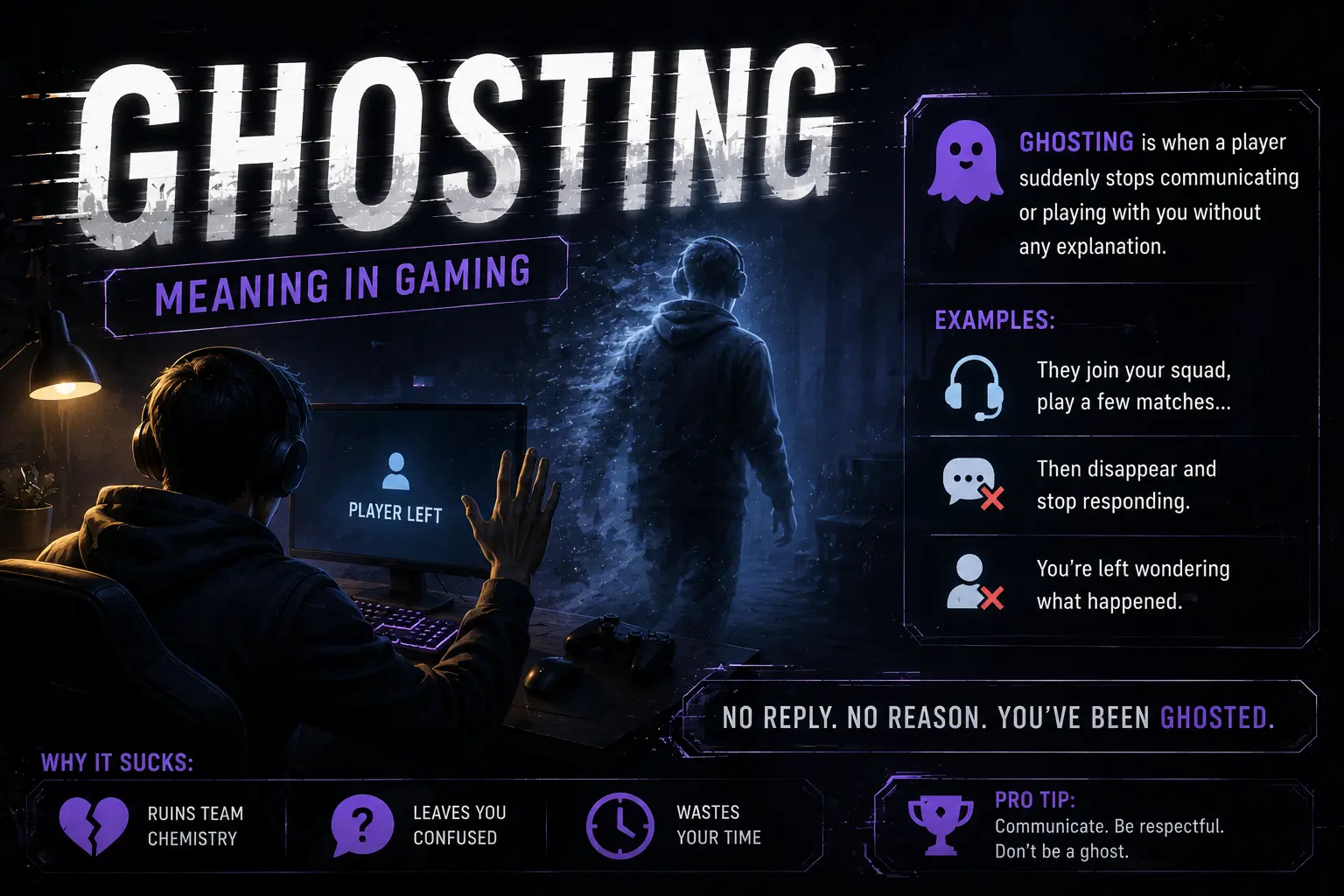
Ghosting in online gaming refers to the unfair practice of sharing live match information with others who should not have access to it during a game, thereby granting an unfair edge to the recipients.
It can involve streaming a match to reveal enemy positions, leaking callouts through external channels, or relaying strategic insights in real time across platforms that bypass in-game communication flows.
In online gaming etiquette, ghosting is typically framed as information leakage that undermines fair competition and erodes trust among players, teams, and communities.
The concept spans genres—from shooters to MOBAs to co-op titles—because timing, map awareness, and tactical knowledge often decide outcomes more than raw personal skill alone.
Understanding ghosting means unpacking its meaning, recognizing core concepts like information hygiene and ethical boundaries, and considering its practical impact on players, organizers, and the broader online gaming ecosystem.
What is ghosting in gaming?
Ghosting in gaming refers to the deliberate sharing of live game information with others who are not part of the intended match in a way that gives one side an unfair advantage.
At its core, ghosting is information leakage: someone who has access to real-time enemy positions, callouts, rotations, or strategic insights communicates that data to teammates or spectators who can act on it within the same game or across concurrent games.
While cooperative play often benefits from clear communication, ghosting crosses a boundary when information is obtained through sources outside the sanctioned channels of the match or shared with participants who do not have a legitimate need to know it.
Different genres experience ghosting in different forms, but the common element is that knowledge gained during play is inappropriately disseminated, altering risk assessments and decision-making in a way that undermines fair play.
From a community perspective, ghosting erodes trust and can deter new players from engaging in ranked or organized play if the environment feels prone to unfair advantages. Addressing ghosting requires clear guidelines, reporting tools, and a culture of accountability that emphasizes skill and teamwork over information leakage. It also invites developers and tournament organizers to implement safeguards such as stream delays, spectator restrictions, and anti-ghosting features that minimize the opportunities for information leakage.
How ghosting happens (live sharing, stream sniping, comms)
Ghosting happens in several recognizable forms during live competition. The following items illustrate common methods used, with real-game implications.
- Live streaming during matches exposes teammates to real-time enemy movements, callouts, and rotations, which can speed up decisions and tilt the odds, especially in fast-paced shooter titles.
- Stream sniping uses a live feed to infer opponents’ plans, letting a team time pushes and counter-moves before the enemy can respond.
- Using external chats, voice apps, or unapproved channels to share sensitive information accelerates the spread of knowledge that should remain private within the match.
- Third-party watchers or accounts listening to streams can relay updates into another team’s lobby, creating a distributed network of ghosting that undermines fair play.
- In-game overlays, if misused, can leak enemy positions or strategies to teammates, blurring line between cooperative play and unfair advantage.
Understanding these methods helps players spot risks and develop strategies to preserve fair play and improve online gaming etiquette.
Live sharing during matches
Live sharing during matches occurs when a player broadcasts or shares real-time information to teammates outside the game’s sanctioned channels. This can involve streaming, taking snapshots, or narrating enemy routes in group chats beyond the match’s boundaries. The effect is a tempo boost for the receiving team, which may react faster, coordinate rotations, and exploit patterns that would otherwise be hidden. While some players see such callouts as helpful in practice runs or organized scrims, it undermines fair play in public or ranked games. Teams can mitigate this by agreeing on which streams are allowed, muting spectators, and enforcing consistent codes of conduct. Tournament organizers should clearly define spectator rules and provide channels to report violations.
Stream sniping risks and prevention
Stream sniping during competitive play uses a live broadcast to glean information about opponent positions, timing, and strategies. The risk is not limited to the primary match but can cascade into bans, disqualifications, or damaged reputations for players and teams. Preventive measures include enabling stream delays, restricting who can view a match, and applying anti-ghosting features in tournament software. Organizers may require players to use official demos or ghosting-free practice rooms, and communities should promote reporting and accountability when breaches occur. By creating clear expectations and consequences, players learn to respect fair play while still enjoying social sharing in appropriate contexts.
Types of ghosting: intentional vs accidental
Ghosting can be intentional, where a player consciously seeks to give others an advantage, or accidental, where information leaks happen without malicious intent. Intentional ghosting often involves deliberate sharing of live updates, coordinates, or strategic notes with teammates who are not in the same match or with external audiences who can act on them. Accidental ghosting might arise from misconfigured streaming setups, misread information, or casual chatter that unintentionally reveals sensitive details. The ethical distinction matters because intent shapes consequences and the appropriate response—intentional acts may warrant sanctions, while accidents call for education and better information hygiene. Regardless of intent, repeated incidents undermine trust and the perceived integrity of a game, prompting communities to codify respectful behavior and enforce rules consistently.
Why ghosting is controversial and ethics
Ghosting sits at the intersection of competitive integrity, player welfare, and community standards in online gaming. Ethically, it challenges the principle that success should reflect skill, teamwork, and preparation rather than access to privileged information. The controversy intensifies when ghosting affects newcomers and casual players who rely on fair matchmaking and constructive feedback, yet encounter repeated breaches that skew outcomes. Psychologically, ghosting can contribute to anxiety, loss of agency, and a sense that the online space is hostile or unpredictable, which can erode participation and community growth. From a broader perspective, ghosting also affects trust in tournaments, leagues, and developer ecosystems, complicating player retention and brand reputation. Coping mechanisms include cultivating strong in-game etiquette, building rapport within teams through transparent communication, and implementing clear consequences for breaches. To address the issue at scale, communities should embrace preventive measures like delayed streams, robust reporting tools, and consistent education on online gaming ethics, while promoting healthy rivalry and collaborative learning. Practical strategies to reduce ghosting range from setting explicit information-sharing rules to designing brighter lines between spectator access and match privacy, all aimed at safeguarding fair play and a positive gaming culture.
Key Features and Capabilities of Ghosting Meaning: Online Gaming Definition
Ghosting in gaming refers to the act of sharing live or near-live game information with teammates during matches, often outside the game’s built-in communication system. This behavior can tilt outcomes by exposing enemy positions, timings, or strategies in real time. In online gaming, ghosting is widely recognized as an unfair practice that undermines skill, coordination, and trust within teams. The meaning and impact of ghosting span from micro level in match decisions to broader online gaming etiquette and community dynamics. This article explores the meaning, examples, detection, and prevention of ghosting in online gaming, touching on its psychological aspects, effects on the community, and how players can cope and respond.
Mechanics and examples in popular game genres
Ghosting manifests differently across game genres, shaping how information affects teamwork and decision-making. The table below compares genre-specific ghosting examples in popular game genres to illustrate practical impacts.
| Genre | Typical Ghosting Behavior | Potential Impact on Play | Common Prevention or Remedies |
|---|---|---|---|
| First-Person Shooter (FPS) | Live enemy positions, routes, or health indicators shared through external chat, voice, or overlay streams during ongoing rounds. | ||
| Provides an immediate, unfair advantage, distorts timing, and undermines skill-based outcomes. | |||
| Enforcing strict in-game communication rules, using anti-ghosting overlays, and promoting ping-based coordination. Moderators can monitor external streams and require players to disable external feeds during matches. | |||
| Multiplayer Online Battle Arena (MOBA) | Revealing timers, rotations, or gank plans via outside channels, leading to pre-arranged plays. | ||
| Destroys strategic planning and punishes teammates who avoid ghosting. | |||
| Coaching on communication etiquette; lobby rules; restrict external information channels; encourage using in-game pings and minimap warding. | |||
| Battle Royale | Broadcasting circle information, loot locations, or drop zones to teammates in real time outside the game client. | ||
| Gives teams hard-to-counter advantages and shortens decision windows unfairly. | |||
| Enforce team-only in-game comms; monitor external streams; educate about fair play; implement client-side overlays that block outside data. | |||
| Real-Time Strategy (RTS) | Revealing enemy builds, scouting information, or fog-of-war data via overlays or third-party apps. | ||
| Erases information asymmetry, leading to predictable outcomes and stifling strategic depth. | |||
| Clear etiquette guidelines; disable external overlays; promote in-game replays and coordination. |
Understanding these patterns helps players and organizers develop clearer etiquette and defenses against unfair information sharing. This genre-based view also informs anti-ghosting design and community guidelines for online gaming.
Tools and channels used to ghost (voice, chat, overlays)
Ghosting relies on a variety of tools and channels, extending far beyond the built-in in-game chat. These channels can amplify information sharing and undermine fair play if used to relay live data.
- External voice chats or streaming overlays that relay live enemy positions or current objective timings, enabling teammates to act with perfect information while the match is ongoing.
- Public chat channels or third party apps that disclose rotation plans, lane assignments, or gank timings before teammates have committed to a plan.
- Shared maps or screenshots posted during a game to reveal spawn points, resource locations, or circle data that would normally require exploration or observation within the game.
- Overheard side conversations or private messages that leak strategies to a subset of players, reducing the need for experimentation and trial and error.
- In game overlays or external widgets that show enemy positions or route suggestions in real time, lowering cognitive load but sacrificing fair play.
Awareness of these channels helps players set boundaries and fosters a culture of fair play, where information is shared within official systems only. Teams that establish etiquette and transparency typically experience more consistent teamwork and fewer disputes.
Detection and indicators of ghosting
Detection begins with attentive listening to communication patterns and cross-checking information against in game data. Signs include inconsistent enemy reports between players, timing updates that do not align with map timers, and sudden shifts in team strategy that rely on data sources outside the game’s client. When players rely on external feeds, the pace of play can become asynchronous, and the team may misread threat levels or opportunities. Game telemetry and chat transcripts can reveal episodes where information sharing crosses from collaboration into unsanctioned information sharing, particularly during high pressure moments. Community moderators and analysts often look for clusters of such events that correlate with abnormal performance curves.
Telemetry clues can include repeated alignment of movements to data that cannot be validated within the game client, such as synchronized rotations across multiple lanes without in game cues. Behavioral signals also matter: players who consistently cite external sources to justify decisions may feel pressure to maintain a ghosting routine, while others experience frustration, reduced trust, and a sense of helplessness when their own observations are discounted. Server logs, chat transcripts, and replay analyses can help distinguish normal coordination from patterns that indicate information leakage. The goal of detection is not blame but understanding how information flows and where boundaries should exist to protect fair play.
Institutions should implement clear rules about acceptable communication, provide easy ways to report concerns, and support educational initiatives that emphasize fair play. Teams can adopt standardized post match reviews, encourage players to call out observed cheating, and train new players in etiquette that prioritizes in game information and minimizes external data sharing. In practice, enforcement combines policy, education, and community norms that favor transparency within the game’s own systems rather than external channels. A culture of accountability helps sustain healthier online gaming communities and reduces the emotional toll on players who feel sidelined by ghosting.
Occasionally ghosting emerges as a coping mechanism under stress, with players believing that outsourcing information shortens losing streaks or builds cohesion. Yet the costs extend beyond a single match; repeated incidents erode trust, discourage experimentation, and push newcomers away from organized play. Communities that invest in clear communication norms, visible reporting avenues, and inclusive education about how to share data responsibly tend to retain more players and foster healthier rivalry. Ultimately the line between smart coordination and unfair ghosting is defined by intent, frequency, and the availability of in game channels for verification.
Common misconceptions about ghosting capabilities
Common myths about ghosting exaggerate its reach or define it as a rare, deliberate act by a single player. In reality ghosting can be informal, opportunistic, or habitual, and it often involves multiple participants or recurring patterns rather than a lone act. Believing that ghosting requires advanced tools can lead teams to ignore simpler sources of unfair information, such as a teammate repeatedly sharing observations from outside the match client or accepting external help without scrutiny. Another misconception is that ghosting only affects elite titles; in fact, it can distort play in casual lobbies and smaller communities as well, influencing reputations and norms.
People sometimes assume that once ghosting starts it is unstoppable, but effective responses exist. Setting explicit communication guidelines, choosing official channels for data sharing, and designating a trusted moderator to oversee conduct can reduce incidents. Encouraging players to verify information through the game’s built in features, like replays and observed maps, helps preserve accurate situational awareness. The impact of misperceived capabilities also matters: overestimating how easily ghosting can be detected may cause under reporting, while underestimating may let it persist.
Benefits, Specifications, and Security for Ghosting Meaning in Online Gaming
Ghosting meaning in online gaming refers to the unfair practice of sharing live game information with teams during matches, often giving one side an advantage through knowledge of enemy positions, strategies, or timings.
This section explores the perceived benefits, technical specifics, and security considerations surrounding ghosting as it relates to online gaming communities.
By understanding both legitimate coaching-oriented uses and the risks to competitive integrity, players, coaches, and platforms can navigate this phenomenon more effectively.
Properly managing information flow helps preserve learning opportunities while protecting the fairness of outcomes.
The following subsections outline benefits, data handling, risk factors, and policy-oriented mitigations relevant to ghosting in online gaming.
Perceived benefits (coaching, learning, spectator experience)
When used responsibly, these perceived benefits can support growth and enjoyment for players, spectators, and organizers.
However, it is essential to separate legitimate coaching cues from active disclosing of live information that could bias outcomes.
- Coaching feedback during live matches helps players recognize patterns, adjust strategies, and refine micro-skills such as timing, spacing, and target prioritization.
- Learning from ongoing play experiences accelerates memory formation, enabling faster decision making when facing similar map layouts, enemy setups, or resource management challenges.
- Spectator experience benefits include clearer demonstrations of team coordination, role execution, and communication cues that fans and newer players can study to improve their own performance.
- For coaches, real-time visibility enables targeted guidance after critical moments, reinforcing correct decisions and discouraging harmful habits without breaking the flow of the game.
- Spectators benefit from accessible analytics during streams or replays, growing a broader learning community that shares insights while maintaining fair play norms.
This structure preserves learning opportunities while discouraging exploitative practices and helps maintain a welcoming competitive environment.
Technical specifications: data shared and timing
Data related to ghosting can flow through several channels, including in game overlays, streaming metadata, chat transcripts, telemetry, and spectator feeds.
In practice, systems may share live map information, enemy positions when players are observed, timers for objectives, resource counts, and tactical cues that are not normally visible to all participants.
The timing of this data is critical: real time or near real time streams increase risk by reducing reaction time to adapt, while delayed or buffered information can still influence decisions if not handled carefully.
Transmission often relies on server side visibility rules, client side overlays, and third party tools that bridge the gap between what a player sees and what a ghosting partner receives.
Encrypted channels, authentication, and access controls are common defenses, but gaps remain in consumer grade setups, streaming to audiences or using mods that bypass protections.
Where legitimate coaching or spectating is allowed, data sharing follows explicit consent, documented guidelines, and clear boundaries to separate coaching oriented feedback from exploitative information.
Security, privacy, and competitive integrity risks
Data exposure can threaten privacy for players who do not intend to share strategic information and can lead to profiling or doxxing risks in public streams.
Real time ghosting may create unfair advantages, undermine authentic communication within teams, and erode trust in matchmaking and ranking systems.
Platform liability increases when ghosting crosses policy lines, potentially triggering sanctions, dispute resolutions, or changes to how events are moderated and scored.
Third party overlays and tools can introduce security vulnerabilities, from malware to credential leakage, affecting both individuals and organizations involved.
Stakeholders including players, teams, developers, broadcasters, and organizers must coordinate to uphold integrity while preserving learning and entertainment value.
Mitigations and fair-play policies
Effective mitigations combine clear rules, transparent enforcement, and user empowerment. These include documented guidelines for what information may be shared, consent procedures for coaching or spectating, and explicit consequences for breaches.
Techniques such as adjustable overlays, timed visibility controls, and enforced data minimization help limit live disclosures during matches. Training programs for players and streamers reinforce expectations around fair play and respectful communication.
Plans, Offers, and Competitive Comparison for Ghosting Meaning Service
This overview outlines the Plans, Offers, and Competitive Comparison for a Ghosting Meaning service designed to help players, teams, and community organizers understand and address live-information leakage in online games. By translating publisher policies into actionable guidelines, the service provides clarity on what counts as ghosting across genres, the typical consequences, and practical steps to prevent and respond to incidents during matches. The plans span individuals, small teams, and esports operations, pairing educational resources with analytics, reporting tools, and workflow integrations that fit existing communication stacks and coaching practices. In the competitive landscape, we compare offerings on policy alignment, enforcement transparency, price, and the breadth of community education resources, with attention to how each option supports fair play, reduces communication breakdowns, and preserves a positive player experience. The following sections drill into official game developer policies, third-party services and monetization, the relative standing of ghosting versus cheating and stream-sniping, and how communities respond through enforcement and education.
Official game developer policies and penalties
Publishers encode ghosting rules within the broader code of conduct and terms of service to establish a baseline for fair play across modes, regions, and platforms. Ghosting is typically described as the intentional sharing of real-time state, live information from another player’s screen, or orchestrated communications that reveal planned strategies during a match, stream, or spectator event. Because ghosting directly undermines competitive balance, publishers treat it as a breach of trust that harms teammates, opponents, and spectators, and they frame penalties to preserve fairness rather than to punish casual discussion about tactics. Policy language often links ghosting to related offenses such as stream-sniping, collusion, and exploitative use of spectator tools, while acknowledging genre-specific differences—for example, arena shooters, MOBAs, and battle royales each face distinct vectors for information disclosure. While the exact wording varies, the intent is consistent: deter real-time information leaks and preserve equal opportunity for all participants.
Third-party services, subscription models, and monetization
Third-party services around ghosting meaning typically fall into educational platforms, policy-translation tools, incident-reporting dashboards, and coaching programs. These services translate publisher rules into accessible summaries, create standardized guidelines for behavior in chats and streams, and provide proactive risk assessments to help teams prevent leaks before they occur. Many developers emphasize that such tools should complement, not replace, the core discipline of fair play, offering context-sensitive advice tailored to different genres and event formats. By aligning with official standards, these vendors help players differentiate between permissible strategic discussion and behavior that veers into exploitative leakage. The goal is to empower communities with transparent, verifiable ways to monitor, report, and improve on-ice conduct.
How ghosting compares to cheating, stream-sniping, and smurfing
Ghosting, cheating, stream-sniping, and smurfing each erode competitive fairness in distinct ways, and understanding their nuances helps players and organizers respond appropriately. Ghosting centers on the deliberate sharing of live game state or intended tactics, often through chat, streams, or private communications that grant an advantage during match play. Cheating encompasses the use of software or hardware to alter game mechanics, automate inputs, or bypass standard rules, creating an uneven playing field that extends beyond information leakage. Stream-sniping involves watching a live feed or replay to anticipate enemy actions, while smurfing describes skilled players using alternate accounts to compete at a lower level, skewing expectations and matchmaking. While all four behaviors disrupt balance, ghosting is unique in its emphasis on information dynamics rather than on manipulation of game code or skill level alone.
Community and competitive responses: enforcement and education
Community and official responses to ghosting blend policy enforcement with education to cultivate healthier gaming cultures. Player reporting systems, moderator interventions, and transparent appeal processes work alongside educational content that teaches etiquette, communication best practices, and incident handling. Grassroots campaigns and in-game etiquette guides help normalize fair play, while official statements and league guidelines reinforce consistent standards across communities and events. Together, these approaches aim to reduce incidents, increase trust in competition, and provide clear pathways for remediation when violations occur.